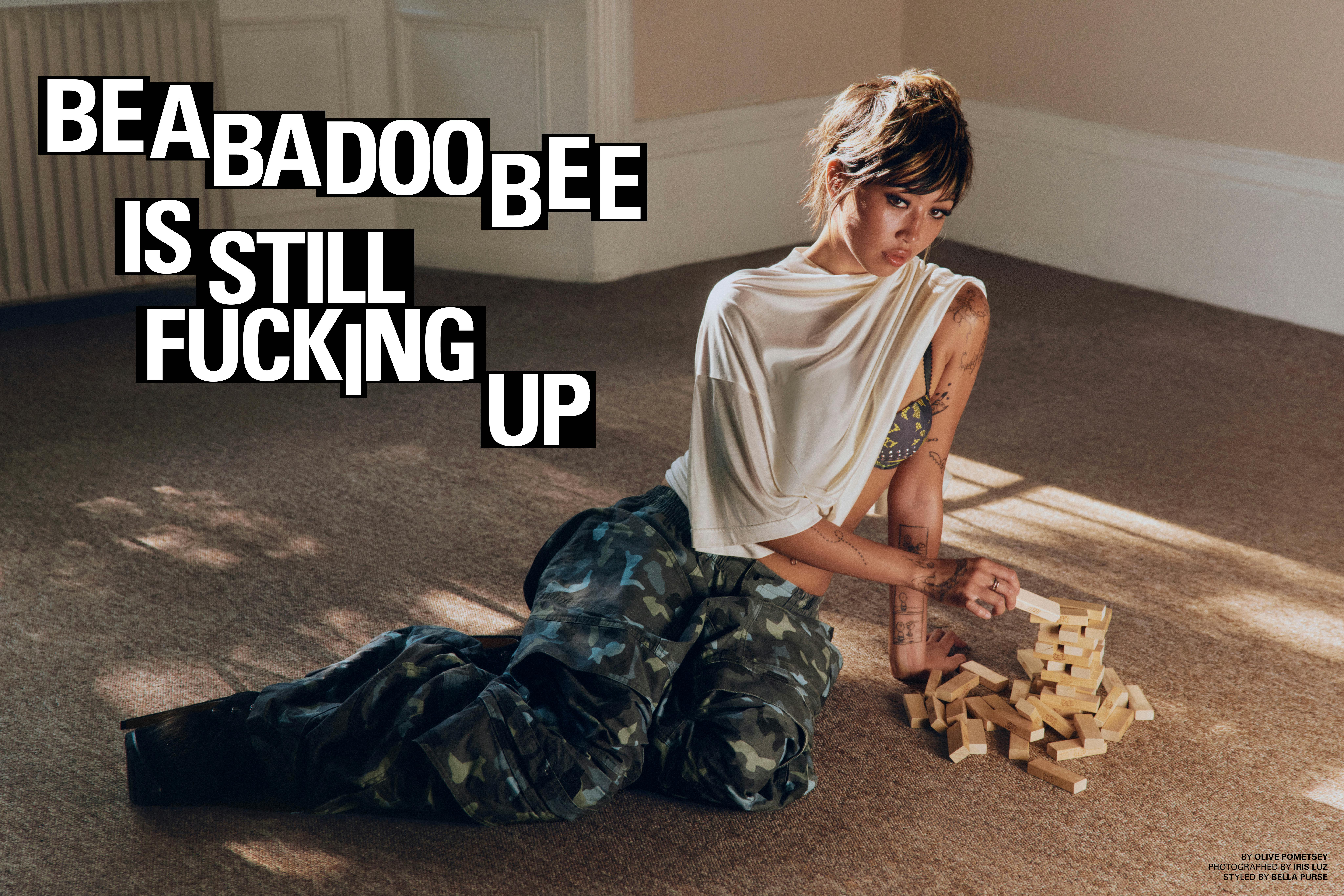
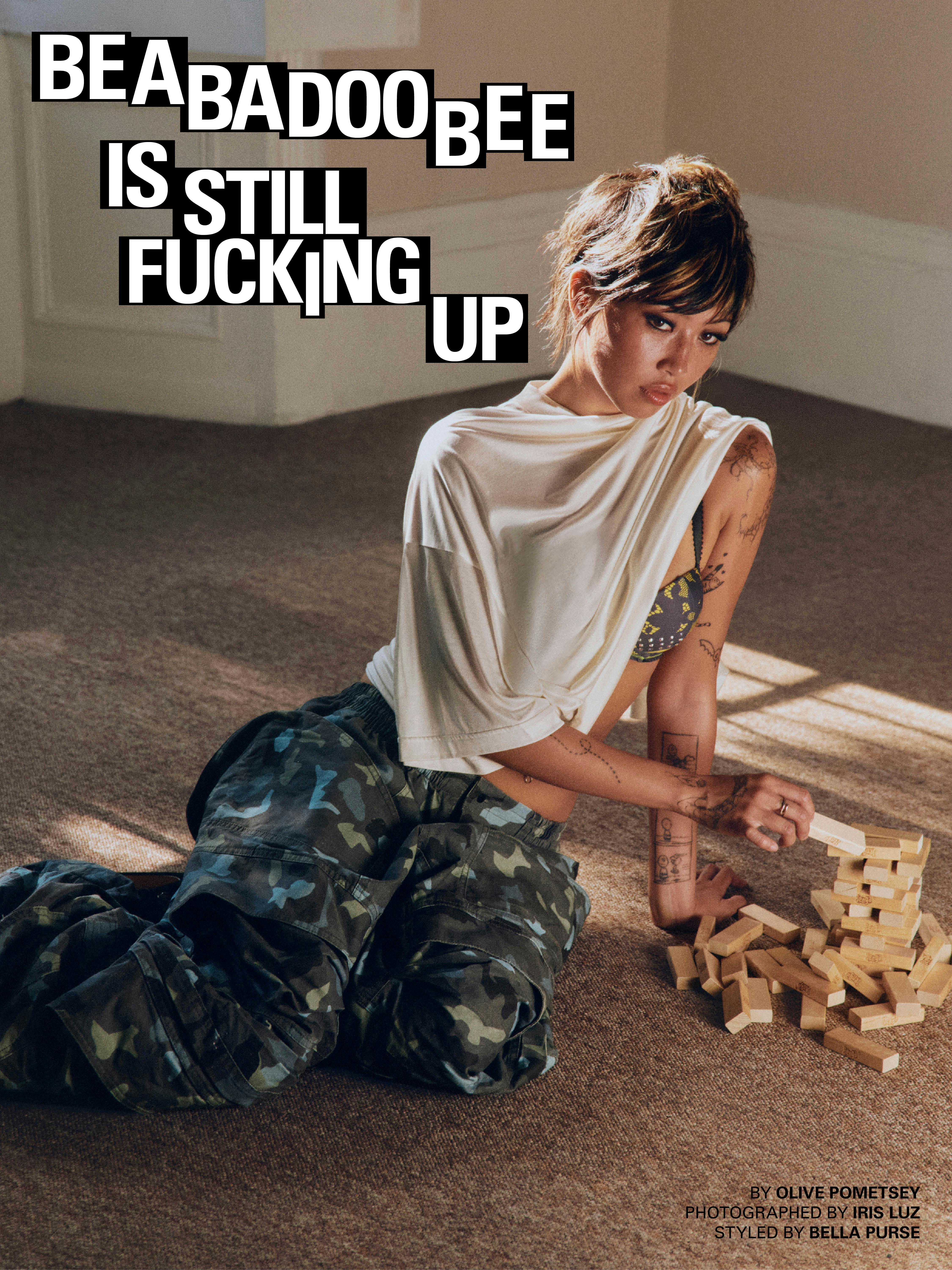
Top GUCCI, bra CHIARA FAIRFAX, pants NATASHA ZINKO, ring CARTIER, shoes VINTAGE from TRIPTYC
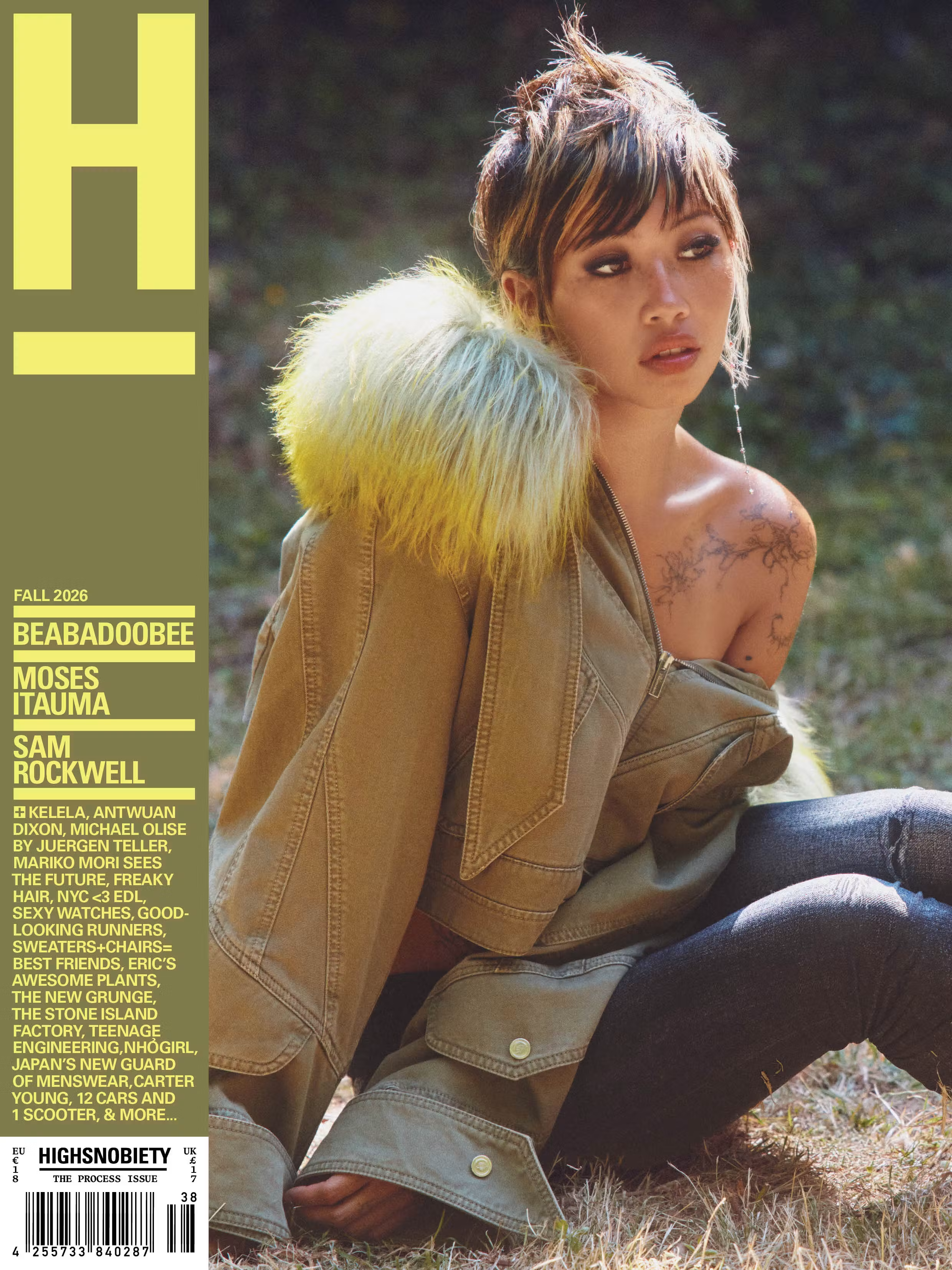
This story appears on the cover of the fall 2026 issue of Highsnobiety. Head here to get a copy.
At a certain point in 2023, as she was wrapping up work on her third album, This Is How Tomorrow Moves, Beatrice Kristi Ilejay Laus, better known as beabadoobee, thought she had it all figured out.
Until that moment, the artist had built a career chronicling the disorienting experience of growing up, offering solace to fans who were just as confused as she was. But, at the ripe age of 23, she figured she’d arrived. Life was good. She wrote the song “Beaches” on which she sings the refrain “I’m sure now, I’m sure” — a full stop on the turmoil of her youth.
“I was like, ‘I’ve been through everything,’” she tells me. She said as much to Def Jam co-founder Rick Rubin in his storied Shangri-La studio as they wound down production. “I said, ‘What am I gonna do, Rick? What am I gonna write about?’” Laus bursts out laughing. “He was like, ‘Dude, shut up.’”
In 2024, This Is How Tomorrow Moves became Laus’ first number-one album in the United Kingdom, and she spent the next year playing sold-out shows around the UK, Europe, and North America. Unlike earlier tours when, by her own admission, she “was a fucking wreckhead,” Laus did the whole thing sober save a bedtime spliff or two. Gone were the days of being dragged onstage by her bandmates or turning a pre-planned kiss with her bassist during “She Plays Bass” into a full-on makeout session. By comparison, this tour felt unusually calm and peaceful. There was so much time to think.

Too much time, even. “It brought light to everything that I’d been shoving away: my relationship, my struggle with change,” she says. “I was like, wait, being in your twenties is fucking bullshit and all I do is fuck up.”
There was, it turned out, more turmoil to come. The crashout was a slow roll. There was no specific trigger. It was just, well, life. She lost new friends and missed her old ones — and her boyfriend and cats. She felt suddenly confused by the direction of her career, which had swerved toward indie pop over her punkier instincts. And she hated her hair. “You know, it’s the simple shit like that. Just a classic quarter-life crisis.”
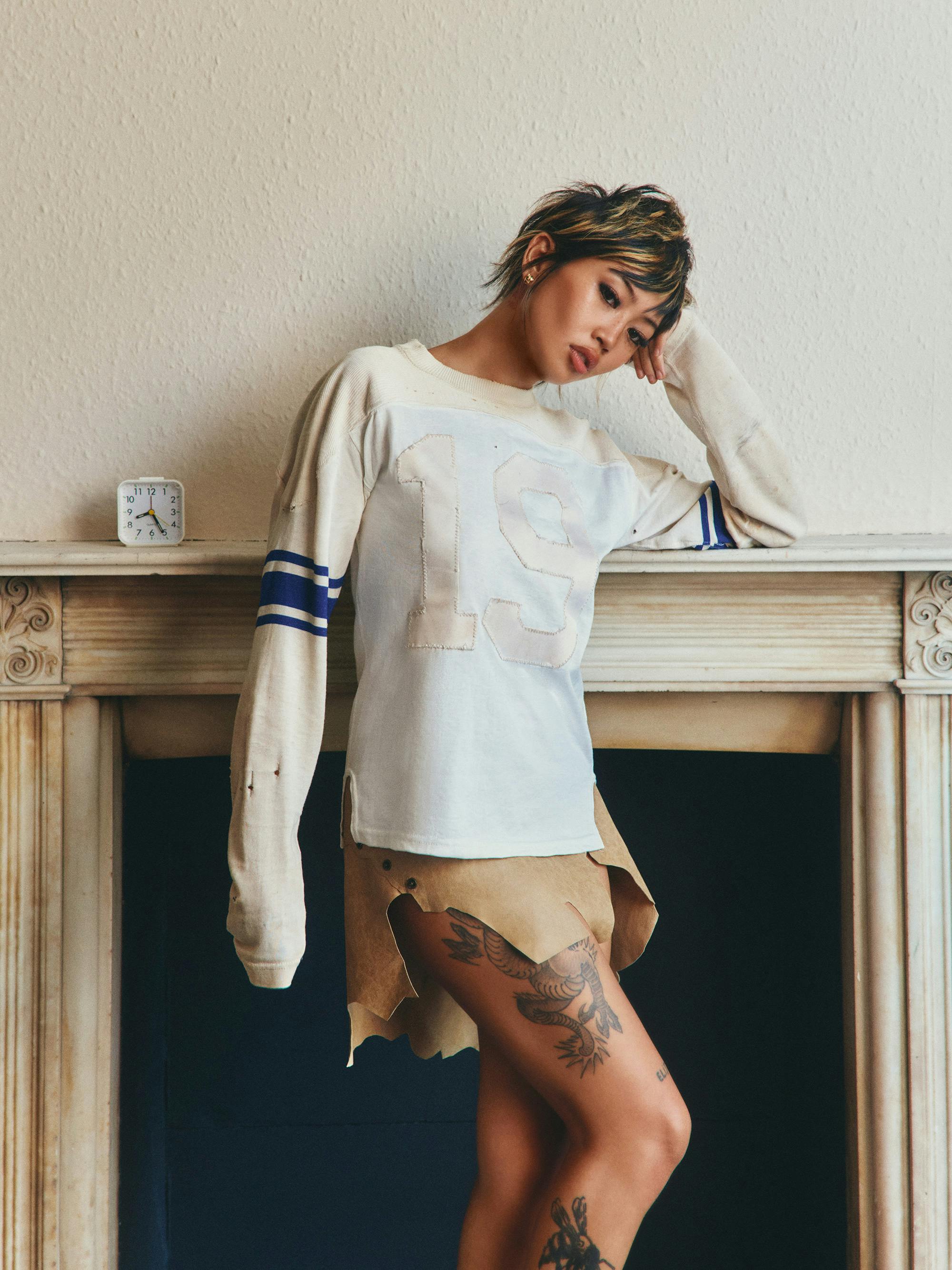
Top COACH Skirt RHODORA, earrings CARTIER, socks COACH
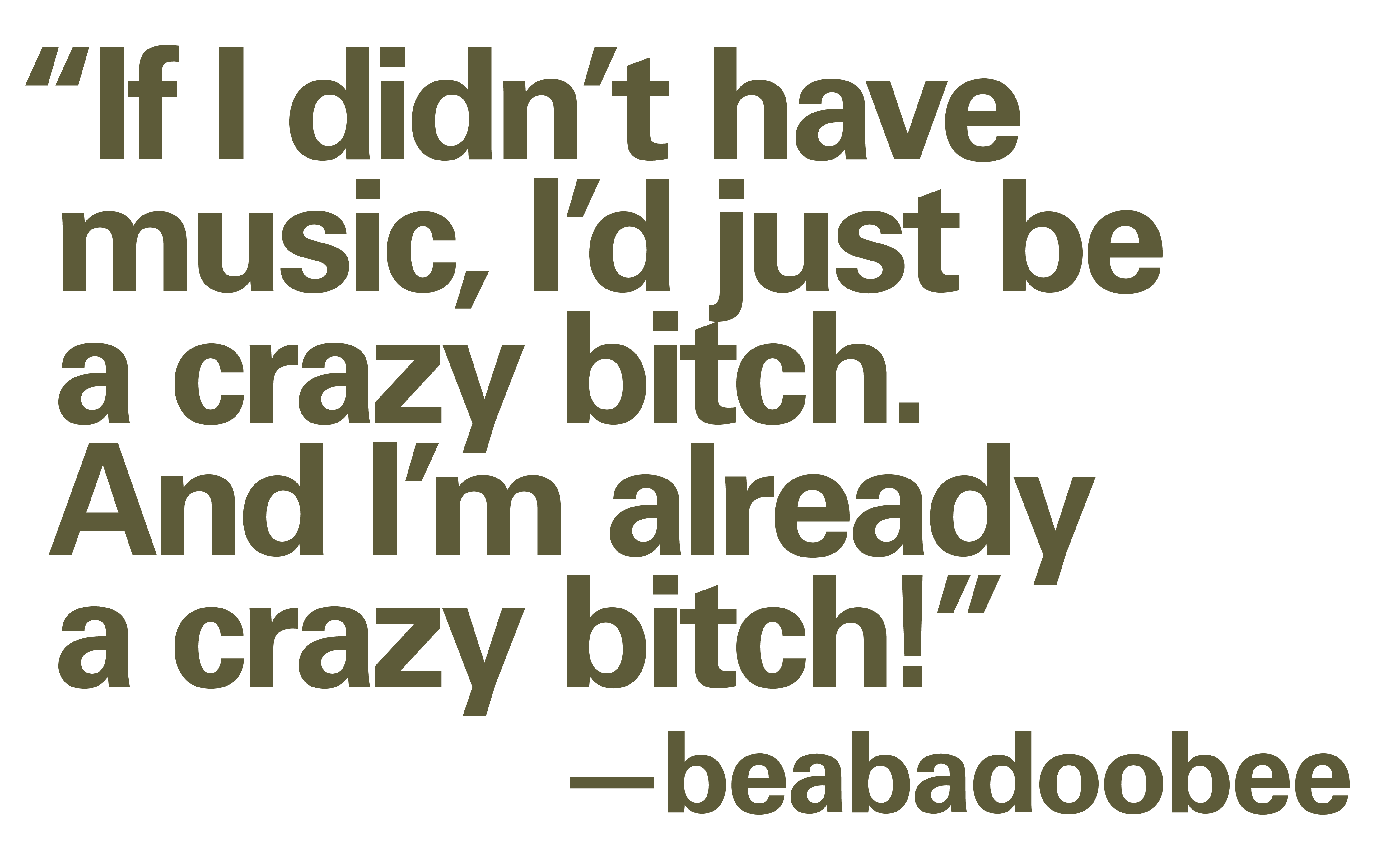
It felt bad at the time, but right now, Laus seems pretty amused by her own naivety. Sitting outside a fish-and-chip shop on Broadway Market in East London, the now 26-year-old picks through her go-to order of a battered sausage and chips and roasts herself with a smile. Her choppy mullet is pulled into two pigtails, her pink iPhone with wired headphones sits screen-down on the table, and her tattoos peek out from a vintage tee emblazoned with “AWOL.” Until this exact moment, she had no idea what the acronym meant. (“Wow, that’s cool,” she says, upon learning its colloquial use to describe someone disappearing. “B5?” she suggests, hinting at her fifth album title.) Clearly, Laus is done pretending she has all the answers. “I’m still an insane, confused, indecisive motherfucker,” she says, extolling the virtues of her bandmates, who have become a vital support system. “If I didn’t have music, I’d just be a crazy bitch. And I’m already a crazy bitch!” she exclaims, taking another bite of sausage.
The only thing Laus seems to have figured out right now is that she’ll probably always be figuring things out. “I’m still fucking up.” She shrugs. “I’m just gonna have to fucking embrace it.”

At least Laus’ meltdowns are productive. This September, she’ll release her highly anticipated fourth album, Pylon, a record that returns to the alt sounds of her youth and bottles the anguish she’s felt over the past two years. Her fans are giddy with excitement: “Rockbadoobee, we are so back,” wrote one under a tease of lead single “Sun Has Set” on TikTok. A month after its June release, the track has been streamed more than 7 million times on Spotify.
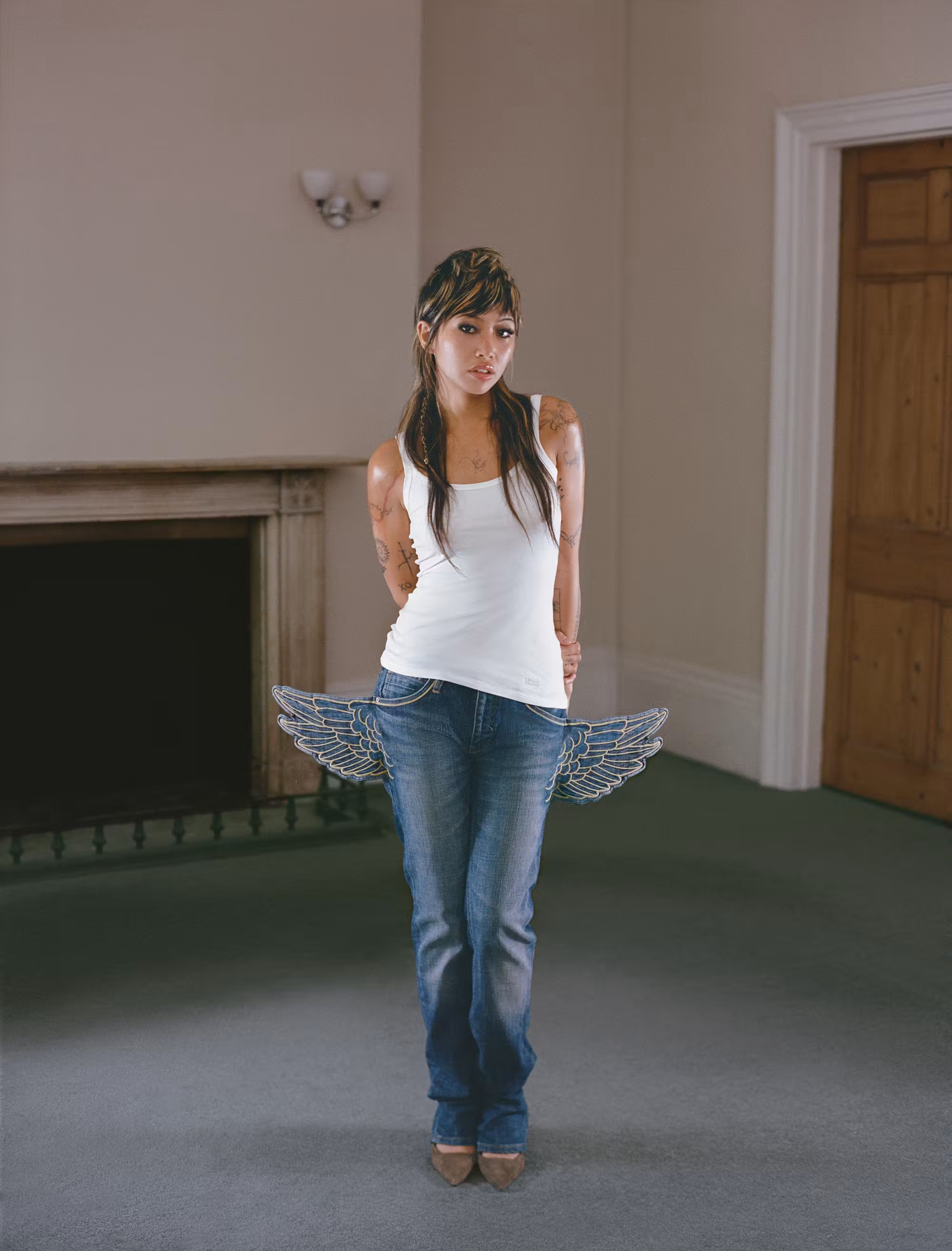
Top INTIMISSIMI, pants JEREMY SCOTT ADIDAS from 6IX ARCHIVE, shoes JUDE THE BRAND
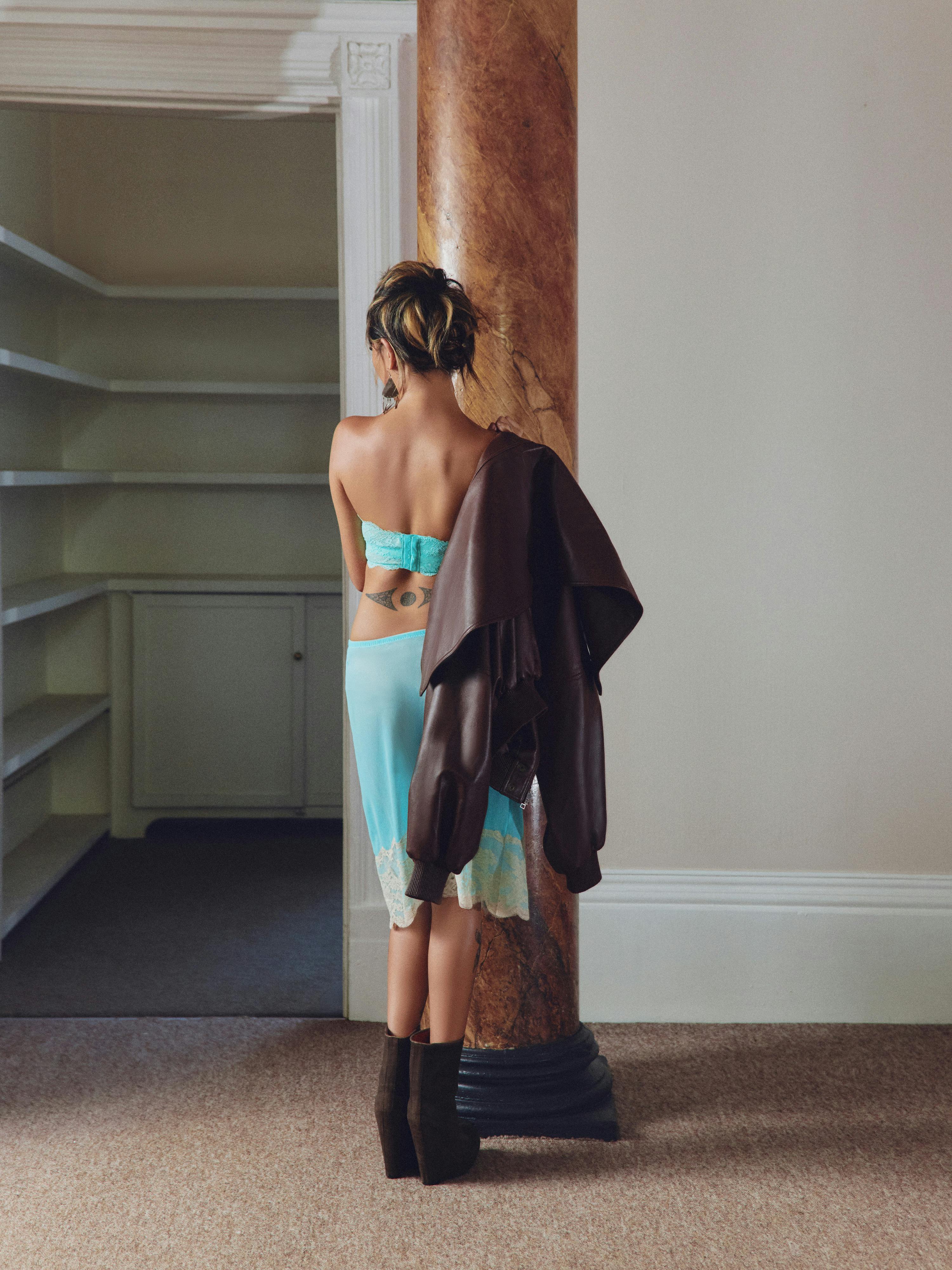
Jacket BALENCIAGA Bra DORA LARSEN, skirt VINTAGE via THE ARC, earrings VINTAGE from 161ARCHIVE, shoes RICK OWENS via WITT STORE
A furious rant against personal betrayal, the single was just a snippet of the anger that shapes the rest of the record, which Laus describes as “triggered, confused, indecisive, and petty.” Maybe, after years of trying to optimize themselves out of despair, that’s exactly what a generation born into perpetual crisis needs. Everything is not fine, so why pretend it is?
Laus’ newfound sense of self-acceptance is something of a triumph. She spent the majority of her childhood and early adulthood in therapy, attempting to heal the wounds of a complicated upbringing. Born in 2000 in Iloilo City, Philippines, she moved to London with her parents when she was three. She faced hardships there familiar to many immigrant kids: struggling to learn English, feeling ostracized, watching her parents start all over again. In elementary school, she coped by retreating into a fantasy world, “Beatopia,” which inspired her second album of the same name in 2022. As a teenager, she partied and flunked out of school. She was in therapy throughout it all, but nothing seemed to help until her dad bought her a secondhand guitar. Seventeen, and with nothing else to do, Laus started writing songs. “I’ve had a lot of experiences in my life where I felt like I had to hide my emotions,” she says. “That’s why I wrote music: Because when I got kicked out of school, I couldn’t really talk to anyone about it.”
She was planning on becoming a nursery school teacher — a dream she’d still like to pursue one day. But when her first song, “Coffee,” took off on YouTube less than a year after she first picked up a guitar, the universe spun her in a different direction. By 18, Laus was signed to Dirty Hit with The 1975 as labelmates. In the years that followed, she missed out on typical young adult stuff (college, house parties, random hook-ups) to do typical ascendant rock star stuff: playing Coachella, Glastonbury, and Lollapalooza; opening for Taylor Swift on the US run of her “Eras” tour; headlining six of her own tours in as many years. “When you go on tour, you kind of stay the same age. So for ages, I still felt like a fucking 17-year-old,” Laus says.
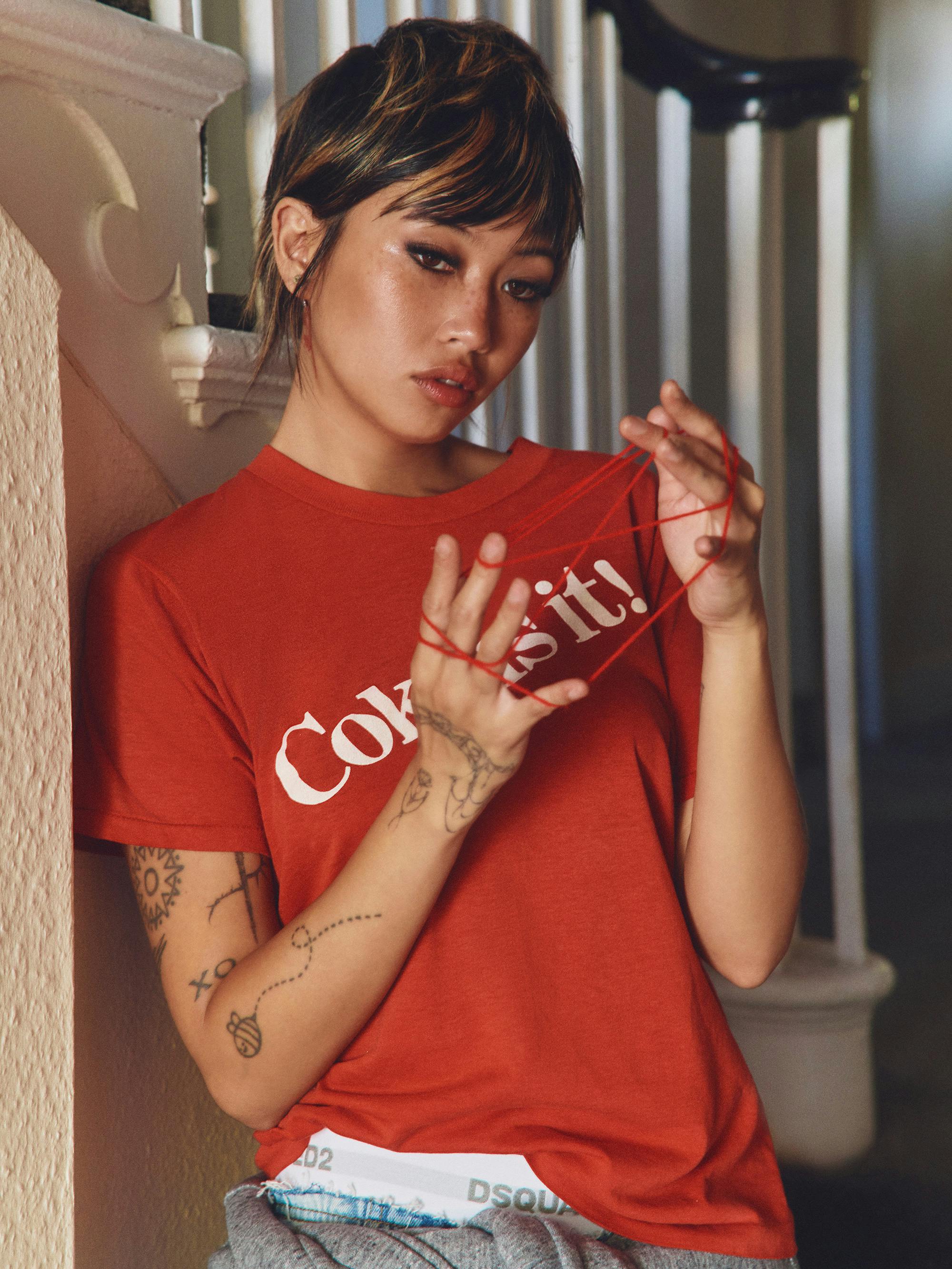
Top VINTAGE via THE ARC, hoodie and shorts DSQUARED2, earrings STYLIST’S OWN, shoes TRIPTYC
Most people wish their day-to-day life was more like that of a celebrity. But Laus, who’s had the same set of friends since she was 11, experienced the opposite problem. “I get the maddest FOMO when [my friends are] like, ‘I went to this party, I got with this guy…’ I’ve just lived a completely different life,” she says. “I have such normal friends, and I love that. But that’s what I was comparing my life to.”
Laus has worked to bring that sense of normalcy into her life. Her childhood best friend joined her on her last tour, and instead of partying and scrolling, they wrote essays. “We would give each other topics; I gave her one about witches in the 1800s,” Laus says. Her own papers covered everything from weed to Midwestern emo. The image she became most fixated on, though, was that of the endless rows of pylons lining her tour bus route. “They’re these fucking gross, big things that are also weirdly beautiful,” she says. “You see them in very isolated places. It’s ironic because they hold this weight of communication: power lines connecting cities to one another. It made me feel like I wasn’t too far from home.” Laus penned two essays about them. And then she wrote an album.
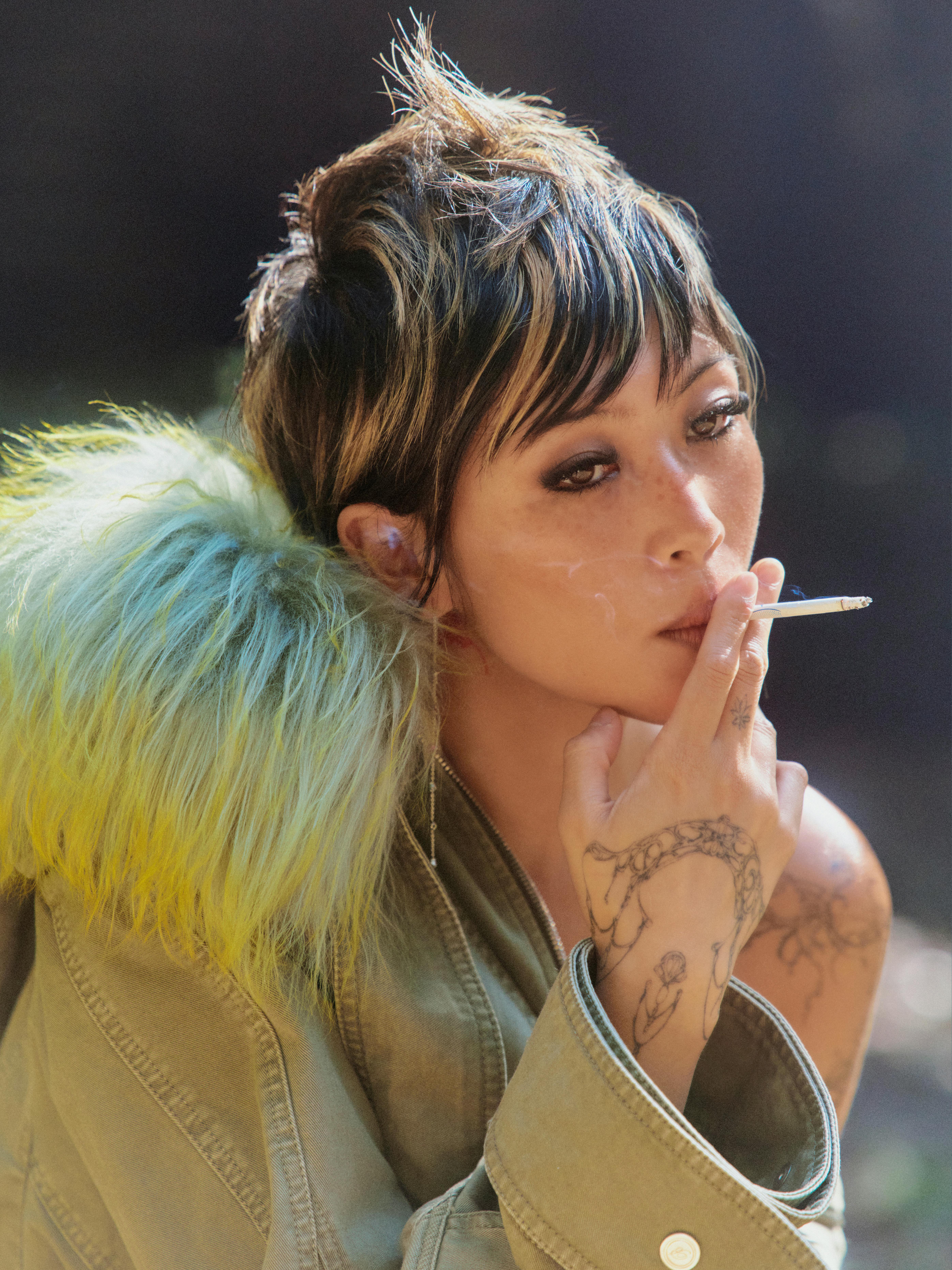
Pylon opens with a formula that’s familiar to casual beabadoobee listeners: an acoustic guitar, romantic lyrics, vocals soft and sweet enough to sound like a lullaby. The opening and titular track has the essence of “Glue Song,” Laus’ rock-a-bye ballad that charmed its way to virality in 2023. But two minutes in, the daydream tears into scuzzy guitars. By the next track, the lead single “Sun Has Set,” she’s in full rage mode: a proper pop-punk spiral about betrayal. She won’t get into specifics — “I would like to think that people have their own interpretation” — but it’s a theme she returns to on “Nothing To Prove,” which is more explicitly about former friends who, she says, sought to “gain something from my career.” Her day ones had warned her about them. “But I like to see the best in people. It feels like I’ve got ‘mug’ written on my forehead.”
Laus has always been open in her music, singing about heartbreak, body image, and mental health. But on Pylon, the attitude is a little uglier. She’s nervous for it to come out. “I feel embarrassed. This is a side of myself that my boyfriend dislikes, that I dislike, and everyone’s going to hear it,” she says. Her anxiety extends to the high-profile guests on the record, including Hayley Williams, Turnstile’s Brendan Yates, Pinegrove’s Evan Stephens Hall, and Deftones’ Chino Moreno. When the features were first announced, she worried that she might look like a clout chaser. “I don’t want this album to feel like I’ve got, like, the fucking emo Avengers on it,” she says. At one point, she even struggled to accept that those artists genuinely wanted to collaborate with her. “Sometimes it’s really hard to believe that people like them would want to work with me. So I would find every reason for that to not make sense.”
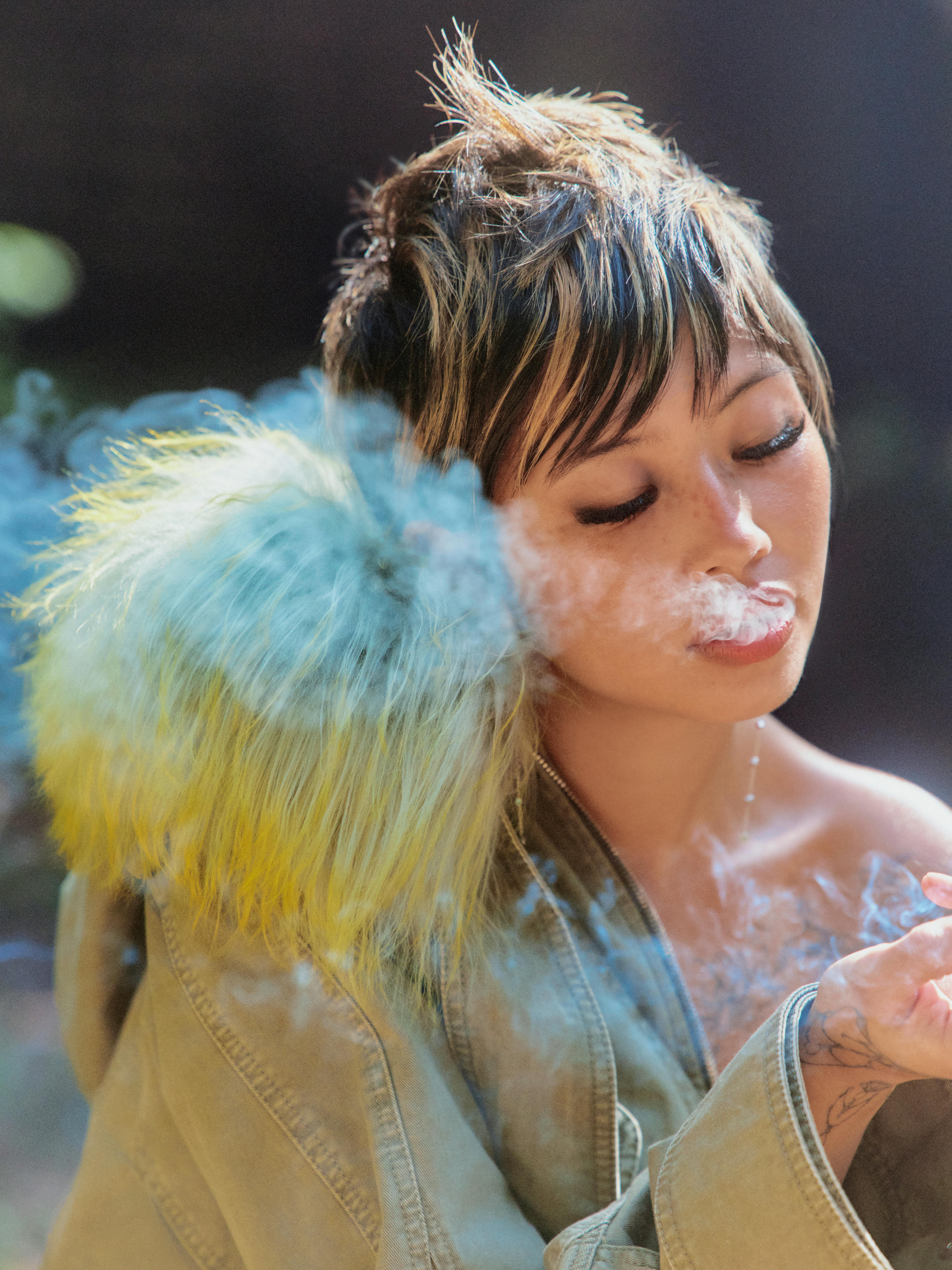
Jacket BLUMARINE, pants TRASHY CLOTHING, earrings KIKO KOSTADINO, shoes R13
For what it’s worth, Title Fight’s Shane Moran believes Laus is “a real rocker.” He co-wrote and co-produced much of Pylon alongside Luca Buccellati, flying from Pennsylvania to London for trips that got longer and longer. Moran’s time on tour meant he instantly connected to Pylon’s themes of isolation. “I had a vision of that bleak, utter despair and loneliness of being on the road, and that complicated feeling of loving what you do so much but being lost in the sacrifice that sometimes comes with it,” he says.

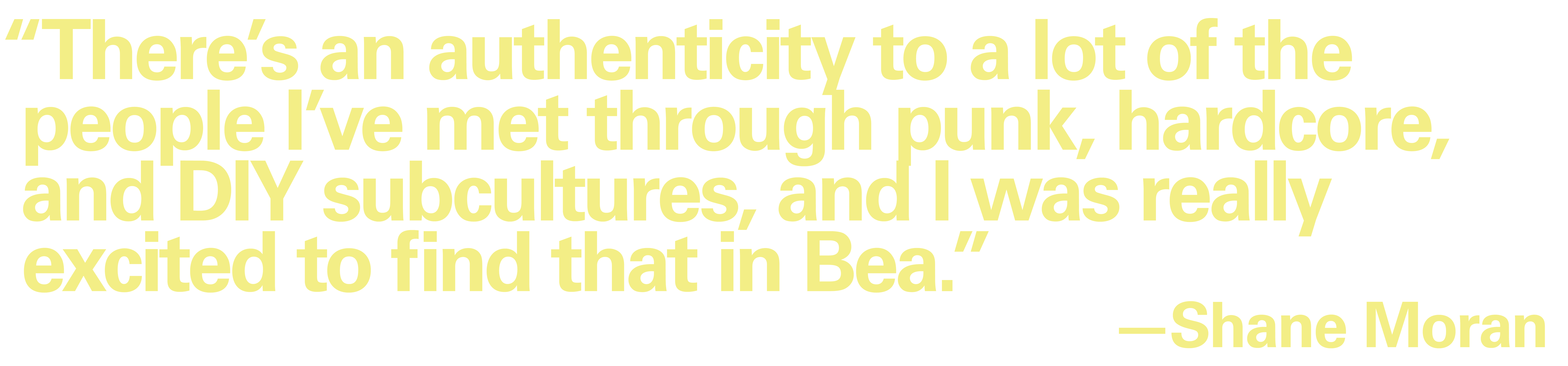
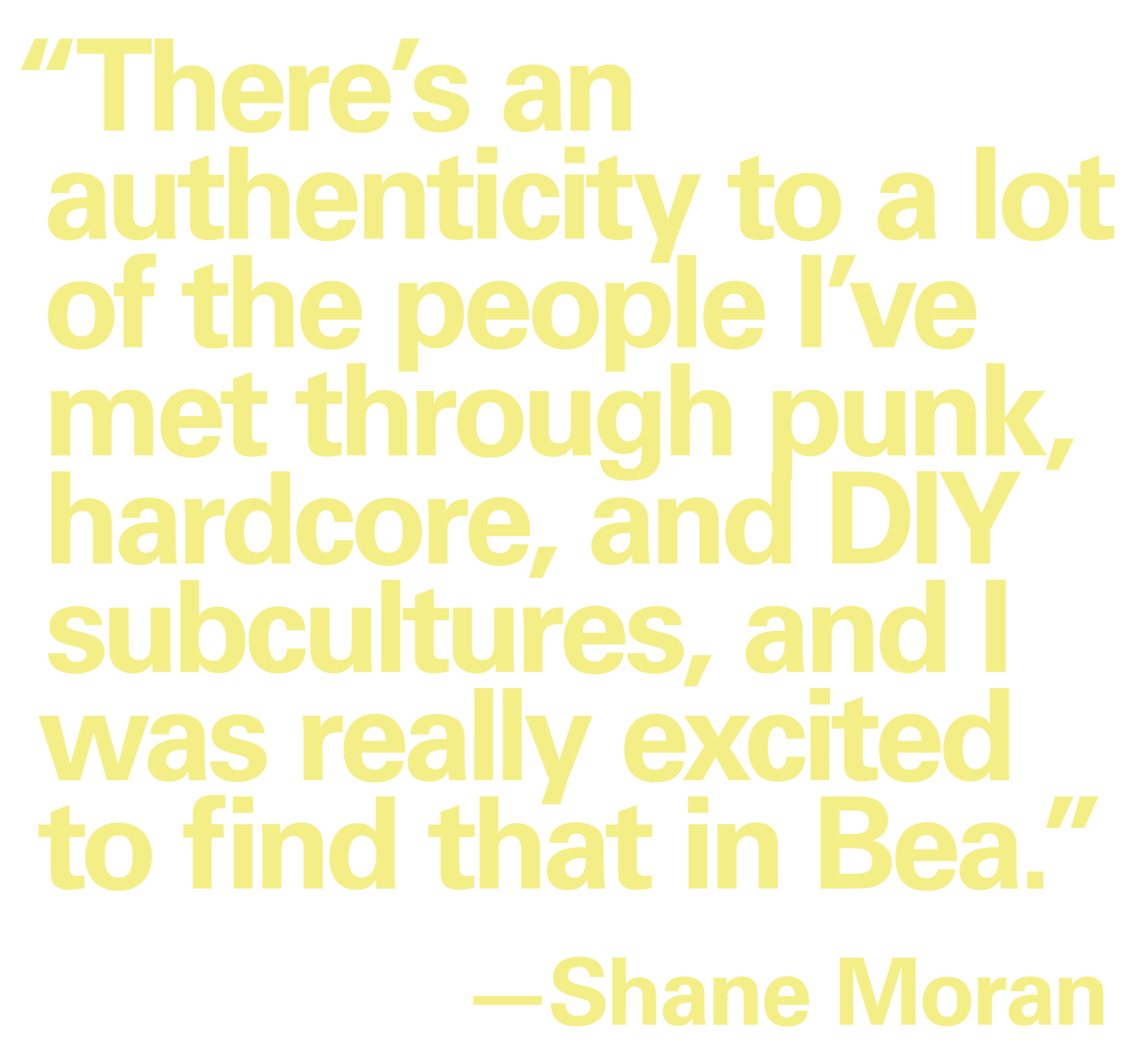
Moran’s time in London let him get to know the person behind Laus’ stage persona. They’d go to the pub after long days in the studio or party with her friends around East London. Once, they went to a spontaneous West Ham football match. “They’re just real, cool people who are making music, creating art, skateboarding, and making movies,” he says. “There’s an authenticity to a lot of the people I’ve met through punk, hardcore, and DIY subcultures, and I was really excited to find that in Bea.”

Collaborating with artists like Moran has been particularly healing for Laus. These are the bands that helped her process emotions when she was younger, alongside Mineral, Texas 3000, Everyone Asked About You, and Sunny Day Real Estate. “When the lyrics are emotional and you have guitars and instruments that make you feel like your heart is being torn through your chest, that’s fucking epic,” says Laus, miming ripping her heart out. “There are some Mineral songs where I’m like, ugh, my god! It feels like I’m taking a dump or something. I’m in pain!”
The same amount of thought went into the artwork for Pylon, a lovingly assembled patchwork of reference images, pages from Laus’ notebooks, and items dug out from the bottom of her bag: a chain, a padlock, and a butterfly trinket, for example. Early on, Laus put together a moodboard for the album on a giant corkboard in her kitchen. “I don’t think she realized how much of a goldmine it was,” says Samuel Burgess-Johnson, a creative director who also worked on Laus’ previous albums. “She was a bit sheepish and didn’t really want to show me, but it was the main source for everything.”
Together, they created a collage out of many of the items on the moodboard, alongside ephemera from a local vintage shop, making it “crazier and crazier,” then dialing it back down. The finishing touch: red thread, sewn across the paper to keep the fragments of Laus’ life intact, just like the pylons that kept her grounded on the road.
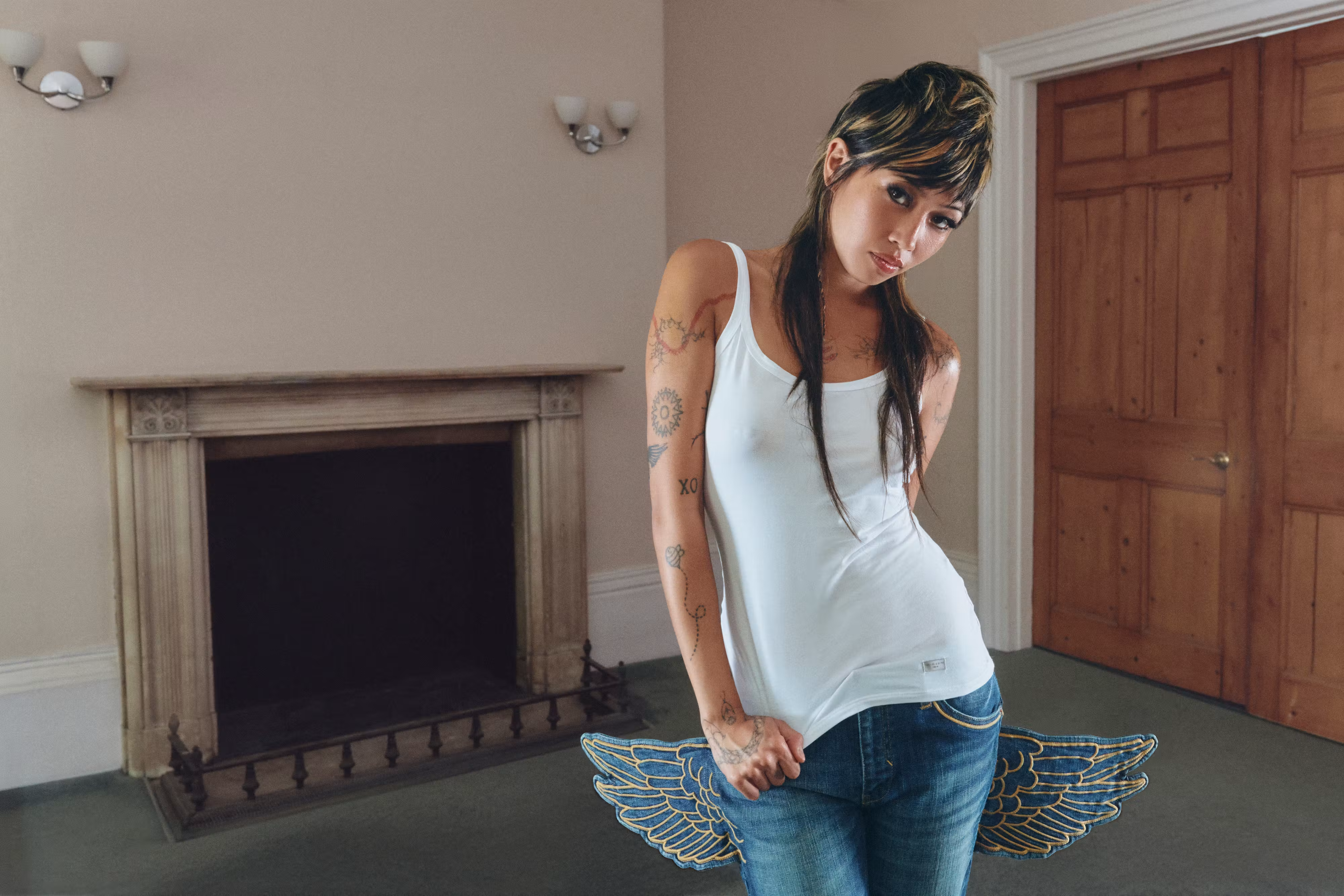
Top INTIMISSIMI, pants JEREMY SCOTT ADIDAS from 6IX ARCHIVE, shoes JUDE THE BRAND
To turn it into an album cover, the collage was scanned into a digital file, but it still exists in its original form, framed as a keepsake. “It’s a real piece of art rather than [existing] in the cloud somewhere,” Burgess-Johnson says. More than that, it’s a time capsule of Laus during a transformative period — “an abstraction of her personality,” as Burgess-Johnson puts it. “Everything is quite chaotic and held together, but it could all fall apart.”
Laus might not feel as assured as she did around the release of This Is How Tomorrow Moves. But she does feel more like herself. “I saw a comment the other day that was like, ‘“Sun Has Set” is so good, but what happened to her?’ I replied with: ‘I cut my hair, and I stopped giving a fuck.’”
The irony is that, after Laus’ many attempts to grow up, her teenage self was more in tune with her identity all along. “I feel like I had known myself so much more at 19 with blue hair,” she says. “I’m the closest now to who I was then. I’m dressing the same, my hair’s just as crazy.” She ditched the long black waves of past eras for a choppy mullet with chunky blonde highlights. Her wardrobe is a collection of vintage tees, baggy jeans and shorts, and pirate boots — some new pieces, but also old favorites that she dug out for a mid-twenties re-up.
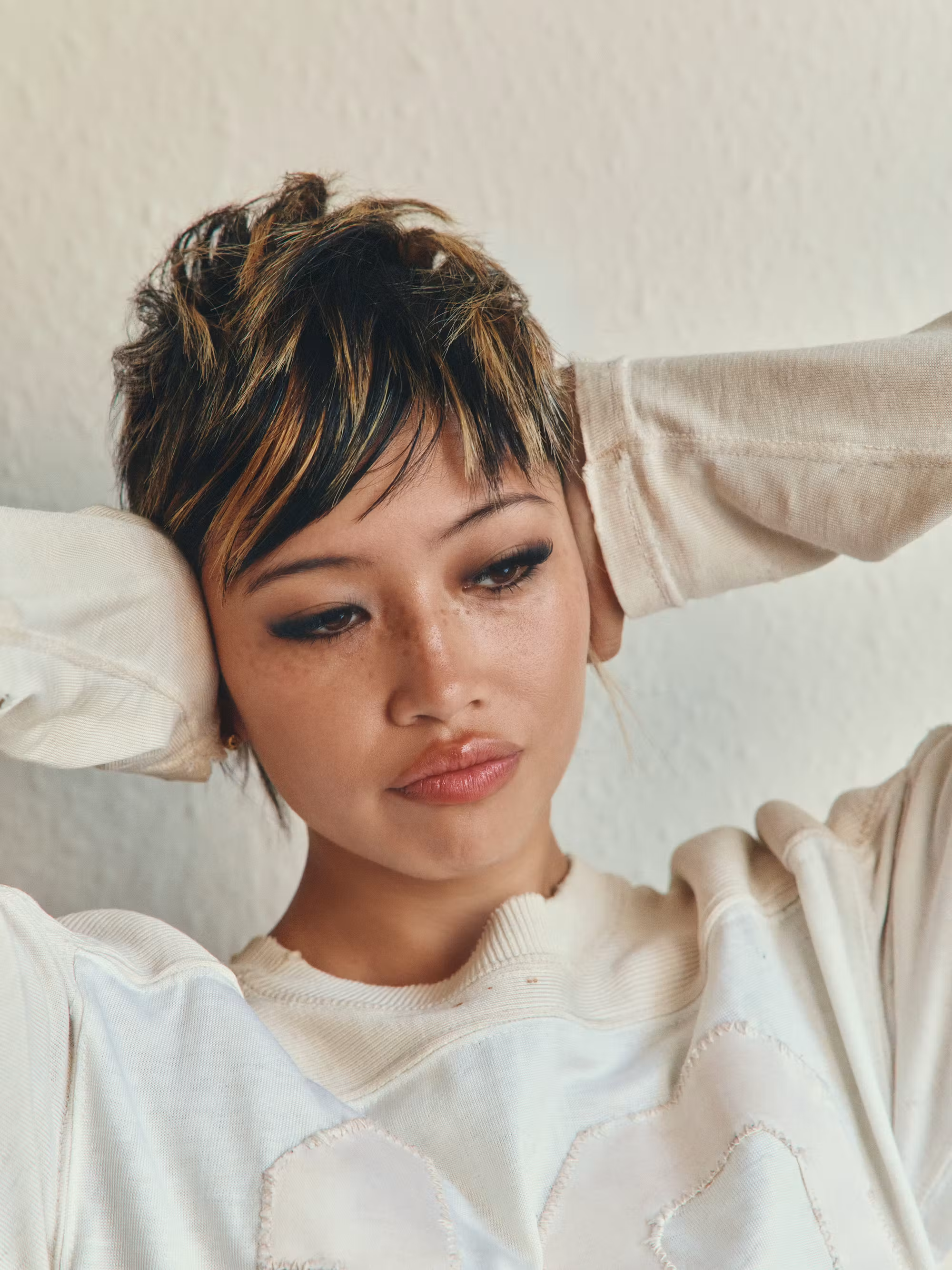
Top COACH Skirt RHODORA, earrings CARTIER
This fall, Laus will go back on the road for her first headline arena tour, playing venues including Madison Square Garden in New York City, Kia Forum in Los Angeles, and The O2 in London. “I think it will be like the only and last tour that I’ll play venues of that size,” she says. Laus doesn’t want to be an A-list pop star. She just wants to be able to tell her kids that she once played to stadiums full of people who bought tickets specifically to see her.
“I’m always going to make music, whether that’s albums or with a class of kids I teach,” Laus says. But what she really craves is a normal life. She treasures the fact that she can anonymously walk to the canal at 2 a.m. to smoke weed, or get “mashed up” on the weekend without being recognized. On the odd occasion that she is approached by a fan at the pub, they usually ask for a photo or buy her a shot. Fame, for now, is manageable. As for her mid-twenties crisis? She’s stopped searching for definitive answers. “As much as it’s tough,” she says, “I’m kind of enjoying the ride.”
Credits
By: Olive Pometsey
Makeup: Natasha Sultana
Photographed by: Iris Luz
Styled by: Bella Purse
Producer: Phoebe Asker
Hair: Tomi Roppongi at Julian Watson Agency Soares