
Need A Suit?
Ask Carter Young
By John Sunyer
Photographed by Jono White
“If I’m put anywhere in the world, my perspective on it will be an American perspective,” says Carter Altman. “That’s what I’ve been steeped in, and that’s how I process information. But we live in a postmodern time; things aren’t geographically bound anymore.”
For Altman, the designer behind Carter Young, Americana is not a matter of flags, zip codes, or fixed cultural borders. It is a way of seeing — one that has traveled from suburban Detroit to New York and now to an East London studio by the canal, where his young menswear label is beginning to develop the confidence and clarity of a much older one.
The clothes are American in their bones but filtered through a London understanding of how garments are lived in: relaxed tailoring, handsome outerwear, trousers that feel considered rather than precious. The result is a wardrobe built around ease, where polish and informality are not opposites.
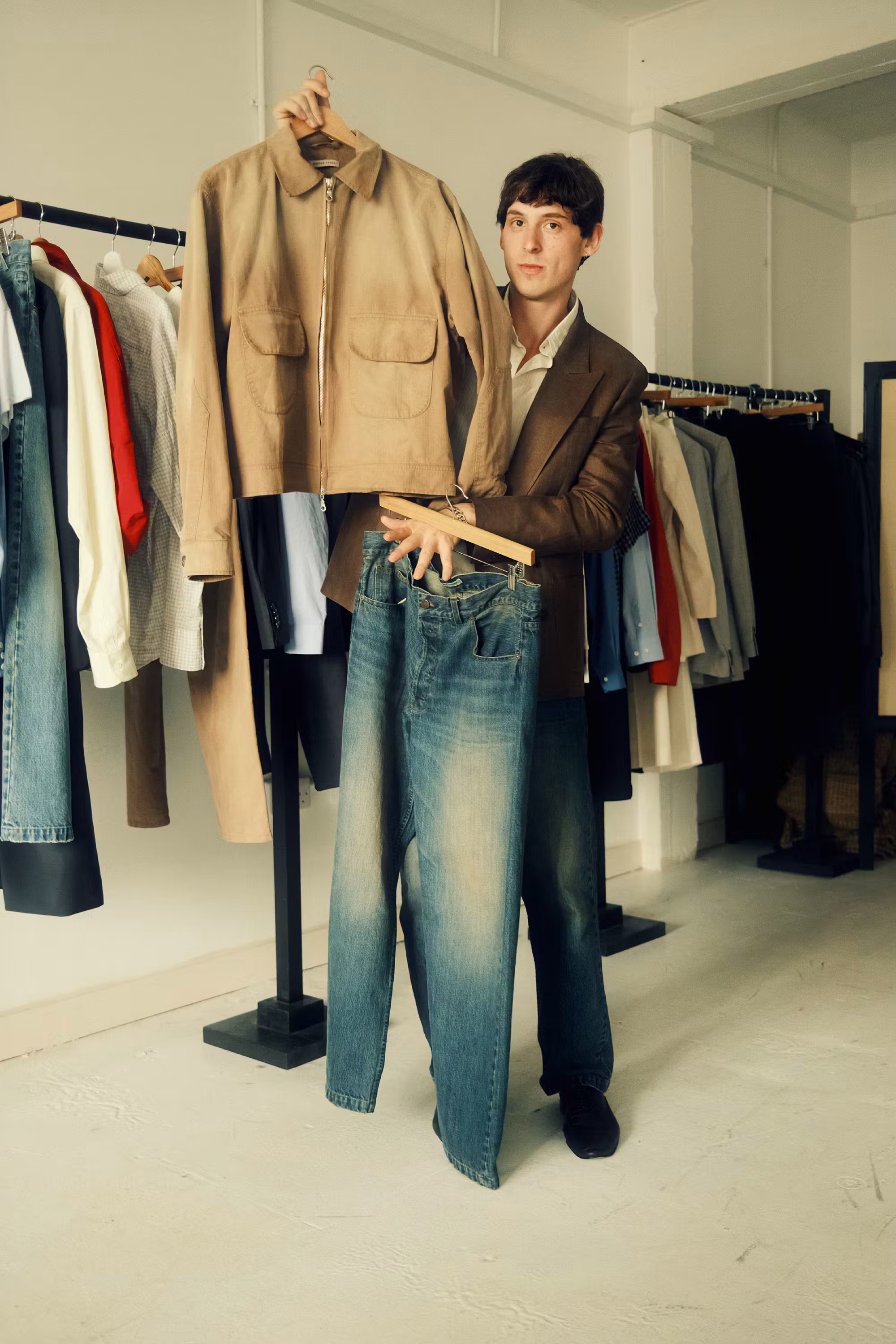
Tailoring remains where the brand’s confidence is most visible. Carter Young has made suits for Paul Mescal, Ethan Hawke, and George Daniel of The 1975, including two suits for Daniel’s wedding to Charli xcx. Mescal’s suit was made in 13 days; Daniel’s involved multiple fittings and iterations. “We’re tailors that make house calls if we need to,” Altman says.
Altman leads the creative side of Carter Young: the references, the design process, the cultural investigation behind each collection. His business partner, Adam Kaplan, handles operations and logistics. Both are in their late 20s around 6’3”, and immaculately dressed, a physical expression of the brand’s point of view: refined but not rigid, youthful but not boyish, confident without feeling overworked.
“We need to put clothes that people want — that people can afford — on the rack.”
Adam Kaplan, Carter Young co-founder
Kaplan’s route into Carter Young was personal as much as professional. He first met Altman through his friend Madison Corr, who is also Altman’s girlfriend, and began modeling for the brand before becoming more involved behind the scenes. Over time, the relationship evolved from representing the clothes to helping build the company itself. “We need to put clothes that people want — that people can afford — on the rack,” Kaplan says. “We need the business to run.”
Despite making London their home, Altman and Kaplan remain proudly American. They love Thanksgiving, football watch parties, and the emotional force of family rituals. When Altman’s family flew to London for Thanksgiving two years ago, the holiday became less something transplanted than something expanded. His relationship with Britain is not one of conversion. It is a fascination that became a life. “I’ve always been an Anglophile,” he explains. “Everything from the Battle of Hastings to Peep Show.”
For Kaplan, moving to London represented a bigger leap than he initially expected. “When Carter first brought [it] up, I was like, ‘Are you sure?’” At the time, the business was growing, but the decision still required a degree of faith. “It wasn’t at the point where it is now, where it was so clear we could drop everything and make it work. But it’s wonderful,” he adds.
London also brought Carter Young closer to the European fashion system. “There’s a reason all of the brands coming out of America that are talked about in a global conversation end up going to Paris Fashion Week,” Altman says. “Generally, they want to be closer to the European fashion capitals.”

Yet Altman’s version of America is not nostalgic or costume-like. He grew up online, in a world where English films, bands, and distant towns could feel as culturally immediate as American references. “Macclesfield might as well have been in Ohio,” he says. Geography mattered, but culture traveled.
That idea of movement has always been present in Altman’s work. He grew up outside of Detroit, skateboarding and spending time at a local skate shop, where he became interested in the complete aesthetic language surrounding the sport. “When someone made a video part, they’re choosing the music, they’re choosing their outfit, and they’re choosing what tricks to do,” he says. “There’s a certain element of style that goes into that.”
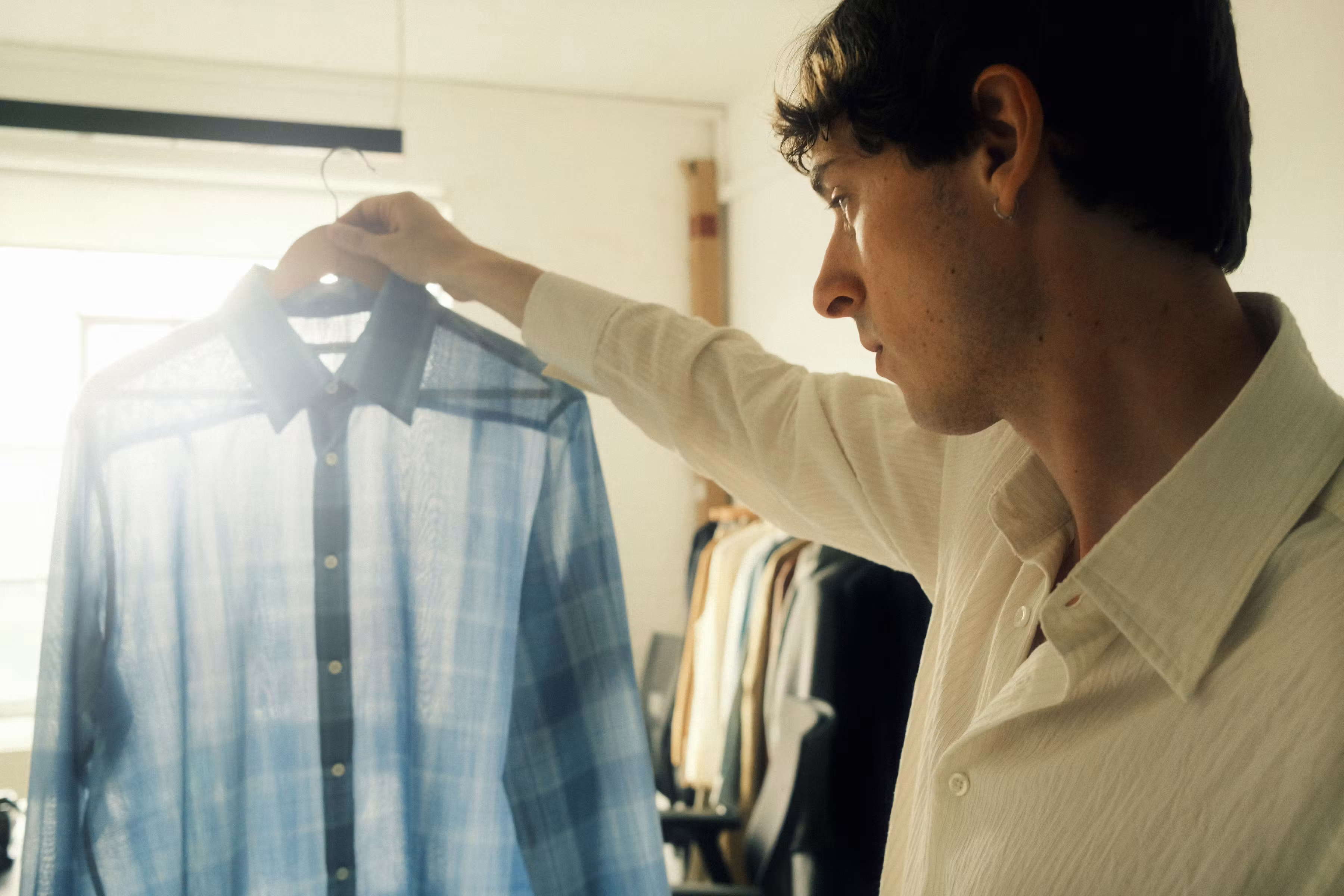

At New York University, Altman built his own major, studying subjects ranging from Dante’s Inferno to psychoanalysis and The Arabian Nights. He did not attend fashion school, partly because the path felt too defined. “I’m from the Midwest,” he says. “I always was interested in design or doing something creative as a career, but I didn’t know how you did it.”
Instead, he learned through experience: internships in bespoke tailoring and fashion, a summer in Italy assisting Matthew M. Williams, and three years in design roles at Urban Outfitters in Philadelphia after an early version of Carter Young was disrupted by the pandemic. “I really understood how you do things at a mass scale,” he says. “I really honed my relationship with working with factories.”

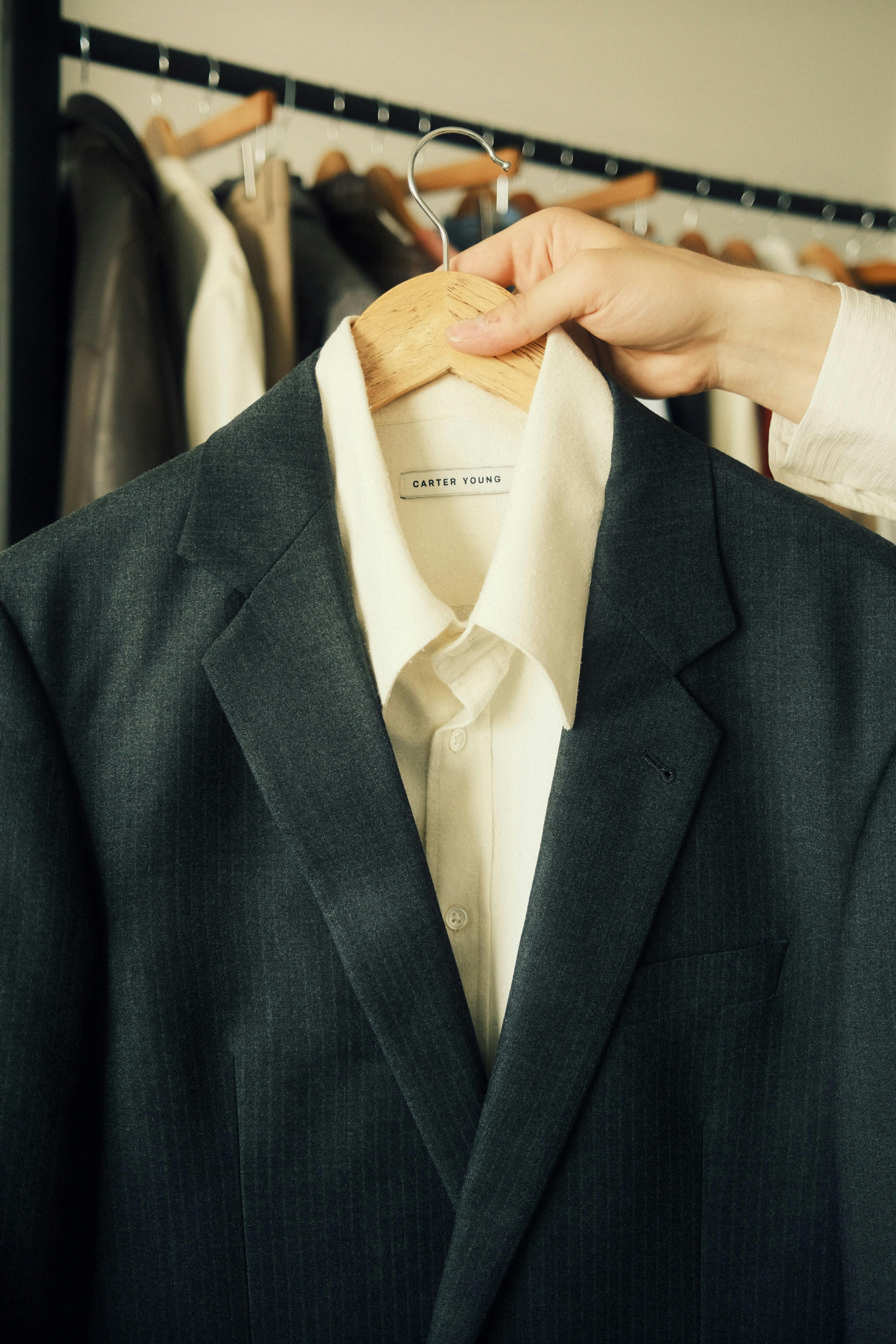
That experience helped transform Carter Young from an aesthetic idea into a functioning business. The relaunch for Spring/Summer 2023 brought a sharper purpose: clothing that could carry the same creative ambition while existing in the real world. “As a small creative business like this, the one thing we have in abundant supply is creativity and a point of view,” Altman says.
“I’m from the Midwest. I always was interested in design or doing something creative as a career, but I didn’t know how you did it.”
Carter Altman, Carter Young co-founder
The difficulty is turning that point of view into something sustainable. “Fashion is firmly a business,” says Kaplan, “but it is a business at the intersection of art and commerce.” Payroll, production, tariffs, distribution, and logistics are not interruptions to the creative process; they are part of making it possible.
Altman’s collections begin with cultural investigation rather than a predetermined silhouette. “I always think that design is more than just designing clothing; it’s engaging with culture,” he says.
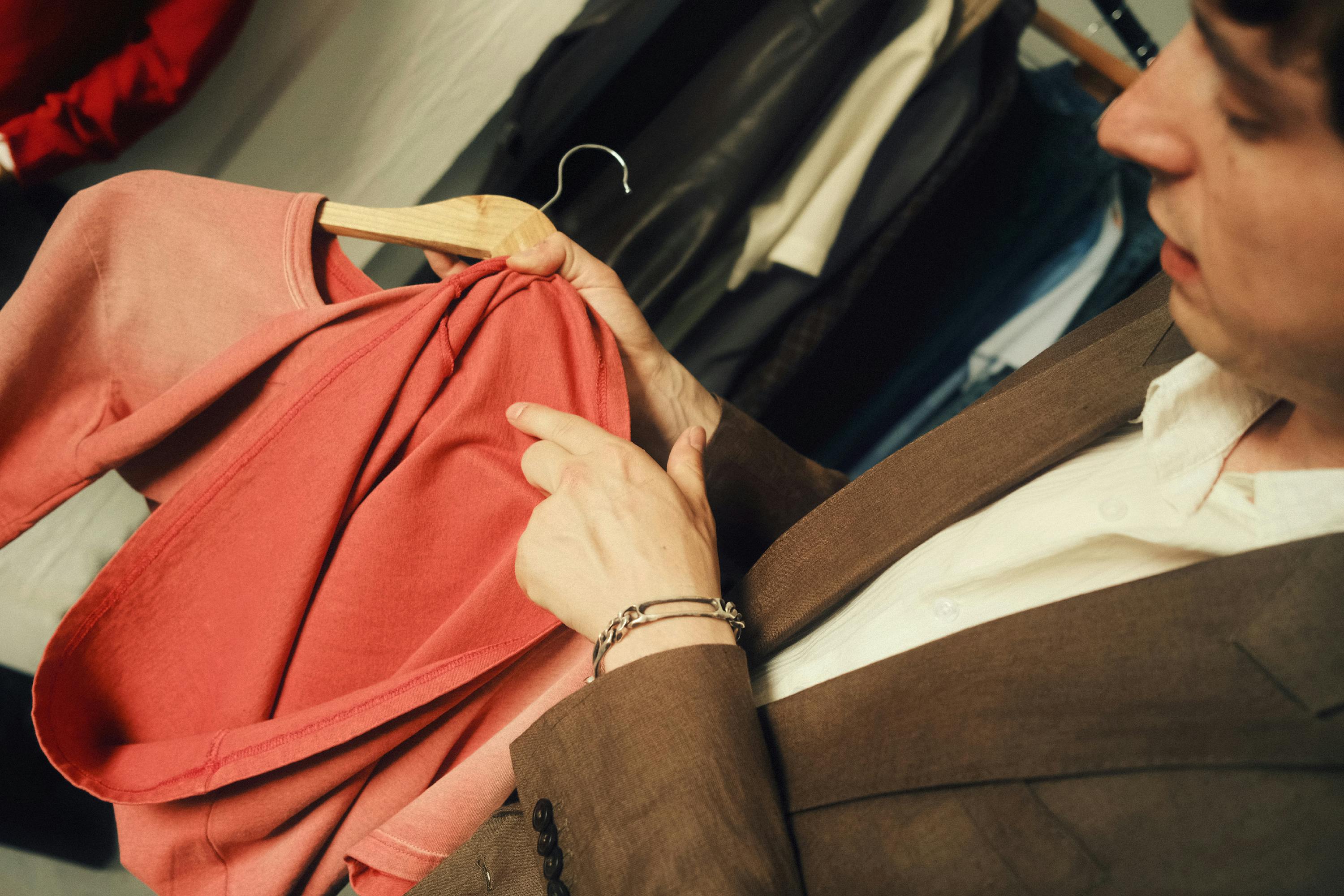

For Spring/Summer 2027, Altman was thinking about the German-American photographer Uta Barth’s book In Between Places. Barth’s work resonated because of her own position between two cultures, and because of the way her photographs shift attention away from the object being captured and toward the act of seeing itself. “I’m often thinking about what’s going on in my life and analyzing what it means to exist in a contemporary society,” Altman says. “I’ll hear music or I’ll see a film or I’ll see an artist, and those things will set me off on a path of exploration and discovery.”
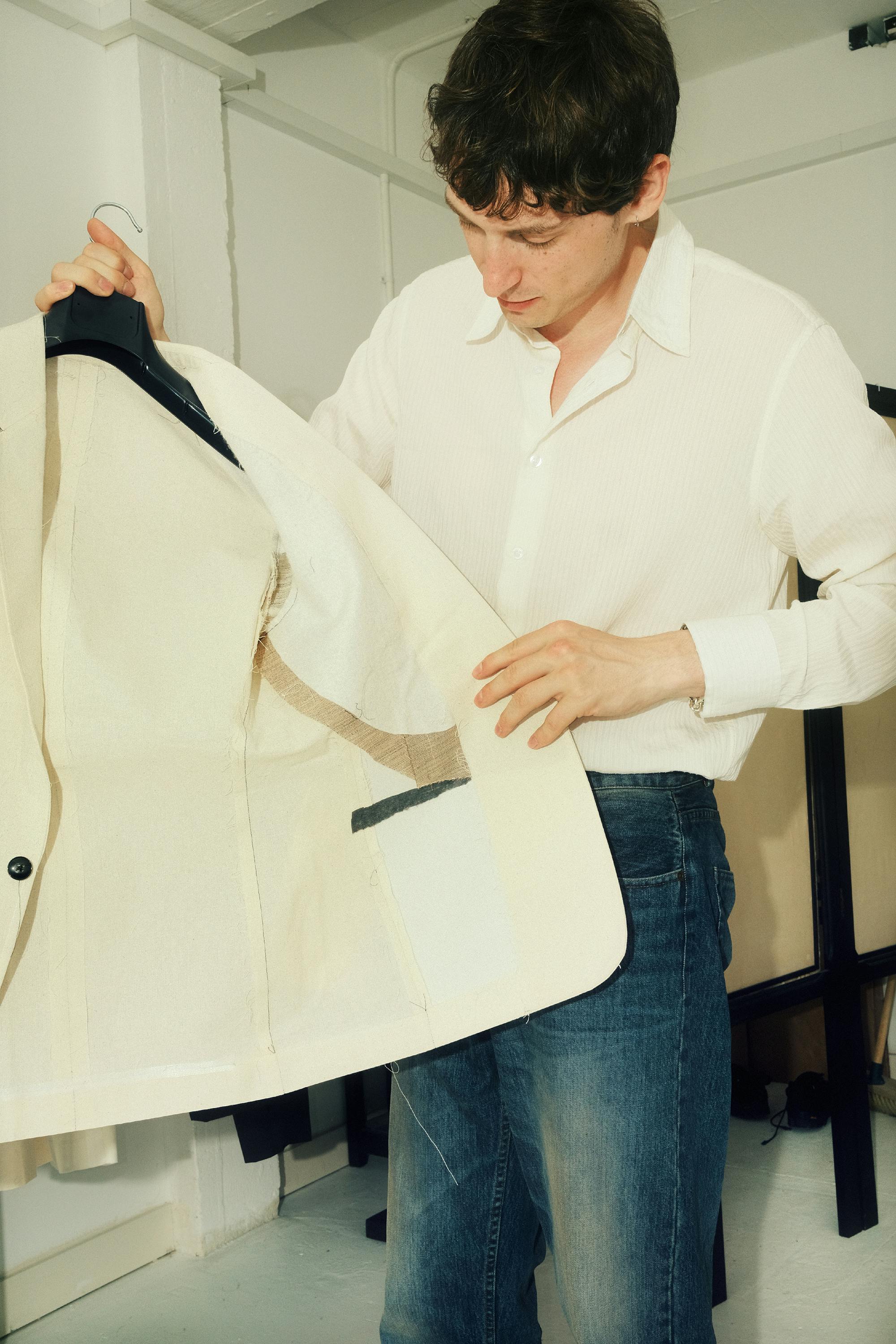
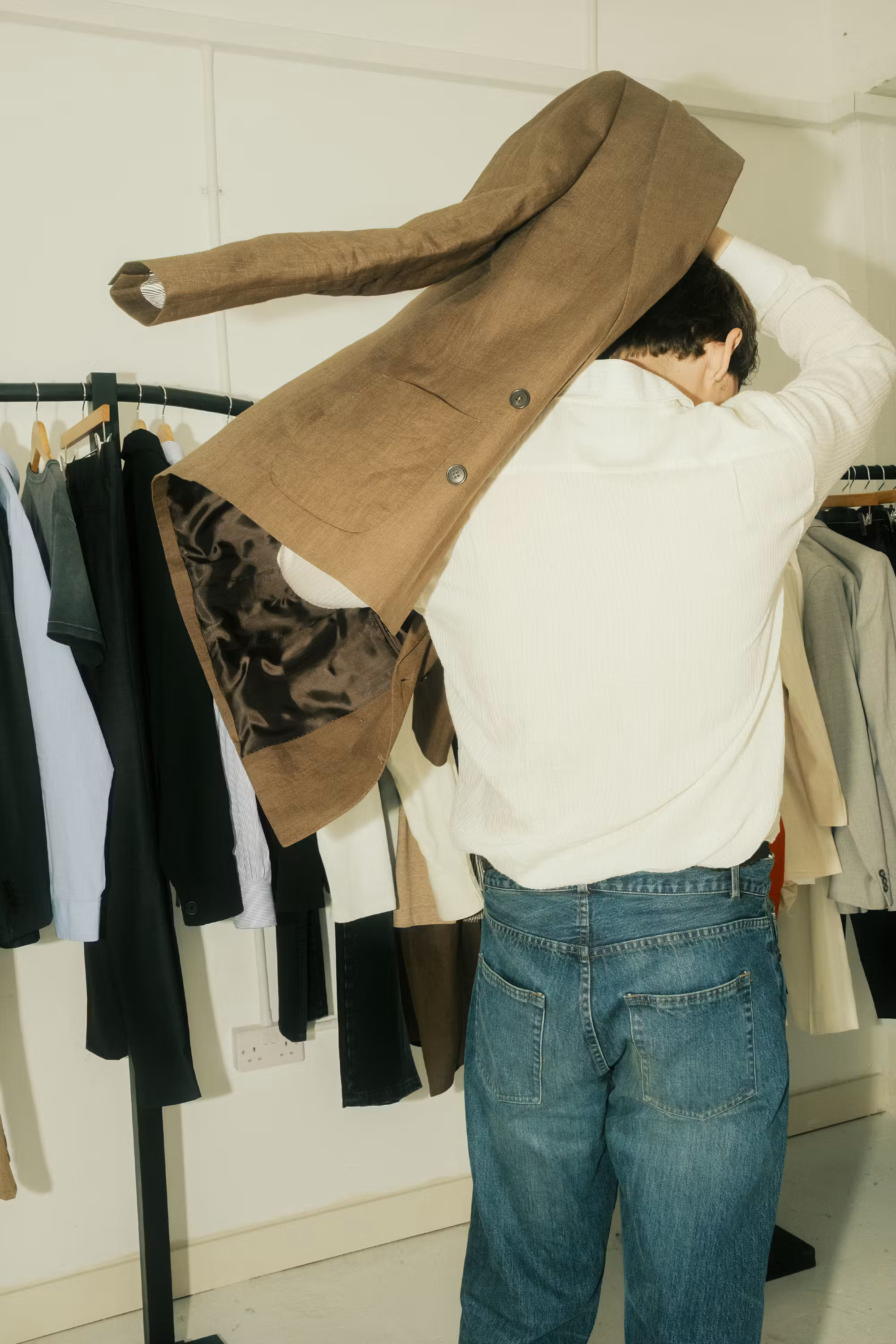
The resulting collection considers what people carry with them when they move between worlds: garments that are practical but emotionally charged, familiar but slightly displaced. A red nylon Harrington jacket references James Dean while functioning as a modern travel piece, made in water-resistant Japanese cotton-nylon grosgrain. A relaxed double-breasted linen suit is designed to be worn, wrinkled and packed into a suitcase without anxiety.
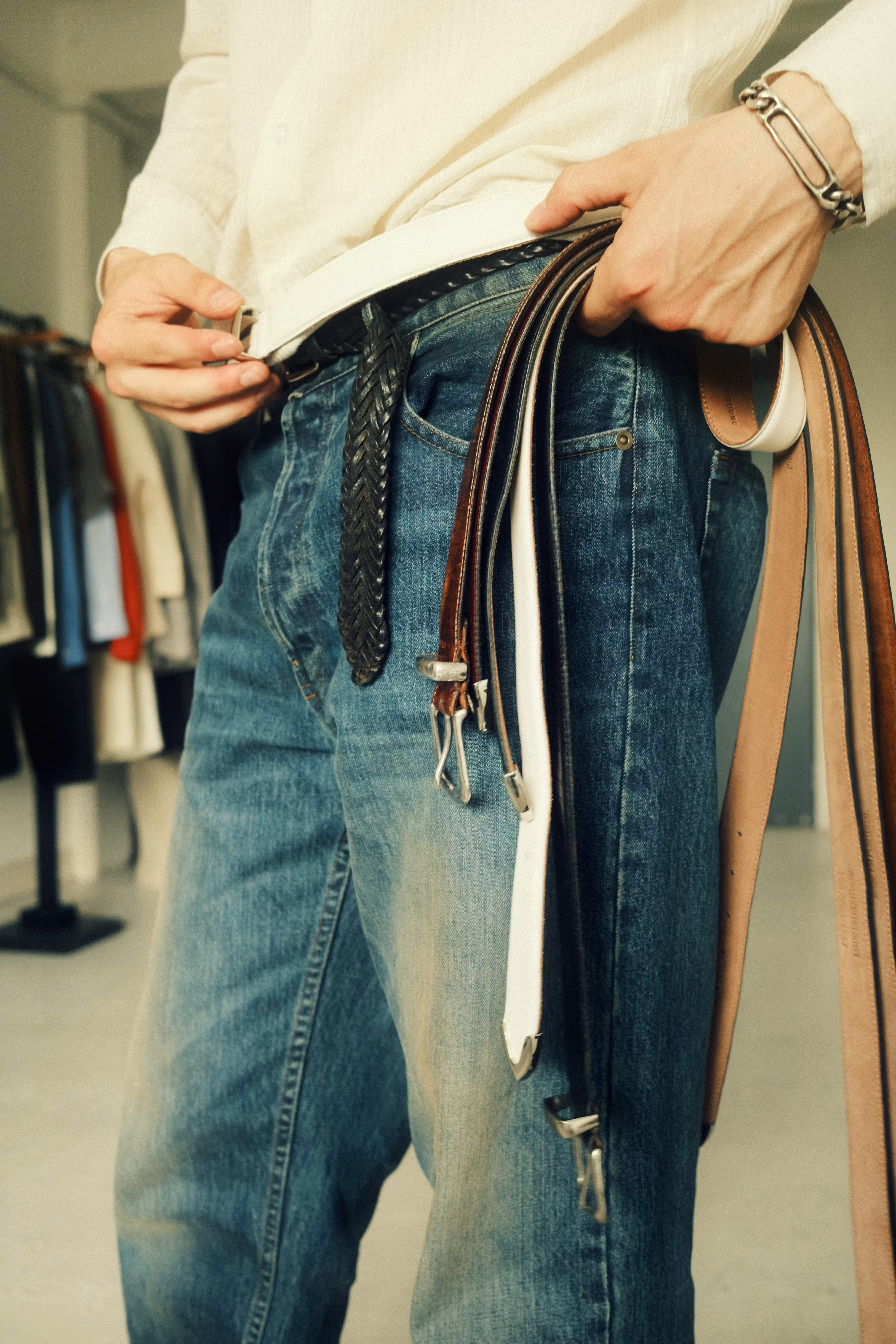
The ready-to-wear collections attract a certain type of buyer. But perhaps the most revealing customer is the one buying a first suit, or first custom suit, looking for someone who understands both the rules and the freedom to ignore them. “People never really know what they want,” Altman says. “They’re looking for someone to tell them, ‘This is what’s proper, this is what’s correct,’ and then to validate the decisions they want to make in breaking the rules.”
“The one thing we have in abundant supply is creativity and a point of view.”
Carter Altman, Carter Young co-founder
I experienced this firsthand after meeting Altman at a Cecile Tulkens party a few years ago and, very recently, asking him to make me a suit. I gave him unusual freedom, including the fabric choice — an act of trust that does not come naturally to me. But his taste is precise enough to make surrender feel sensible. The finished suit became a clear example of what Carter Young does best: translating instinct into something personal, concrete, and wearable.

The brand is now preparing to grow its made-to-measure business more formally, expanding beyond its existing friends-of-friends and word-of-mouth system. The East London studio will become more public-facing, with appointments, shopping, and activations. It feels like a natural progression for a brand that has built much of its reputation through close interaction.
“London has an understanding of bespoke tailoring that’s never really gone away,” Altman says. “Whereas I think in America, at a mass level, people are generally adopting more casual styles.” Carter Young’s answer has been to occupy the space between those worlds. It has found its voice not by narrowing its references, but by allowing them to coexist.