THE NOTORIOUSLY QUIET 24-YEAR-OLD RAP SENSATION
OPENS UP FOR THE VERY FIRST TIME.
BY: SIMRAN HANS
PHOTOGRAPHED BY JOE CRUZ
STYLED BY: SEBASTIAN JEAN

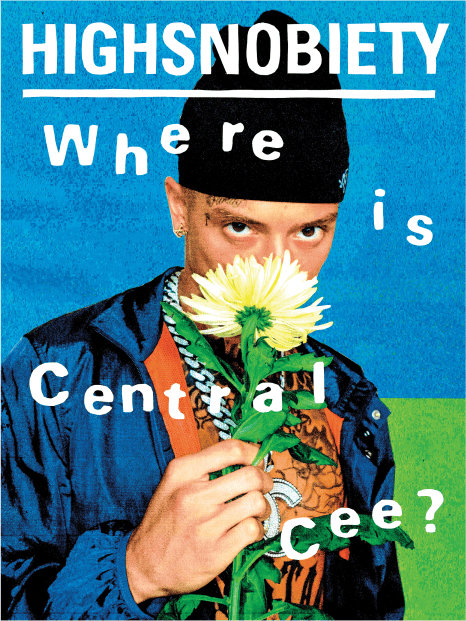
Experience this story and others in the new issue of Highsnobiety Magazine, available from retailers around the world and our online store.
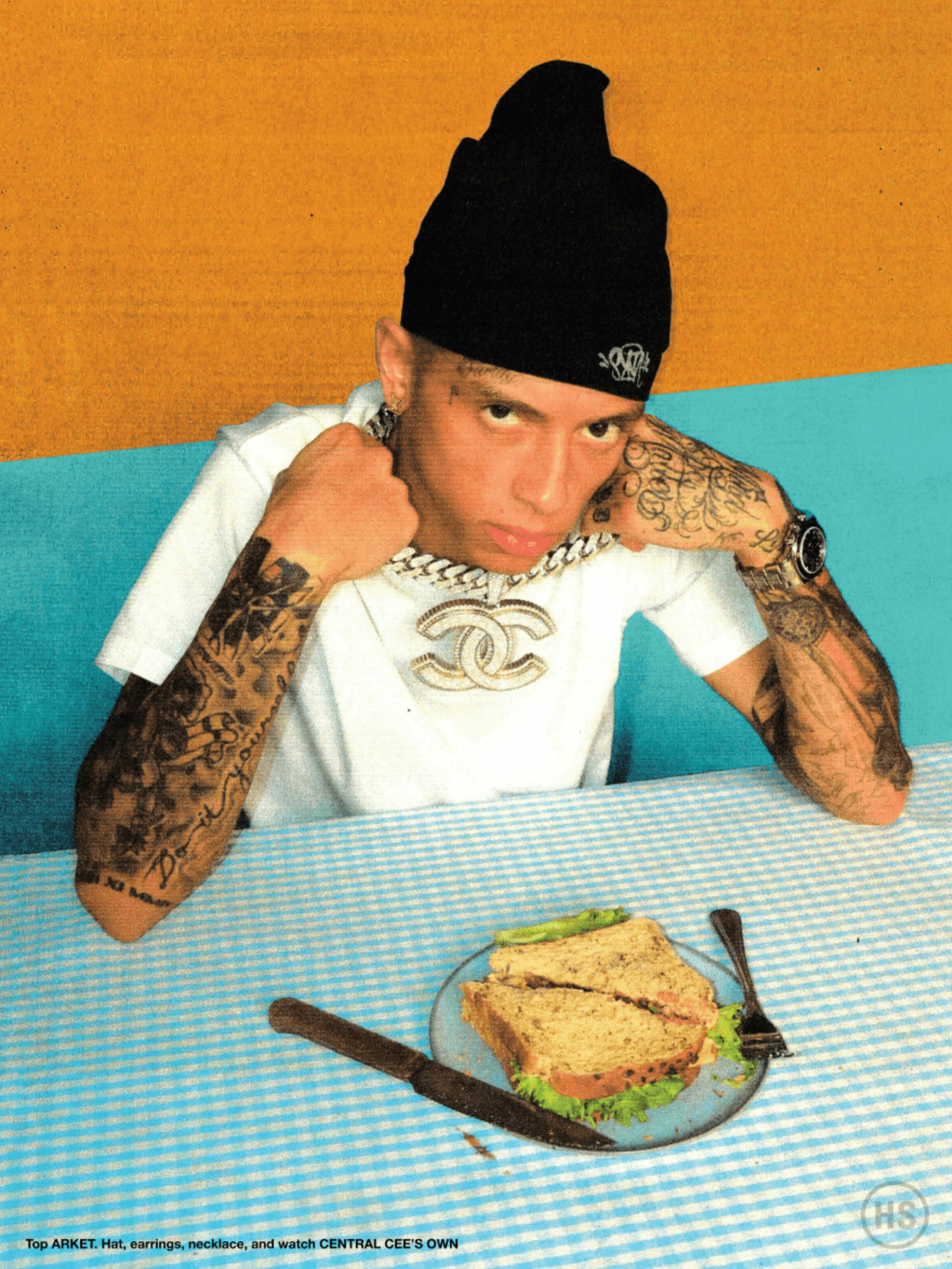
Central Cee is a man of few words. “He don’t speak. At all,” warns his best friend Wadz (Walid Wahbi), who’s been following the 24-year-old British rapper with a video camera for a documentary coming out at some point in “the future.” As a lyricist, Central Cee, or “Cench” as his fans and followers call him, is a sharp and eloquent observer, but in person he’s more likely to keep his thoughts to himself. “It’ll be hard for anyone to get any words out of him,” says Wadz. “I’ll tell you that for free.”
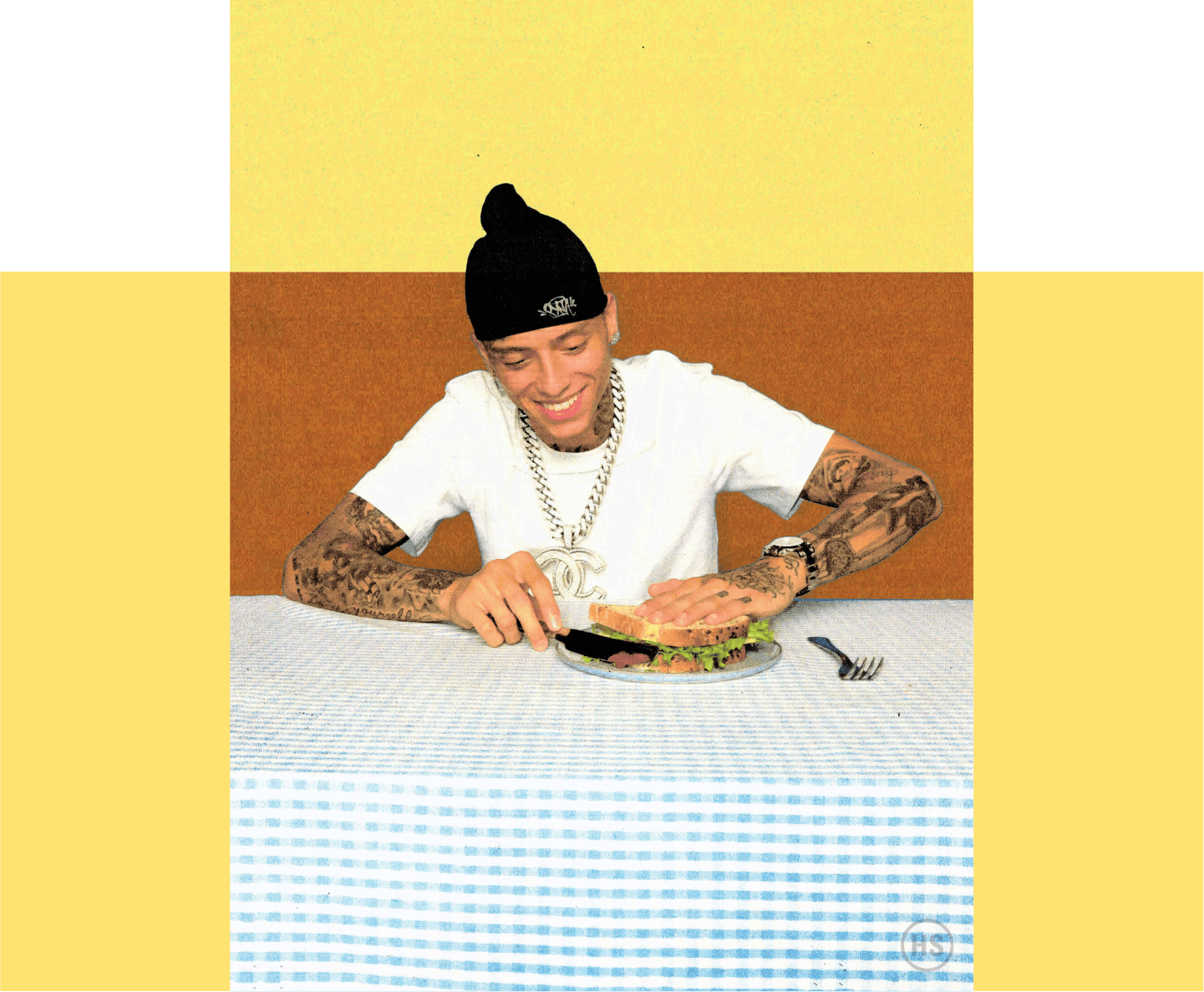
Top ARKET. Hat, earrings, necklace, and watch CENTRAL CEE’S OWN
Cench rang in the New Year in St. Barts, on a yacht. It took four flights and a 30-hour journey to get there from London. A French colony with pristine white beaches and a population of 10,000, the Caribbean island is a party destination for celebrities and billionaires. Picture a row of three superyachts docked to shore, each one of them 100 meters long. Music is blaring; champagne corks are popping; a spray of red fireworks illuminates an inky black sky.
Cench is a little reticent when I ask who else was on the yacht with him. (“Actors,” he says with a shrug.) But Leonardo DiCaprio was there, Mike Tyson was there, and so, apparently, was P. Diddy. Cench and Diddy had met 18 months before at a Fourth of July party, an event he wasn’t sure the rapper and mogul would remember. It turns out Diddy’s kids are huge fans. “He came up to me and was like, ‘Let’s take a picture,’” Cench says. Diddy told him to make sure people knew that it was him who asked Cench for a photo and not the other way around.
If you’re not familiar with Central Cee, you’ll recognize his track “Doja,” whose frankly genius opening line became an instant meme on TikTok last summer. “How can I be homophobic? My bitch is gay,” was both a witty jab at the homophobia baked into hip-hop culture, and also his place in it. Cench raps over a hooky, sped-up interpolation of Eve and Gwen Stefani’s Y2K hit “Let Me Blow Ya Mind.” Its Hype Williams–inspired music video has a nostalgic, early 2000s feel, too, boasting a boxy 4:3 aspect ratio (retro, when viewed on an iPhone). Set outside a housing estate in his native West London, it features synchronized Chicago footwork routines and crisp white tees, a cleaned-up take on gritty UK drill, the genre Cench is most often associated with.
The rapper’s savvy pop sensibility, nimble flow, and distinctive cadence have sent him global in a way that’s genuinely unprecedented for a UK MC. The appeal of his accent — often a barrier for UK artists abroad — has won him legions of international fans, who were both amused and delighted by his “LA Leakers Freestyle,” a viral rap in which he explained the nuances of British slang. “You say, ‘What’s up?’, we say, ‘Wagwan,’” read the onscreen subtitles of a rap that is, hilariously, already in English.
He began to break through with tracks like “Day in the Life” and “Loading” while the country was still in lockdown, and independently released his debut mixtape, Wild West, in 2021, which entered the UK album chart at number two. It’s been a steady ascent, with his follow-up mixtape, 23, shooting straight to number one in the UK, and his monthly listener count ballooning to 29.1 million on Spotify in 2022. He closed out last year with a sold-out homecoming show, performing for 10,000 loyal fans at London’s Alexandra Palace. And a couple of days after we meet, he’ll be nominated for two BRIT Awards, including Artist of the Year.
In a chilly photo studio in East London, in January, Cench pulls up a chair next to a glowing space heater, his version of a fireside chat. Up close, he smells pretty good, though he says he’s not showered in two days. Yesterday he was in Miami; he flew back on the red eye. When he arrived on set, without a publicist or his manager, Ybeez, Cench was still half-asleep, disorientated. Now though, he’s alert, and even a little fidgety, eyes avoiding mine and darting down to his phone.
Cench was in Miami because of Drake. His team learned about the trip the same way his 6.1 million Instagram followers did: from his stories. Drake had summoned Cench to the heart of Miami’s Design District to appear in the music video for “Jumbotron Shit Poppin.” In the Rolex shop, rather sweetly, the rapper presented Cench with a small box. “I got this for you, by the way,” Drake said to him. “He actually tried to buy me a Rolex I already had,” he says sheepishly, gesturing to the rose-gold watch on his wrist. “I said, ‘Oh, I’ve got that one already.’” When he tells the story today, his assistant asks if “Madz” got a new watch, too. “No,” he replies. This is the only acknowledgement of Cench’s rumored girlfriend, the TikTok star and motormouth princess Madeline Argy, that I’ll hear all day. Fan theories that Argy might be the “gay” girlfriend (she’s openly bisexual) Cench refers to in “Doja” flooded TikTok after the users noticed her wearing his hoodie, and soon enough, screenshots of their WhatsApp messages started appearing on his Instagram stories. It’s no wonder people are so obsessed with the idea of the pair as a couple — between them, they have a direct line to basically every teenager in the country.

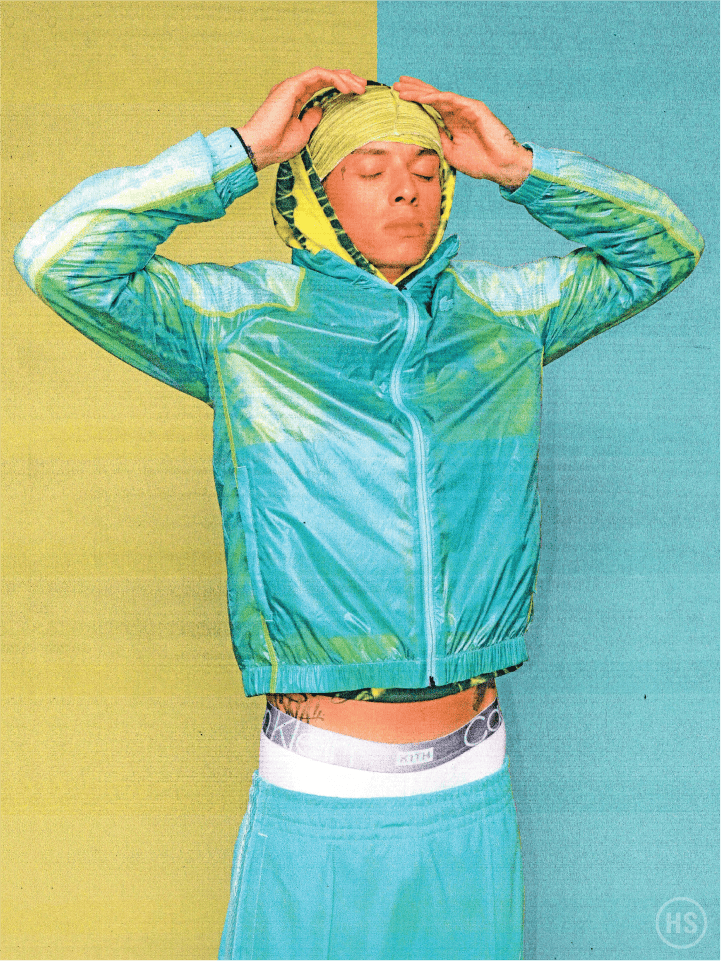
Hoodie worn underneath AGR. Pants and jacket LACOSTE. Balaclava BRAIN FACE
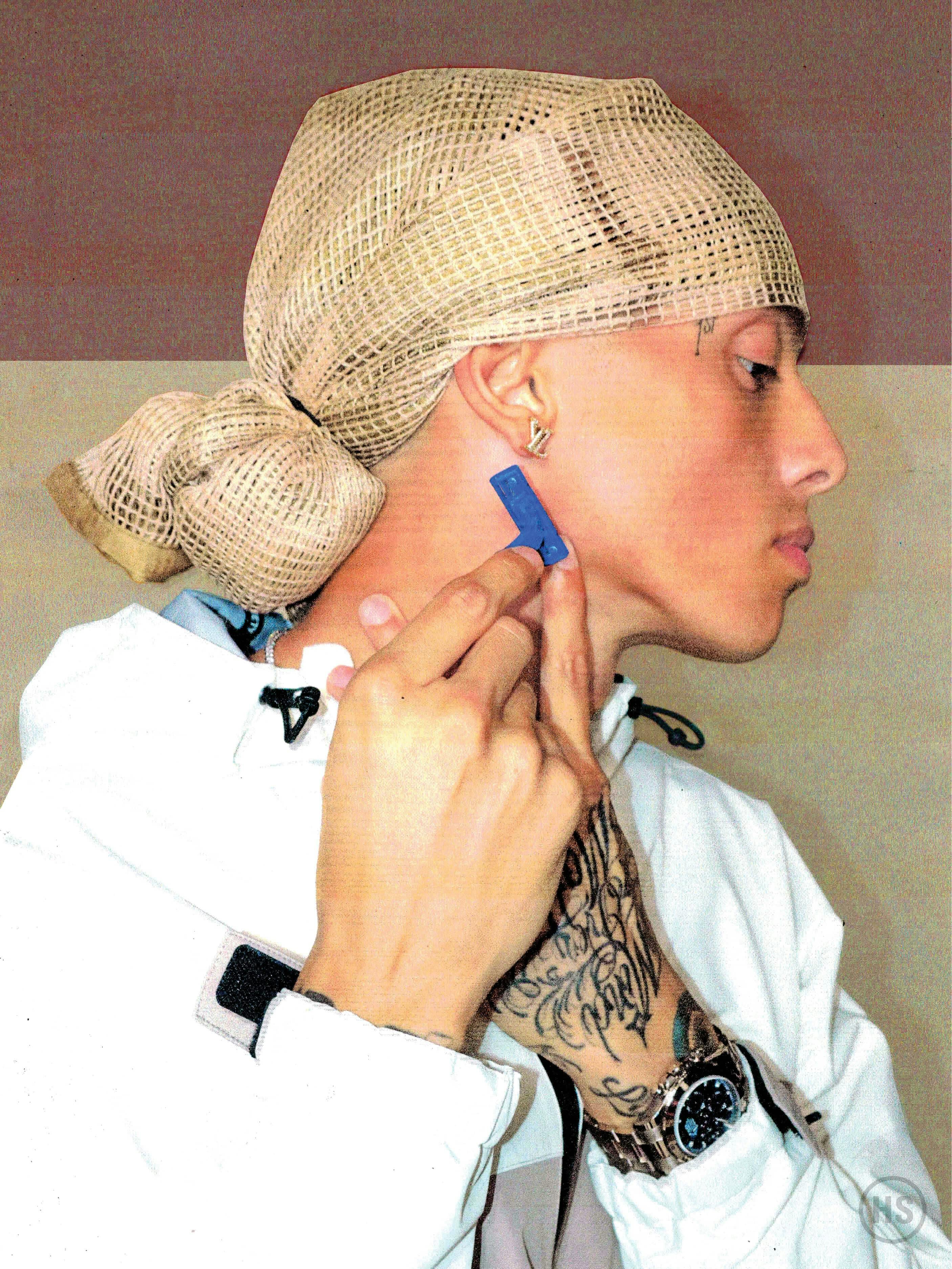
Jacket HIGHSNOBIETY. Scarf worn on head PUBLIC HOUSING SKATE TEAM. Earrings, necklace, and watch CENTRAL CEE’S OWN
Maybe it’s the heater, but it feels like Cench is beginning to warm up. He swivels the desk chair he’s sitting in toward me, though he doesn’t immediately put down his phone. It’s clear that he finds the spectacle of being interviewed mildly embarrassing. “I’m not talkative,” he cringes. But Cench is not exactly withholding, either. He tells me that Drake was another superstar in attendance at the New Year’s party in St. Barts. “It was a mad environment,” he says matter-of-factly. Mad in the sense that everyone was so chill. “Everyone’s I guess ‘used to it,’” he says, using air quotes. Everyone on the island is either super rich, or famous. “These super-rich kids aren’t gonna go crazy over Drake. They’ve probably met Drake before. And their dad’s probably more important than Drake,” he says, unbothered and idly scrolling.
The way he sees it, there are similarities between the two kinds of currency. Both afford people access to a certain kind of lifestyle, a certain caliber of experience. “What’s to fantasize about now? You’re either famous or you’re super rich and you’re insensitive to the value of money,” he says. “I’m not super rich, but I’m famous to some extent, so I’ve seen things,” he continues. “Money don’t excite these people, and fame don’t excite me.”
Still, it was cool when P. Diddy complimented Cench’s and Wadz’s style. Upon discovering they were from West London, he told them, “You lot dress like you’re from Harlem.”
Cench was born Oakley Neil H. T. Caesar-Su, to an Irish mother and father who is half Chinese, half Guyanese, in the West London neighborhood of Ladbroke Grove. His parents split up when he was “six or seven,” and at eight years old, Cench, his mom, and two younger brothers moved to Shepherd’s Bush. “It’s only 10 minutes down the road, but it is two different neighborhoods,” he explains. There is, he says, an issue between the two neighborhoods. Ladbroke Grove is home to Notting Hill Carnival, the famed vintage stalls of Portobello Road Market, some of the best Caribbean food in London, and rappers including AJ Tracey and Digga D. “To other people, I’d say go there — go to the market, Carnival, all these things I probably would avoid doing now. It’s still a nice place. I’ve got love for the area,” he says, recalling making T-shirts for Carnival at the local youth club as a child. As for the people? “There’s no loyalty to no people.” Navigating London, Cench says he was always a lone wolf, regardless of where he was living.
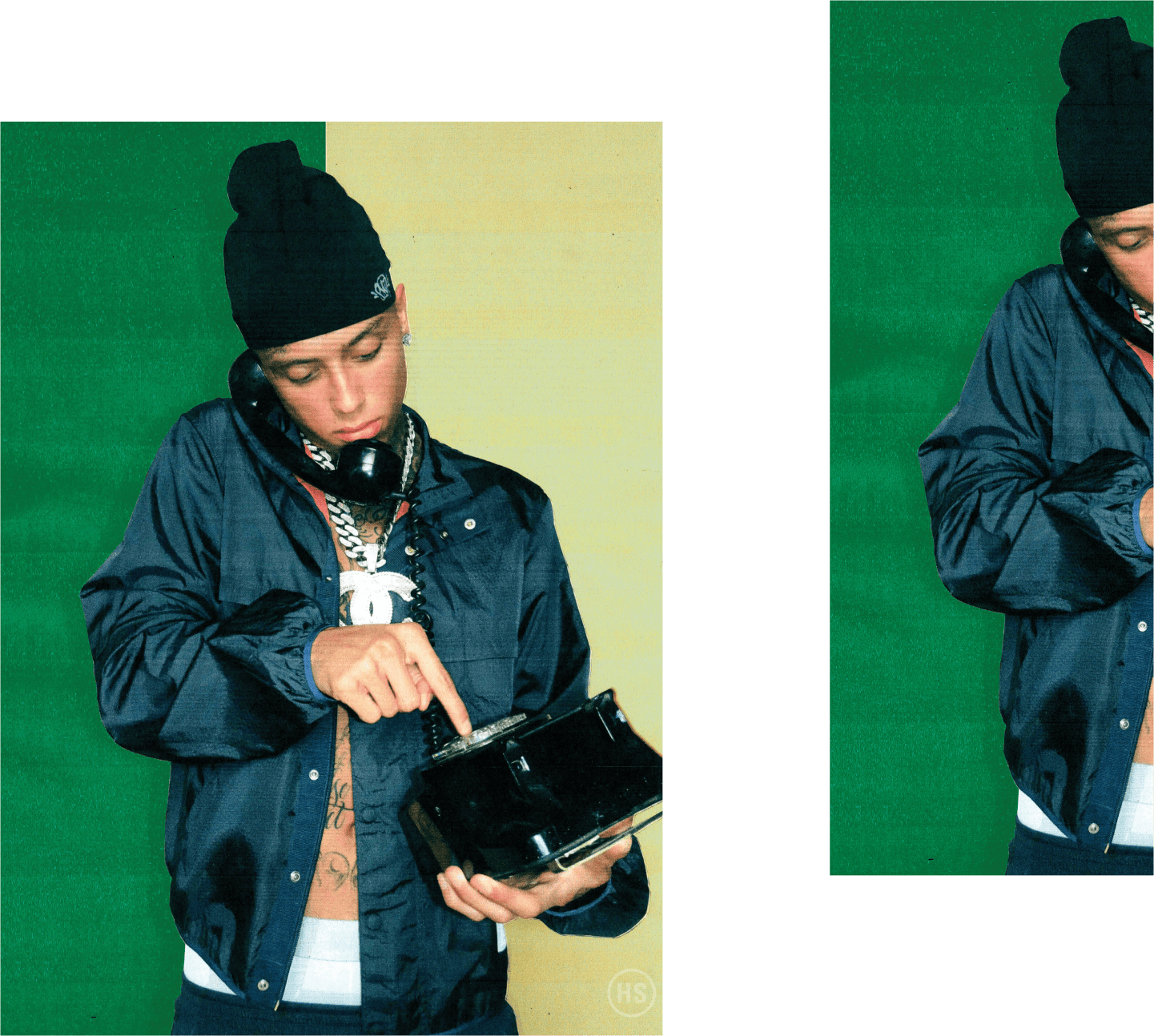
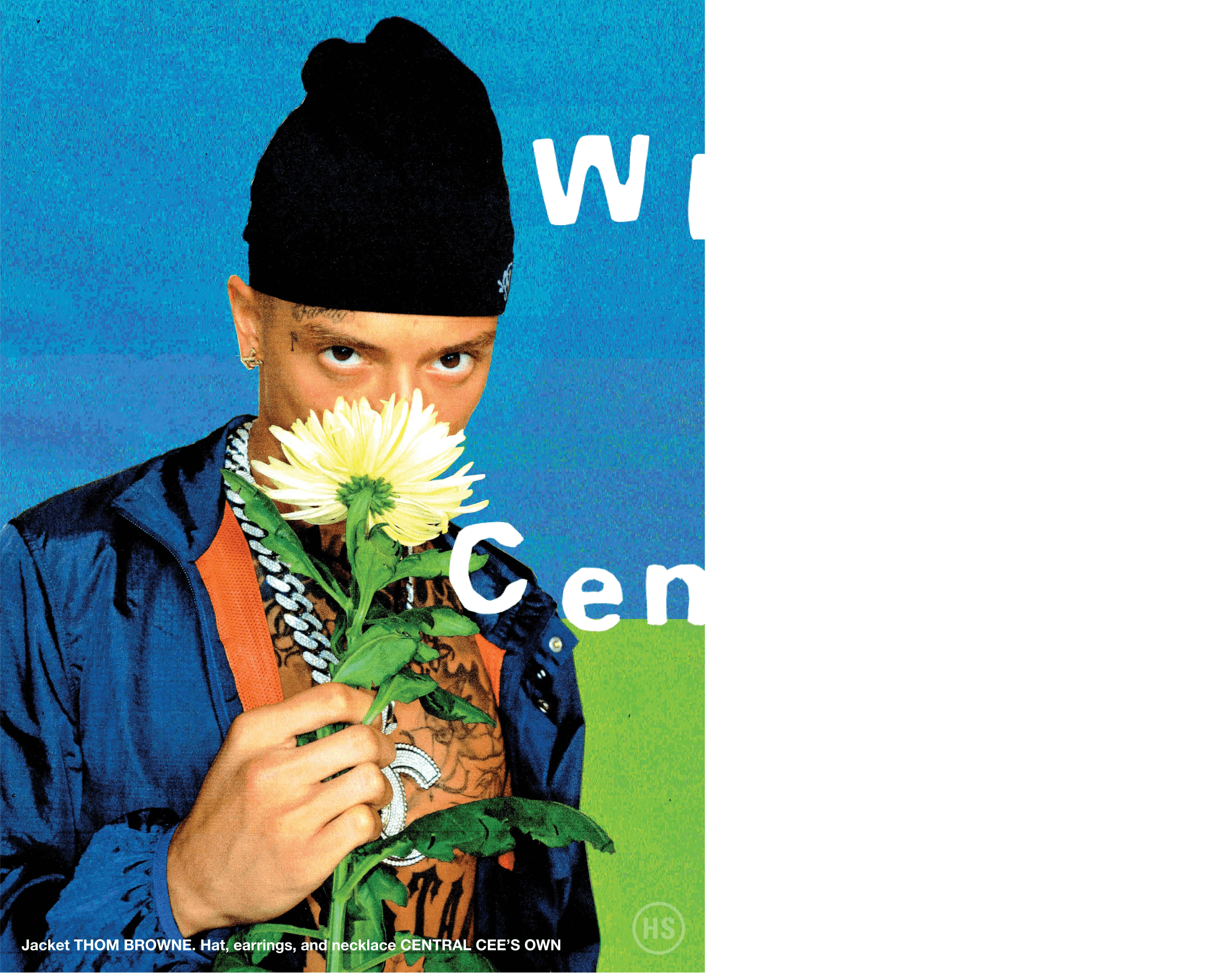
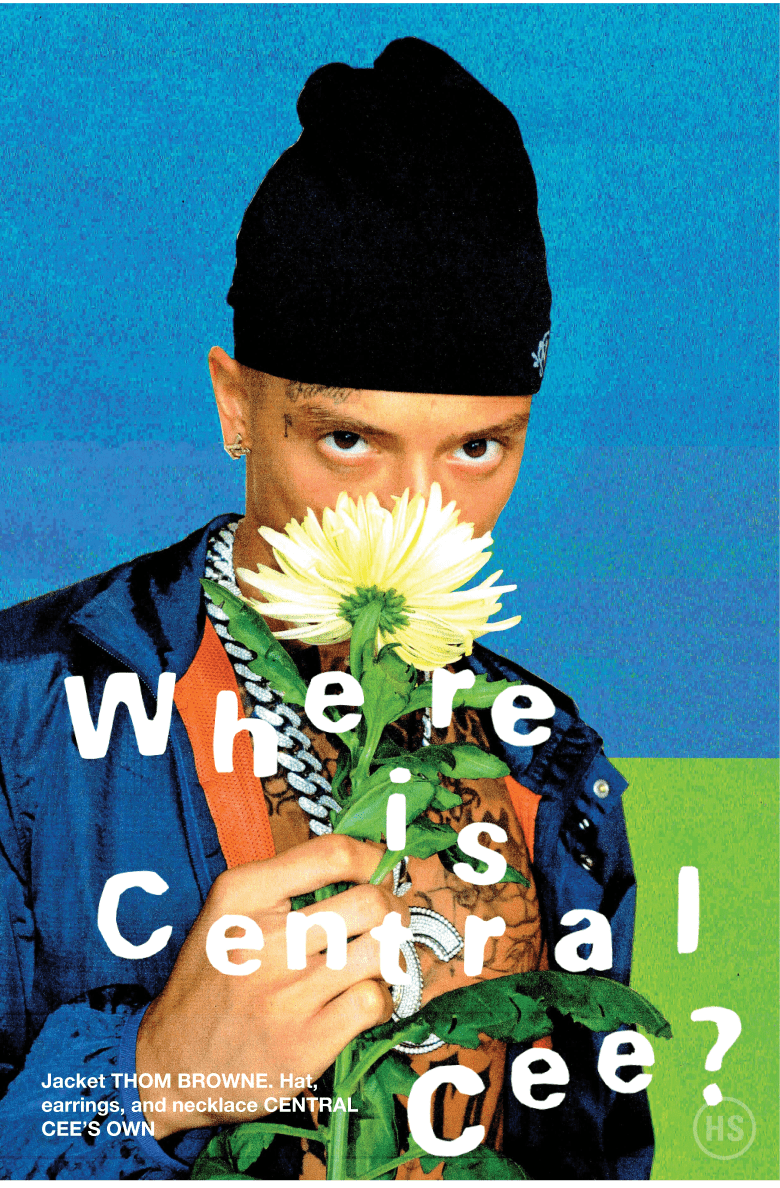
Jacket and shorts THOM BROWNE. Hat, earrings, and necklace CENTRAL CEE’S OWN
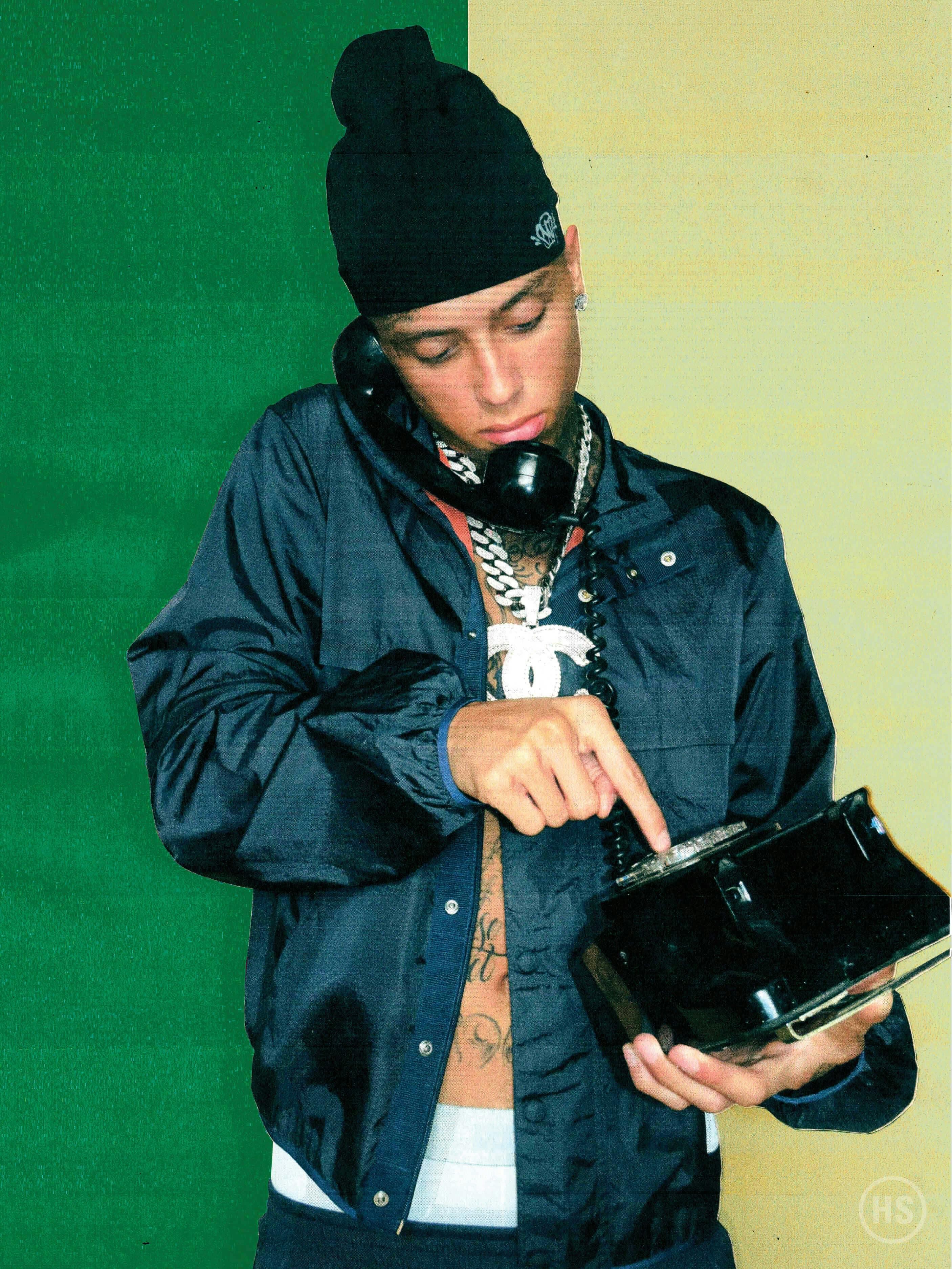
Briefs, hat, necklace CENTRAL CEE’S OWN. Shorts and jacket THOM BROWNE
Diddy’s observation was astute. If London is like New York, West London is like Harlem, says Cench. “I haven’t actually been to Harlem, so I’ve made this analogy through the movies,” he says. He means one movie in particular: 2002’s hood classic Paid in Full, a film he’s watched “like 50 times.” Set in Harlem in the 1980s during the crack epidemic, he noticed the characters’ clothes had “a swag to them.” According to Cench, people from West London take more pride in their style, too. He has a theory or two about why. “It’s closer to the clubs, there’s more access to the shops, cultures are more integrated,” he says. In West London, “the hood youths might easily get an upper class woman,” he says. “I’m sure Harlem’s like that.”
Earlier today, Cench surveyed the racks of clothes with Highsnobiety’s fashion director, Sebastian Jean. He rifled through the rails of designer tracksuits laid out for him on set, before landing on one by Thom Browne. His eyes drifted over a table filled with headgear, something he’s rarely photographed without: an embroidered yellow balaclava by Maxwell Deter; an oversized baker boy cap, baby blue and shiny; a fluffy bucket hat the exact purple of a bar of Cadbury’s Dairy Milk (“Reminds me of my man Boy George,” he remarked drily). “I’m not really a flamboyant guy, to be fair,” he said, before reaching into his own suitcase, possibly looking for something more comfortable. Cench says he “quite likes ironing,” shaves his own face before shoots, and chooses to wear his own “CC” custom Chanel chain. Letting someone else pick his outfits would be “my worst nightmare,” he said toward Jean. “Clothes is like your skin, innit? Can’t let a man choose my skin, you know what I mean?”
Out of the corner of his eye, Cench spotted his groomer and childhood friend Nicola Svensen trying on his wave cap, stuffing her long red hair into the tight black nylon. Now she works alongside him in a professional capacity: on set, she is introduced to me as hair and makeup, but later lets slip that she’s also his assistant. When I asked more about their relationship, she explained they grew up in the same neighborhood and became friends when she was 14. Cench is two years older. “Nic!” he called out. “You’re stretching out my ting, you know! The bun was stretching it. Be careful please, I’ve got a small head and it’s already too big for me.”
In another life, back when he was a teenager, Cench made money selling drugs. “You ain’t never sat in the trap with a pack / Hear the doorbell ring and your heartbeat lag,” he raps on “Day in a Life.” Before that song blew up, Cench was more likely to be seen posting ’fit pics than he was music. If you scroll back far enough, there are still a handful of photos on his Instagram of him posing in distressed skinny-fit jeans, Nike tracksuits, and a rotation of flashy designer cross-body bags. “I had a very active following for my style,” he says. “I still meet people today who are like, ‘Bro, I was following you from when you was posting pics in Nike Techs!’” He spent the money he earned “on road” buying high-end clothes and designer jewelry. “I bought my little chain, my grills,” he says. When he started making money off music, he didn’t spend any of it.
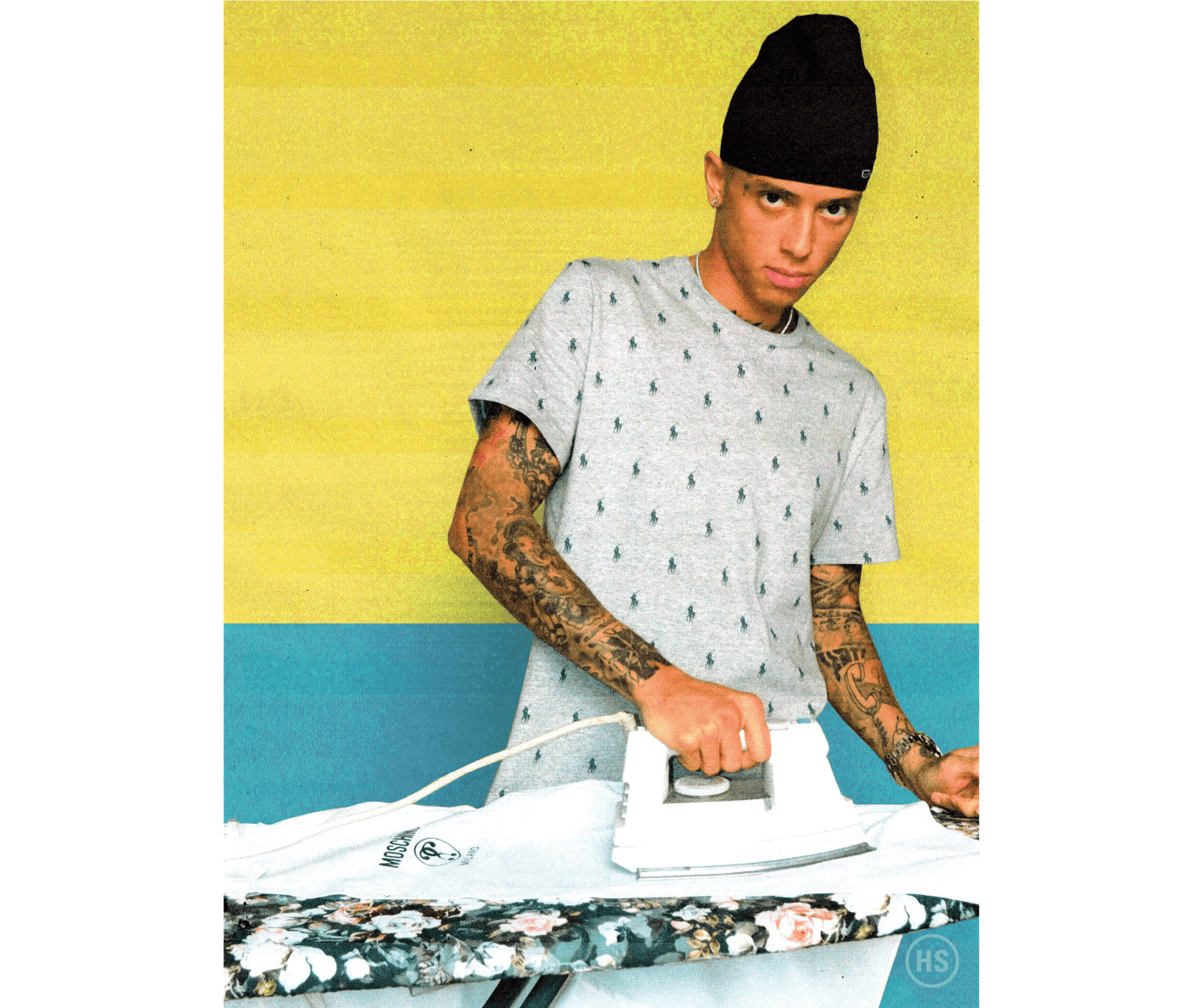
Top POLO RALPH LAUREN Hat, necklace, and watch CENTRAL CEE’S OWN.
Cench inherited his specific style — immaculate sportswear with matching, color-coordinated trainers — from his father, whom he didn’t see much growing up. “My dad’s proper stylish. No matter what, he makes sure his ’fit is fly,” he says. “My dad’s very far from…” He pauses, and starts again. “He hasn’t come from money, he’s never had a great job or anything, but he always makes sure his ’fit is clean. You never really see him in the same thing.” When I ask Cench to describe how his dad dresses, he says he thinks of him as trendy, always wearing “the ‘in’ thing.” But it wasn’t just the clothes that made an impact on Cench — it was how his dad wore them.
Cench recalls his father’s pride in his appearance, something that also was instilled in him. “You know when you’re a kid, you just wanna wear your pajamas or your football kit out? My dad’s not on letting you do that,” he says. He told Cench and his brothers that they had to “dress nicely,” or at the very least presentably, in laundered, un-creased clothes. When picking up the kids to spend an occasional weekend together, Cench remembers his dad getting angry upon seeing their overnight clothes bundled into a plastic Poundland bag. “And rightfully so,” he says. “It definitely is a big part of how people perceive you.”
As a teenager, Cench would customize his school uniform, upgrading his regulation school blazer by cutting out its badge and Velcro-ing it on to a trendier slim-fit blazer from John Lewis, the British department store. You could say he’s always been detail-oriented. “I don’t know if it’s OCD, but I’ve got a proper complex,” he says. “If I don’t feel comfortable in my clothes, I can’t go out the house.”
When he was younger, he’d argue with his mom about clothes. Looking back, he realizes she might’ve been going through her own personal struggles, which he perhaps wasn’t sensitive to at the time. “Even the fact of getting the clothes washed was neglected. My clothes was dirty, and I really had a problem with it,” he says. He says his lack of new clothes, nice clothes, and clean clothes, created an admiration for material things that he describes as “toxic.” He’s only just growing out of it now. “It’s created from deprivation, so it’s not actually a healthy want. I wanted it because I felt like I didn’t have it,” he says. For someone who is supposedly not a talker, Cench is surprisingly open.
“I was observant as a kid,” he says. His mom encouraged him to write about his feelings, and so he wrote poems and raps that he’d share with her. He also showed them to the social worker who would visit their flat to check on them. “He was playing a father-figure role, and he was cool, a Vietnamese guy.” Cench was scared to show him the lyrics he’d written down on a piece of paper, but did it anyway, turning his personal experiences of hardship into stories. “I wouldn’t rap no bullshit about the street life that I didn’t know — I was a kid. It was about my feelings.”
At 14, Cench “parted ways” with his mom, and moved in with his then-girlfriend and her parents. When I ask what it was like living with another family, he says it was cool. “Looking at it in retrospect, it was not a great situation,” he admits, but for him, it was much better than being at home. He says there were only a few times he felt that situation get the better of him. “Christmas day was a bit weird, my birthday was a bit weird,” he says.
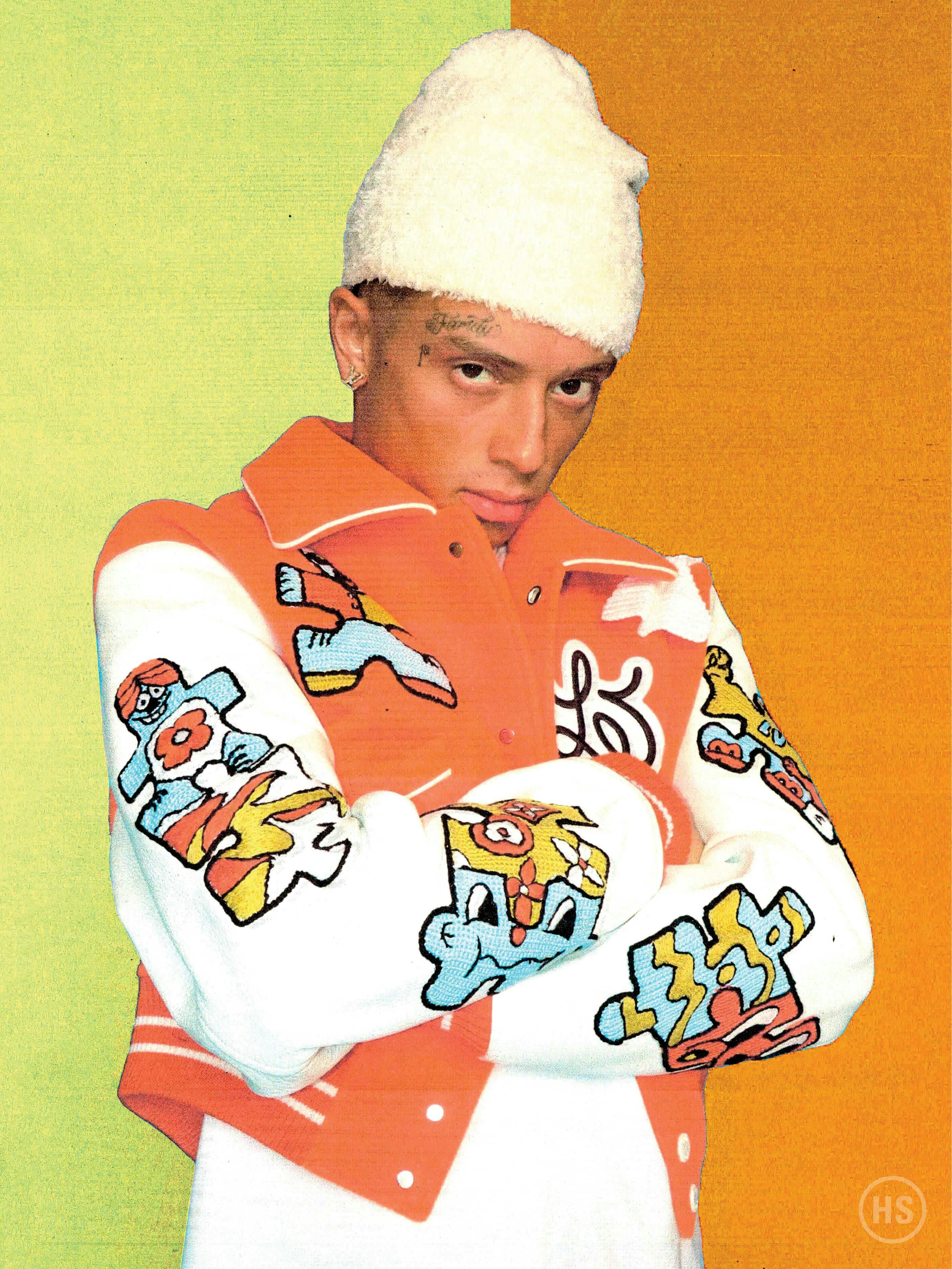
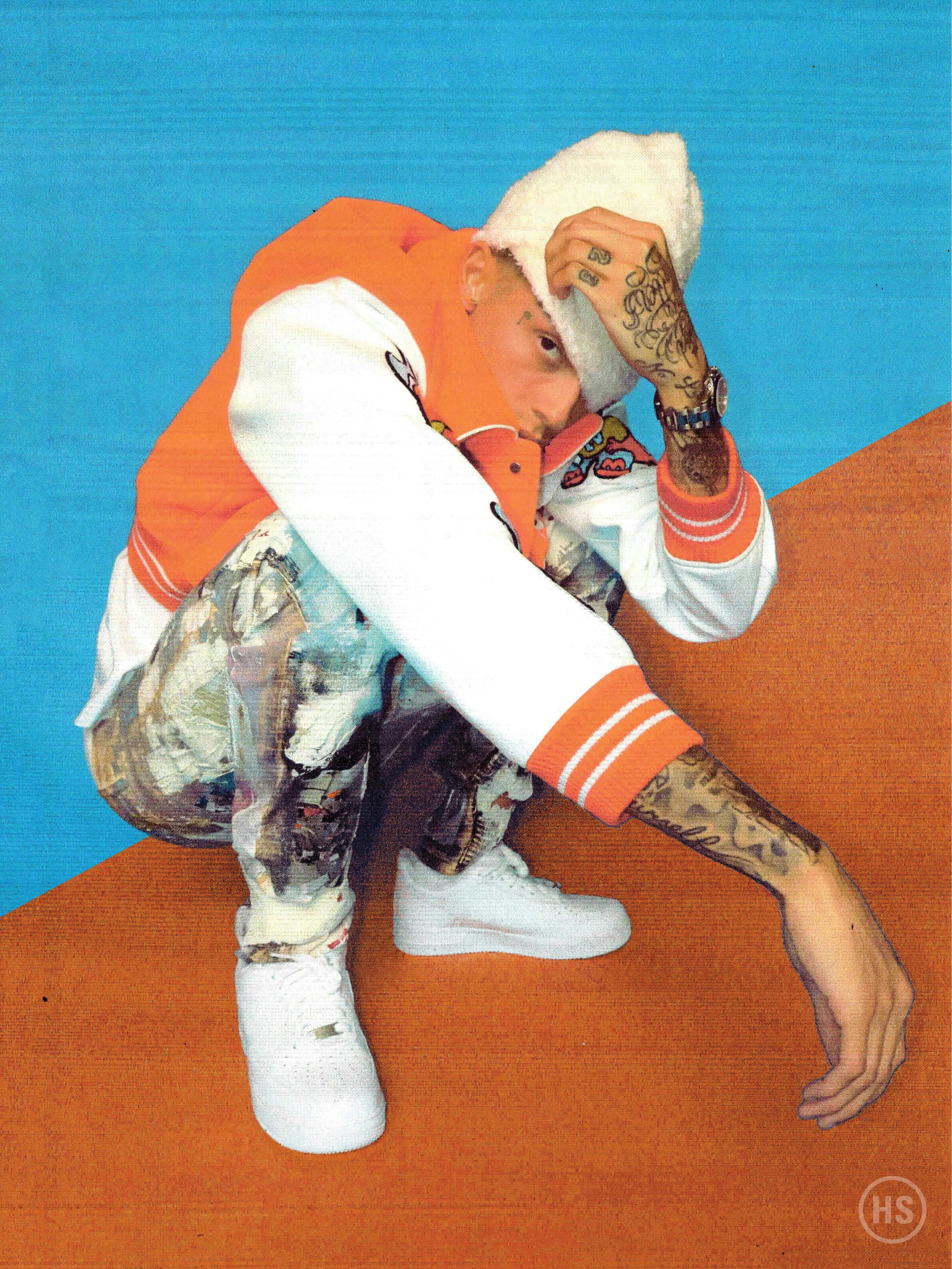
Jacket LOUIS VUITTON. Pants PUBLIC HOUSING SKATE TEAM. Hat THE ELDER STATESMAN. Watch CENTRAL CEE’S OWN. Shoes NIKE
It was also at that age that Cench visited a recording studio for the first time. A fan of grime when the genre was still relatively underground, listening to rappers like Jme and Skepta made Cench want to rap himself. He had been writing lyrics, but the idea of turning them into a song hadn’t even crossed his mind. “I thought it was so far-fetched, and probably really hard to do,” he says. He moved schools and made friends with another aspiring rapper, one with an incredibly supportive mom. She took the boys to her professional recording studio, one that Cench says he’d use now as a multi-million-pound business-running professional rapper. In that studio, something changed. “I heard my voice clear in my microphone. I felt like the man in the booth,” he remembers. He’d always wanted to make music, but that day, the dream began to feel real.
“Been saying it to him from when we were little kids, sleeping on the floor,” says Wadz, who has been friends with Cench for 10 years. “It’s you, bro, I’m telling you,” he remembers saying, convinced that Cench had the ability to break the mainstream.
Mainstream isn’t a word Cench would use to describe himself exactly, though he jokes that the Jacquemus “Neve World” campaign he starred in last winter was his “commercial crossover” moment, elevating him from relatable streetwear king to high-end muse. Shot by Oliver Hadlee Pearch, the campaign sees Cench decked out like a teddy bear — wrapped in a nubby brown balaclava; cuddling a pack of Siberian huskies in a fluffy white beanie; dressed head-to-toe in hot pink mohair and matching bucket hat. By embracing a soft-fuzzy aesthetic from a queer luxury designer, Cench has, once again, cleverly rejected the hypermasculinity that’s perhaps expected of rap stars like him. Naturally, the cuteness of the campaign meant it was everywhere.
Cench made music “with no income” for a long time. He lost money, and lost out on money. “I had jeopardized everything to prioritize my music career for so many years that it didn’t take much for me to have a turning point,” he says. That turning point was buying his mom “a big yard” for Christmas. “I had one simple goal, which was to get my family out of the situation that they were in, which I’ve done now.”
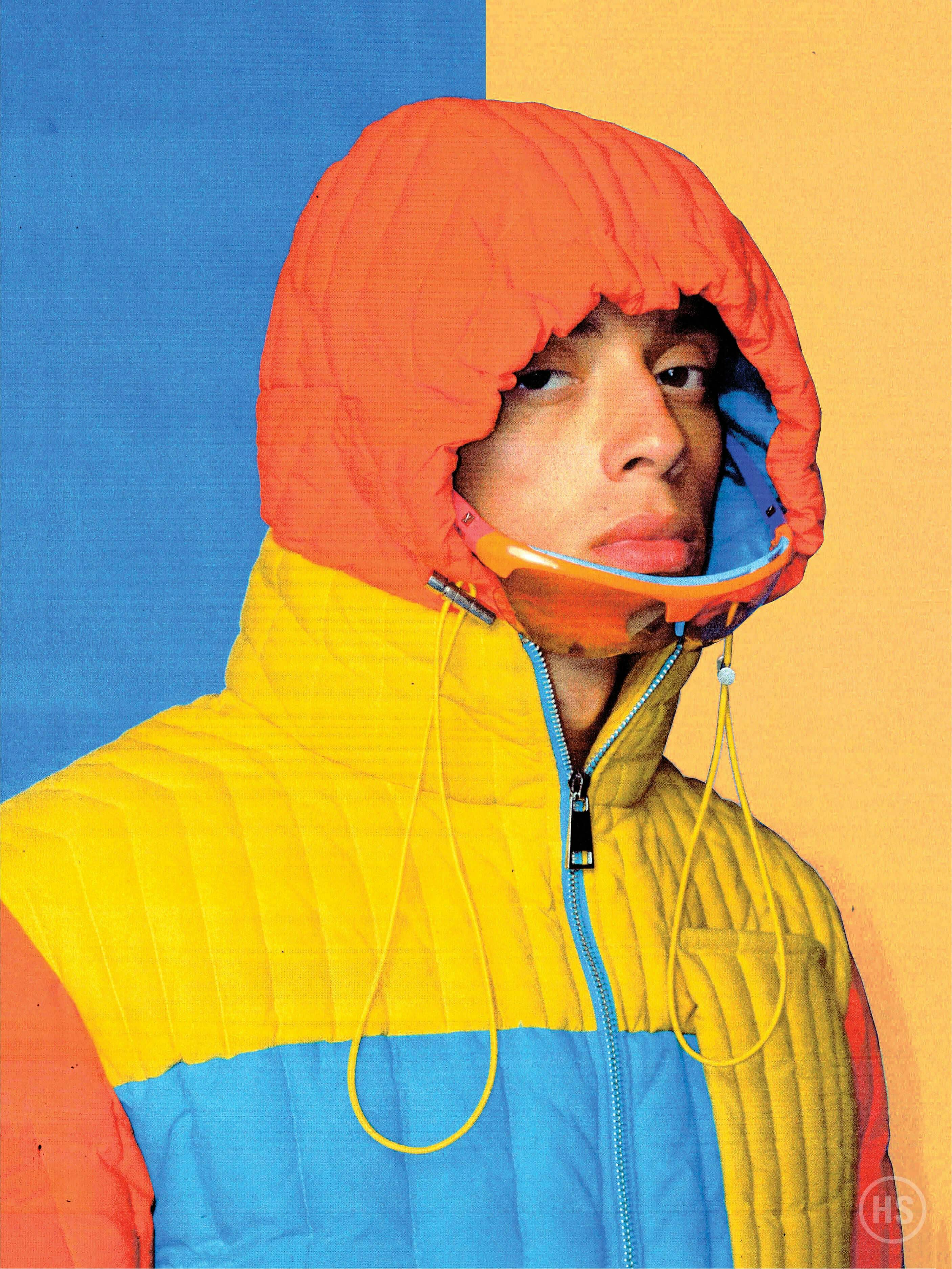
Jacket JEKEUN Sunglasses LOUIS VUITTON
It only takes a quick glance at Cench’s Instagram to see that achieving his goal has obvious perks. But what strikes me about photos of him partying with Drake and eating McDonald’s on a private jet, and even today, at his first major magazine cover shoot, is the fact that he’s surrounded by old friends. If the people close to him were to put him on a pedestal, Cench says, he’d hate it. “I try to stay away from that,” he says, explaining that his social media presence isn’t a character, but instead, “a mood.” People love to think he’s calculated, he says, and are often suspicious of his tendency to go viral. Really though, he’s simply a child of the Internet who has an instinct for how to connect with his fans.
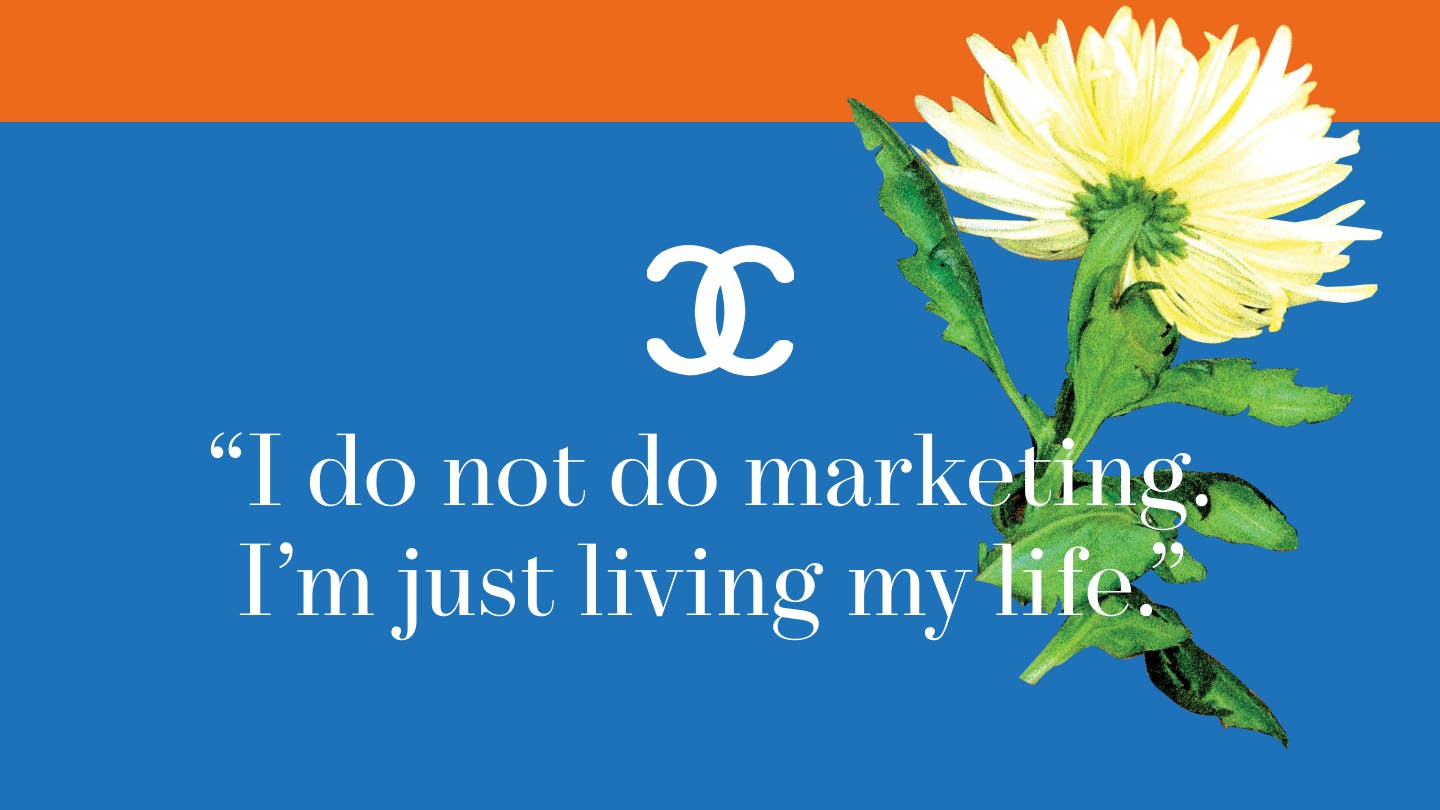
“One thing I wouldn’t mind reiterating,” he says, looking me dead in the eyes, is that “I do not do marketing.” He emphasizes every word. “I hate marketing,” he says with a frown. “And I’m not marketing. I’m just living my life.”
Credits
By: Simran Hans
Photographed by: Joe Cruz
Styled by: Sebastian Jean
Production: Hillary Lui
Casting: Greg Krelenstein
Set Design : King Owusu
Photography Assistant: Sam Dearden
Styling Assistant: Aurelie Mason-Perez
Production Assistant: Cheuk Ng
Set Assistant: Charlotte Cook
Tailor: Allison Ozeray at Chapman Burrell
Shot At: Lock Studios