







By Jake Silbert
Photographed by Nadine Fraczkowski
“Dries, how would you feel if I called you ‘iconic’?” “Oh, I think there are other icons in the world who deserve that more as a title than I.”
It’s 8 a.m. on a Thursday, New York time, 2 p.m. in Antwerp. I’m speaking over Zoom to Dries Van Noten for the third time in the same number of years. This is the third time I’ve seen the same brick wall framed by the same corner of the same wooden cabinet with the same bowl or plate or whatever balanced atop it. Van Noten is wearing the same navy sweater and loosely coiled bluish-greenish scarf. He’s even sitting in the same pose: head tilted into an upward-turned right hand that’s gently clasping the side of his face. Rodin’s “The Designer.” As always, he pauses to thoughtfully consider each of my silly little questions, eyes flitting to the ceiling, before answering in the same crisp, chambré timbre.

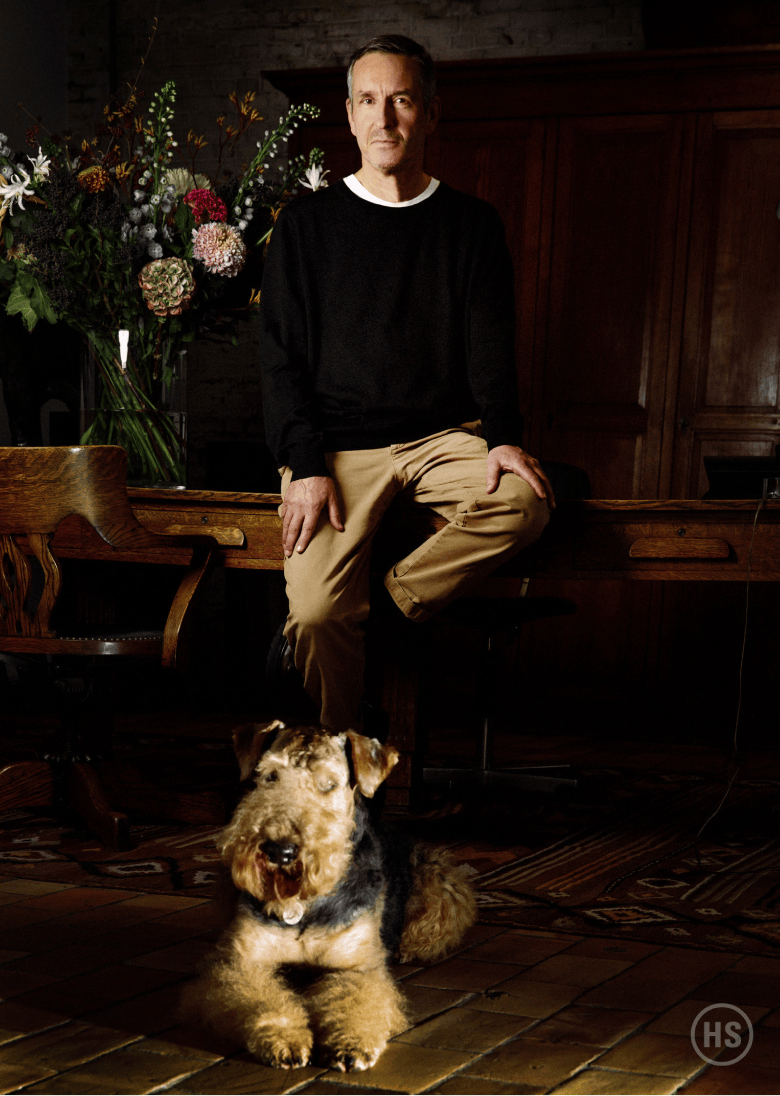
The only thing that’s different is that it’s 2023 and, since we last spoke, Van Noten has created several excellent and remarkably distinct collections (as usual), plus his debut partnership with streetwear brand Stüssy. Over the past three years, Dries Van Noten’s brand has evolved, but the man behind the eponymous label, and his instantly recognizable uniform, is utterly unchanged.
I ask Van Noten if he’s to fashion as Steve Jobs was to tech: a savant who resigned himself to wearing a uniform so as to better focus his brilliance on reframing his chosen medium, instead of his own wardrobe.
“I don’t think so,” Van Noten patiently replies.


At this point, I’m looking for a reaction — any reaction — so I ask the same question that every interviewer inevitably asks him: Why has Dries Van Noten, the brand, been so successful for so long?
Van Noten, the man, shrugs. “I don’t know.”
The same answer to the same question that he’s perpetually brushed off with the world-weariness of someone who’s done it all. Twice!
But this is the succinct and equivocal logic I’ve come to expect from Van Noten. The man does not speak his mind for the sake of it; not for fear of being wrong but due to practiced precision in speech, craft, and career. Everything Van Noten does is exact, an extension of the remarkable clarity of vision that turns fashion buyers into believers.
A third-generation tailor, Van Noten knows well enough to trust his gut. He’s achieved some of the world’s highest civilian honors: Beyond being known as the most marketable and renowned member of the industry-deconstructing Antwerp Six collective, he’s been awarded with France’s l’Ordre des Arts et des Lettres, the CFDA’s International Designer of the Year, a baronship from the King of Belgium (!), and, I have to add, my undying adoration. All this on the strength of the choices he’s made since graduating from Antwerp’s Royal Academy of Fine Arts in 1980.
As most fashion-curious folks likely already know, it was at the academy that Van Noten met his fellow Antwerp Six members — Walter Van Beirendonck, Ann Demeulemeester, Dirk Bikkembergs, Marina Yee, and Dirk Van Saene — and began dedicating himself to the single-minded pursuit of fashion, inadvertently upsetting the heretofore staid medium simply by going his own way, all the way. But that was four decades ago, when Van Noten wore Prince of Wales checkered blazers and white sneakers, a look that eventually softened into what I see before me: sophisticated, 65-year-old sweater-wearing Dries Van Noten.
If there’s any one thing you could point to as Van Noten’s most significant stamp on fashion history, it may very well be his ability to render ordinary clothes extraordinary by elevating silhouette, fabrication, color, print, or pattern without stripping away the garments’ wearability. It sounds simple enough, but shaping beauty without forsaking utility, while simultaneously straddling the commercial and creative realms, requires a master’s touch and an exceptional eye. Van Noten’s jackets are elegant and wearable; his shirts are gorgeous and wearable. They’re made to be worn, they’re made to last, and they’re also meant to dazzle. The Dries Van Noten brand represents fashion’s platonic ideal: Decade on decade, it produces purposeful, approachable clothes that also happen to be imminently beautiful. The difference is recognizable to the layperson and the fashion insider alike. This is what makes Van Noten the designer’s designer.


“WHEN YOU CAN CALL SOMEONE CONSISTENT, IT’S A COMPLIMENT. CONSISTENT IS NOT THE SAME AS BORING. BUT CLASSIC AND TIMELESS – MAYBE THEY’RE A LITTLE TOO SAFE.”
Perhaps that’s why, to many, Dries Van Noten’s appeal can be boiled down to consistency. It’s easy enough to make one beautiful dress; it’s far more impressive to consistently create beautiful dresses. Once, I asked a designer who recently opened a Lower East Side menswear store specializing in Western shirts and carpenter jeans: “Who’s your favorite designer?” Without hesitation, he replied, “Dries Van Noten.”
“Why?” I asked.
“Because Dries is classic, timeless. Everything he makes is meant to be worn forever; he’s the antithesis of trend.”
When I recount the exchange to him, Van Noten appreciates the compliment, mostly.
“Consistent is a nice word,” he says. “When you can call someone consistent, it’s a compliment. Consistent is not the same as ‘boring.’ But classic and timeless — maybe they’re a little too safe.”
This is the flip side of Van Noten’s classic, consistent, and uniform-wearing persona: unremitting hunger for innovation. And it’s why, 37 years after founding his fashion label, Van Noten fears only one thing: stagnation.
It’s also why he’s adamant that his staff remain young. Like, surprisingly young. “The oldest [member of my design team] is 32 or 33. It’s really a young bunch of people,” he says. “Of course, it’s quite [disconcerting] that most of them were not born when I was making my first collections, and they love to remind me of that. ‘When you made this garment, I was two years old!’” Van Noten exclaims, eyes widening in mock surprise, affecting the tone of a staffer half his age. (So this is what it sounds like to tease Van Noten.) “‘Okay. Yes, I understand,’” he says, returning to his own warmly clipped tone for the dry retort. “‘Thank you.’”
Youth and newness can be mutually exclusive terms, though; they are “two different concepts,” as Van Noten explains. “Youth is not only about age but mentality. Newness is something you haven’t seen before; it has nothing to do with age.” In other words, progress is part of his process. Van Noten contends that “old thinking” impedes freshness, so he surrounds himself with unjaded minds. And the “olds” wouldn’t likely show Van Noten new musicians and artists on TikTok, you know. “I’m very hungry,” says Van Noten. “I want to see, I want to learn, and I want to understand what young people are doing. Parents learn as much from their children as the children learn from their parents, right? It’s the same with my creative team. They have to explain to me, they have to surprise me, they have to shock me. Absolutely important. Otherwise I get bored, and I don’t want to get bored.” Boredom is, in essence, loss of momentum. “Designers need a lot of energy, and the energy has to come from somewhere,” he explains. “It’s not earning money that gives you true energy. No, it has to be that the creative side stimulates you. It has to be so many different things. And that for me is important. The surprise and the newness are very important.”
Van Noten stands up abruptly. It’s the first notable physical shift he’s made in about 30 monkish minutes of gentle gesticulation and stream-of-conscious dialogue. The patchwork quilt of visual and audible stability is suddenly yanked away; I’m practically bowled over. “Sorry, sorry, one second,” he murmurs, vanishing off-screen.
And here, I think to myself, is the tangible manifestation of the brusque pivots necessary of a Van Noten collection, the newness he aims to achieve in his practice. If this is an intentional demonstration, Van Noten is twice the genius anyone already believes him to be. If it isn’t, well, whoever is at his door has impeccable timing.
As rapidly as he disappeared, Van Noten is back, arcing into his seat as if he’d never left. But the momentary reprieve has sparked a new thought: “There is not enough newness at the moment for me,” he says, a fresh spark in his eyes. “There is not enough newness,” he repeats emphatically.
Now we’re getting somewhere.
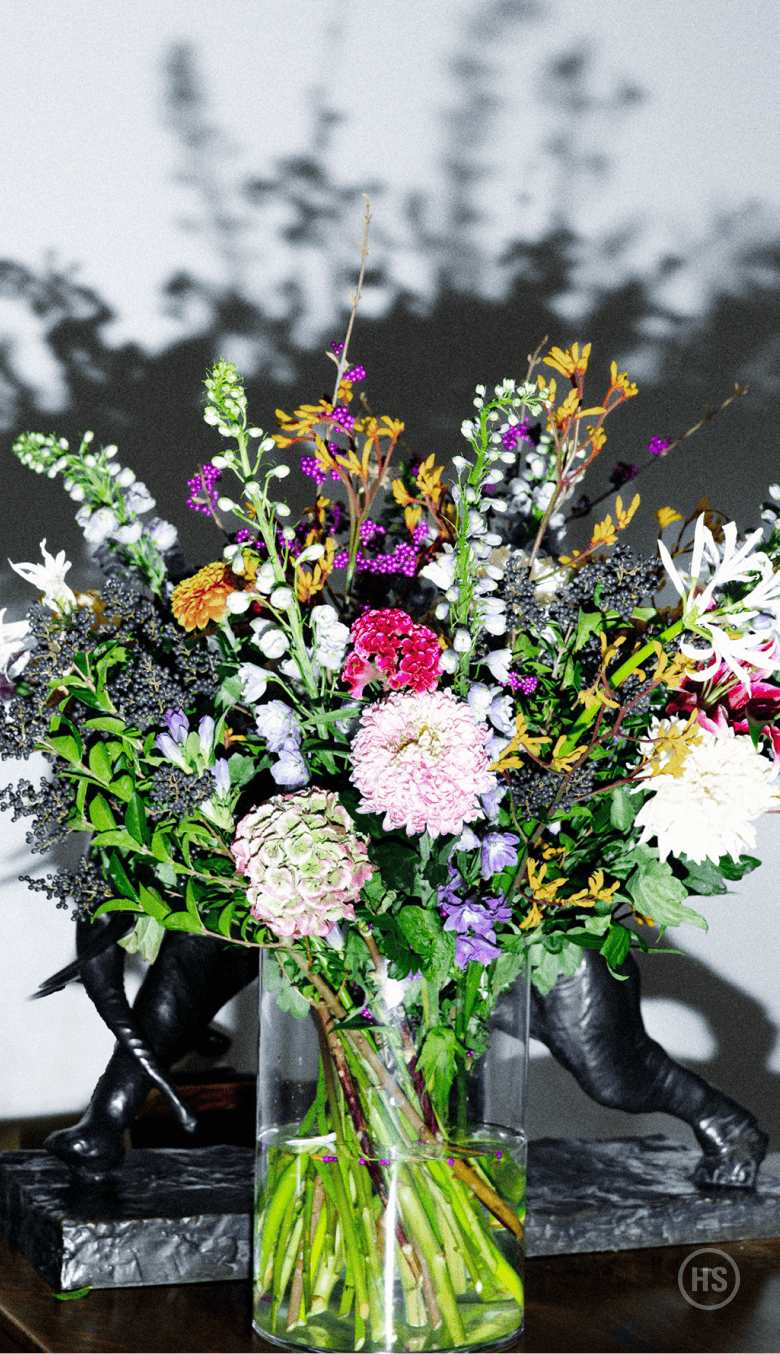
I ask Van Noten if he’s on TikTok. Not only is he not, but, true to form, he has no real opinion of the app (“I don’t know it well enough to judge”). He is on Instagram, though, another testament to his unquenchable thirst for evolution. I ask for the name of his personal Instagram account and he bemusedly declines, calling to mind another truism: Adventurousness has its natural boundaries, of which we are each the architect. To be witnessed on Instagram tending to his garden or playing with beloved hound Scott would undercut the actual surprises that Van Noten delivers. His variety of surprise is realized in the spectrum of his brand’s wearable palette: A double-breasted peak lapel blazer cropped to the waist; an enveloping shirt patched together from old-season fabrics; a glossy collarless coat that evokes a military liner jacket melted in the vein of Dali’s clocks. It’s his bounty of expressive, sumptuous fabrics. For his Spring/Summer 2024 line alone, Van Noten selected ombré-dyed satin, crumpled wool gabardine, shredded cotton twill, metallic sequins, and silk woven so fine as to be see-through.
It’s also in the variety of his character, the Dries Van Noten man: One season, he was a louche dude who strolled in platform sandals and baggy sweatpants that drooped to the floor. The next, he was wearing a polyurethane trench over a blazer (no shirt) and cropped trousers in utility orange. Only a year prior, this fellow was wearing a white shirt, tie, and crisply tailored suit indistinguishable from a person dressed by Savile Row, save for the tie-dye splashed across his jacket and pants. The Van Noten man has even been known to wear a two-tone knitted tank top that drapes to mid-thigh and pants evocative of a bisected trench coat, paired with fur-trimmed flip-flops.
Newness.
“Fashion has to be created by newness, surprise, beauty,” he reiterates. “It’s not just that something that you haven’t seen before is automatically good, but that emotion you get when you see something that makes you say, ‘Oh, this is really interesting. This I really would like to have because this really fits my personality.’ I need my team around me to guide me there. Sometimes I lose it all in the sea of garments which we create.”
Van Noten does admit that he makes a lot of clothes (“It’s strange for me to say that”), but, even if his inspiration is occasionally random, his creative process is perpetually purposeful. “We esteem buyers very highly,” he explains. “I like that we have a lot of young people who come to our showroom, take their time, and really choose the things that they like and the things that are suitable for their clients. That way, when you travel around the world, you see how our collection looks in different ways. That’s exactly what I like.”
Selling the same collection at every store would be boring — Van Noten hates boring — but it would also miss the point. Designers “all make clothes to sell because that’s the goal of what we are doing. We want to sell it because the fact that we sell it means that people are going to wear it, and that’s also the goal,” he says, suddenly animated. “It would be the same if a baker baked cakes only to look at them, not eat them. For me, if you bake a cake, you have to eat it, and the fact that it’s being eaten is proof, as they say, of the pudding. The proof of the pudding is eating it. So that’s the same for fashion. You have to have people who wear it.”


Here we have another distinction: Newness without thoughtlessness. Freshness tempered by tradition. For Van Noten, there is no easy fashion. There isn’t even an industry (“That’s not a very nice word to call it, ‘industry’; fashion is much more than just business”). It’s more than labels printed on shirts (“For me, that’s a little bit sad, and not really honest to people who love fashion”). No, fashion for Van Noten is a means of expression. “All those young people who are now at fashion schools, they need to have perspectives beyond fashion being controlled by conglomerates and the biggest fashion influences being the Kardashians,” says Van Noten, who certainly does not keep up with them. “With all respect for the Kardashians, I think it’s a little bit too simplified. Fashion is worth more than that.”
Which brings us back to his own wardrobe and the appeal of wearing the same clothes every day. No, he doesn’t like the Jobs comparison, but there is something there, something about wearing a uniform to conserve precious mental energy. When I press Van Noten, he elaborates: “Being a fashion designer, you have to make decisions the whole day. Every yarn, every fabric, every color combination. It’s decisions from the early morning until late in the evening. So, the last thing I want is that, when I open my cupboard, I have to choose between a red sweater and a yellow sweater with purple pants or green pants. It’s not only my wardrobe. When I go to restaurants, we always just take the dish of the day because, even looking at a menu, for me, it’s just too much. It’s a decision. That doesn’t relax me and I want to go to a restaurant to relax. I have a uniform to save my energy for more important things than getting dressed.”
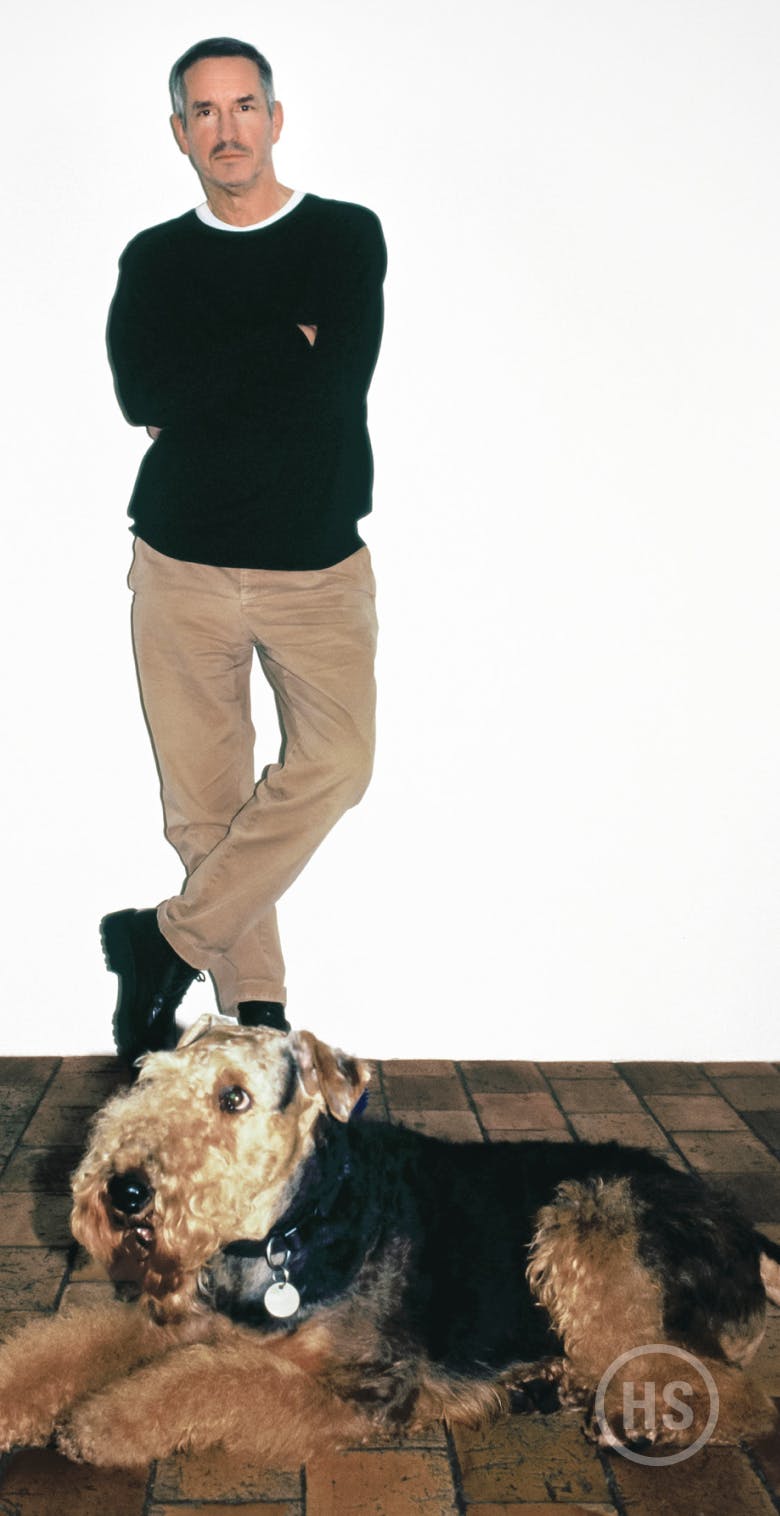
This is the logical approach of Dries Van Noten, a guy for whom the day peaks when he walks his dog, simply because it means being in nature. The clothes that he himself wears matter little because it’s not about what Dries Van Noten wears, it’s all about what Dries Van Noten creates. Like Steve Jobs. But different.
This talk about Van Noten’s inner life inspires another silly little question in me, so I ask it, half-jokingly, just to see the mechanisms of the Van Noten Logic at work: “Are we friends, you and I?” After all, we’ve spoken on Zoom many times in a relatively short period.

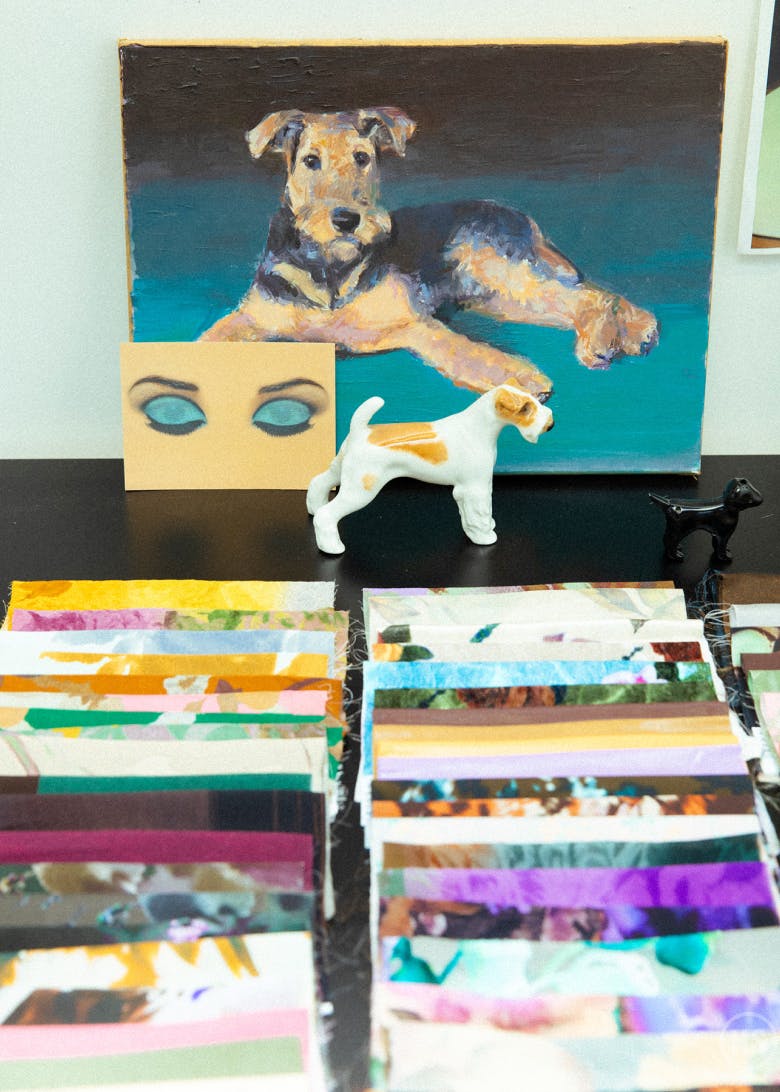
“Ah, no,” he replies, shifting his head-holding palm to the left hand, eyes upward. “I think ‘friends’ is a little bit... I’m quite picky with who I’m friends with, and we’d have to be very close. It’s not that I’m friends with a lot of people.”
It’s the ultimate in polite brush-offs, the kindest possible rejection of what I thought was clearly in jest (though the offer is still open if you change your mind, Dries!). But that’s the thing: Van Noten is so considerate that even a wink and a nod is treated with the gravity of a subpoena.
“I’m a serious guy,” he admits.
Let’s move on. Heck, we must move on — because this is Van Noten. “Moving forward is absolutely necessary. Glorifying the past, definitely not,” he says. “Look, I respect the past, I respect tradition, I respect the know-how, our own, but you have to make collections for the future. I don’t want to stand still.”