Japanese Artist Mariko Mori
Predicted Our AI Future
“An artist’s work is to try and find things through ourselves. To visualize something people haven’t seen before,” explains Mariko Mori, beaming into a slightly fuzzy video call from Yuputira House, the pearlescent, almost alienlike architectural marvel that serves as her home and studio in Japan. Although Yuputira physically exists on the shores of Miyako Island, Mori appears to exist beyond any earthly plane.
She is wearing all white and has been for nearly 30 years, since a spiritual experience irrevocably altered her while she was working on her 1999 installation, Dream Temple. “I saw a very, very strong light, and white is the closest color to it,” she explains matter-of-factly. “I didn’t want to forget it. So I decided to wear white because it would always remind me of that very precious experience.”
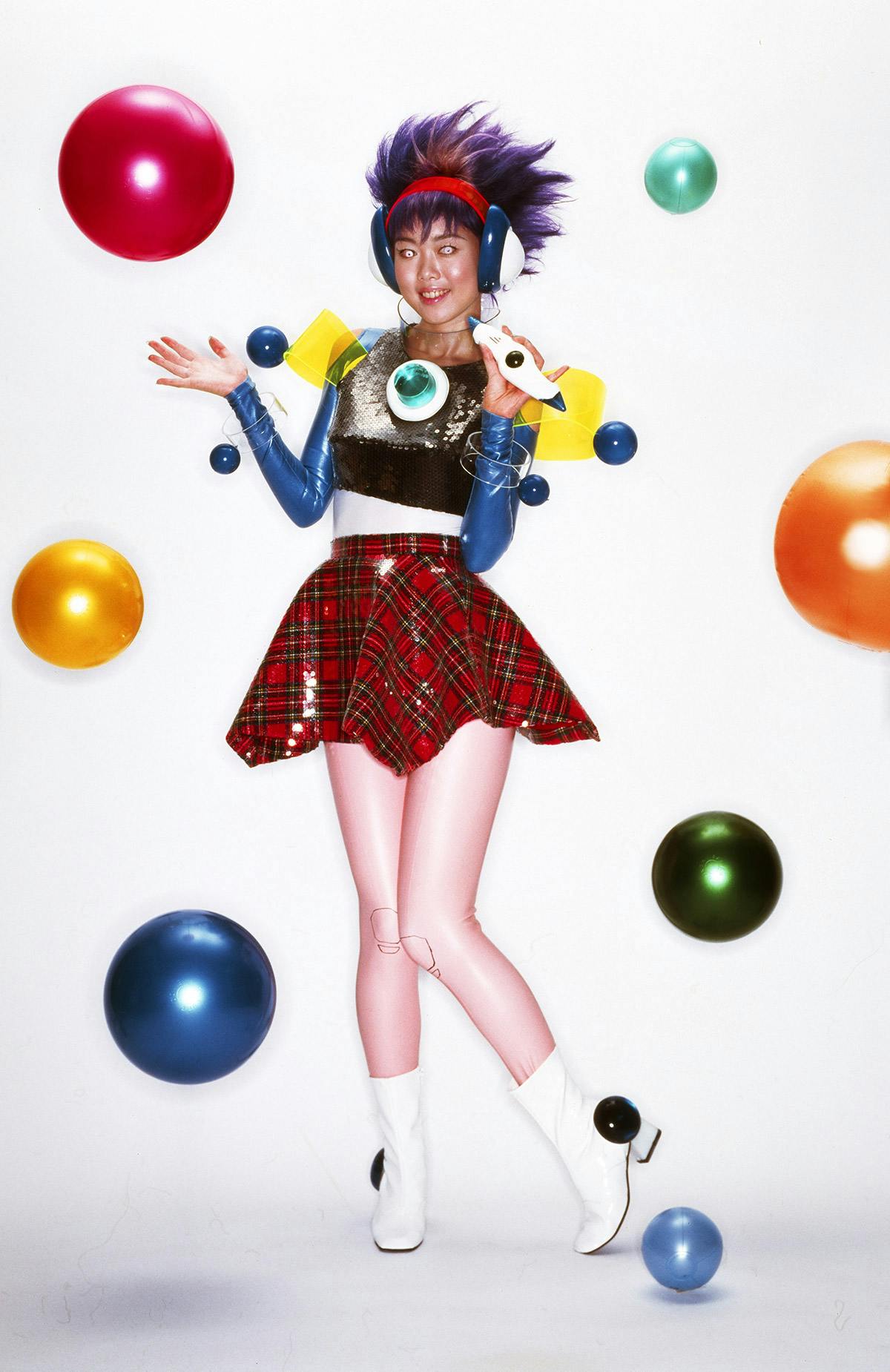
Mariko Mori, Birth of a Star, 1995 © 2026 Mariko Mori, Member Artists Rights Society (ARS), New York
Mori has come to feel larger than life since her early “Cyborg” series of otaku-inspired self-portraits around Tokyo helped her burst onto the contemporary art scene in 1994. Those portraits saw her dress as a sexualized robot in Play with Me, or in Tea Ceremony, in a typical office worker’s uniform, accessorized with metallic tights and pointed ears, serving tea to salarymen. Just three years later, in 1997, she was awarded the 47th Venice Biennale’s Award of Excellence for Nirvana — her groundbreaking 3D video installation that combined sound, scent, and Mori, appearing as a futuristic cyber-deity floating on a lotus alongside a phalanx of little otherworldly musicians.
Mori’s output has always been slightly confounding. In one work, she’s dressing as a deity in China’s Flaming Mountains; in another, she’s rigging a glass sculpture to a neutrino observatory so that it glows whenever a distant star dies. But focus on the strangeness, and you’ll miss just how clairvoyant a cultural figure she’s been: The questions she began to ask in the ’90s — about the image and the self, about what technology can and cannot do to connect us, about the thinning membrane between reality and its representations — have become the defining themes of the current era.
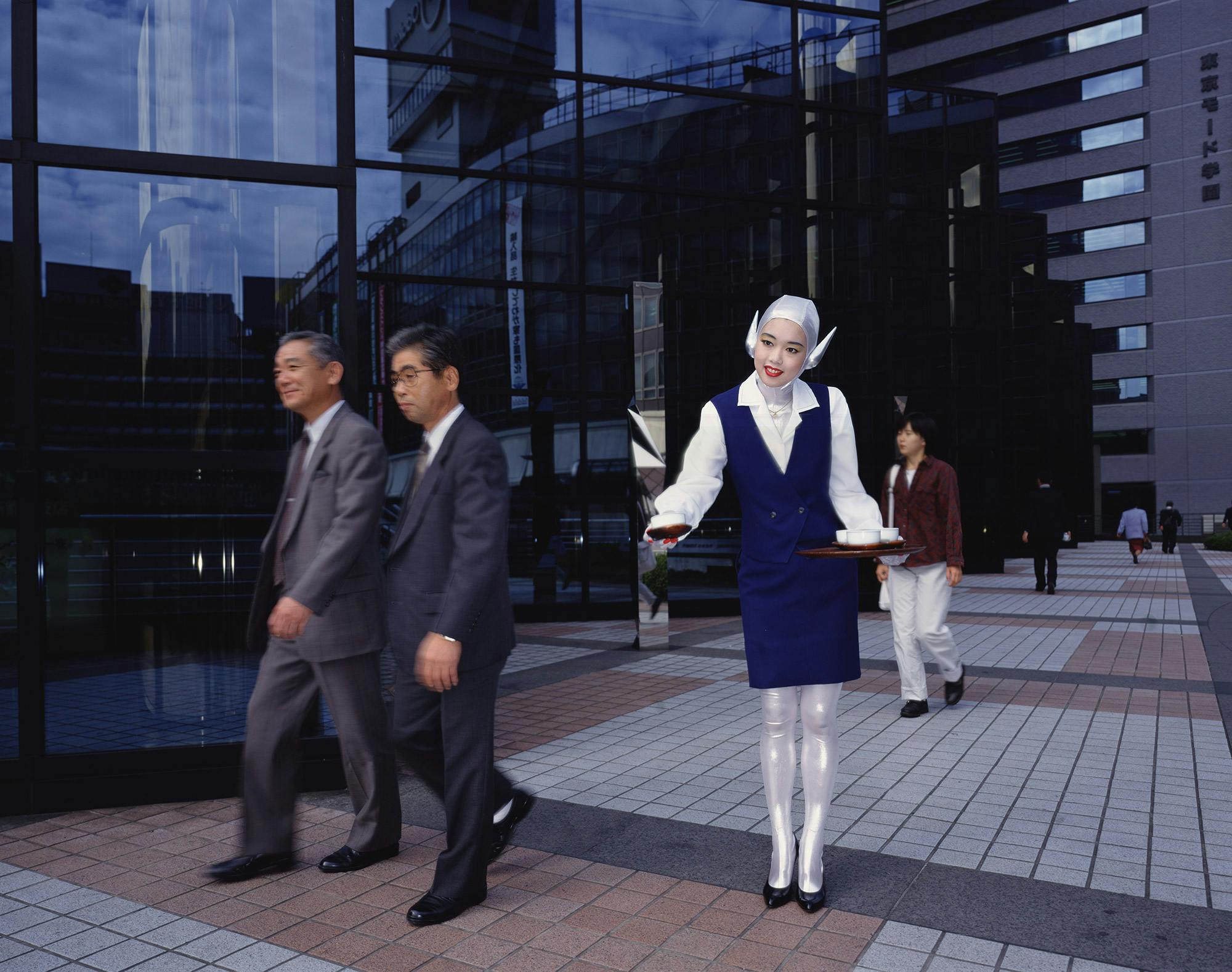
Mariko Mori, Tea Ceremony III, 1994 © 2026 Mariko Mori, Member Artists Rights Society (ARS), New York
The artist works through those questions using the vocabulary of fashion and image-making built on her years at Bunka Fashion College and working pick-up modeling gigs. Indeed, her early work landed just as easily in magazines as in art galleries. She may have moved beyond the body to tackle galaxy-brained questions about the soul and the subconscious, but it’s her early exploration of identity that feels most prescient.
Now, after 24 years without a major museum show in Tokyo, Mori is ready for her reintroduction, with a sprawling exhibition at the Mori Art Museum in October featuring 40 works spanning three decades of her practice. It’s less a retrospective than a chance to catch up on just how far ahead Mori really was.

Raised in Tokyo by an inventor father and a Renaissance art historian mother, Mori’s childhood was shaped by Raphael and Bruegel and by the freedom to question the world around her. But it was a chance encounter with Jackson Pollock’s chaotic, paint-spattered Number 13, tucked into a stack of her mother’s art postcards, that first taught her just how powerful a tool art could be. “I was maybe nine or 10, but I could really feel it was a new kind of expression. It was completely modern, completely different,” she recalls. “I used to have a recurring nightmare as a child where the world was entirely abstract. That painting reminded me of that dream.”
Before Mori could translate this feeling into a career as one of Japan’s most trailblazing artists, she first stumbled into the realm of fashion, attending Bunka Fashion College in the late ’80s and frequenting the one magazine shop in Tokyo that sold The Face and i-D. It was an era of fashion marked by the rise of Rei Kawakubo of COMME des GARÇONS and Yohji Yamamoto, two designers who, for the first time, were finding success in the West by using their own cultural language.
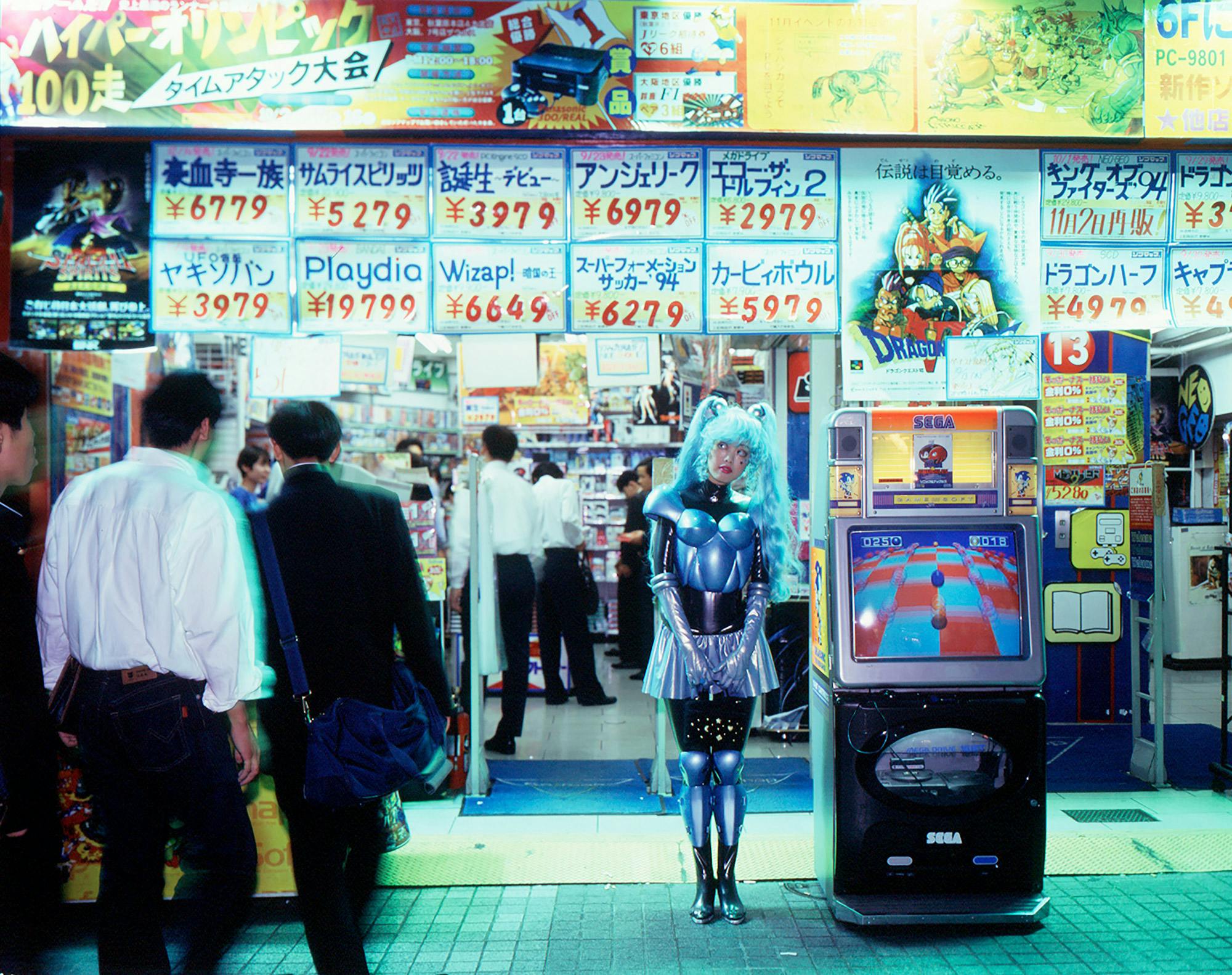
Mariko Mori, Play with Me, 1994 © 2026 Mariko Mori, Member Artists Rights Society (ARS), New York
Although Mori went on to work as a student designer and part-time model, it was the years she spent outside of Japan — first at art school in London, later in the Whitney Museum’s independent study program in New York City — that allowed her to stretch beyond her country’s socially conservative bubble.
“When I came back to Japan, I noticed that the social [life] of women was very repressed compared to the number of opportunities that women had in the US, Europe, and the UK,” she recalls. This realization inspired her to explore the divide through self-portraiture in 1994 using the transformative lens of otaku culture — a burgeoning space for creating “a new reality through computer games and animation” — to interrogate not just what it meant to be a woman in contemporary Japanese culture, but to live in reality, full stop.
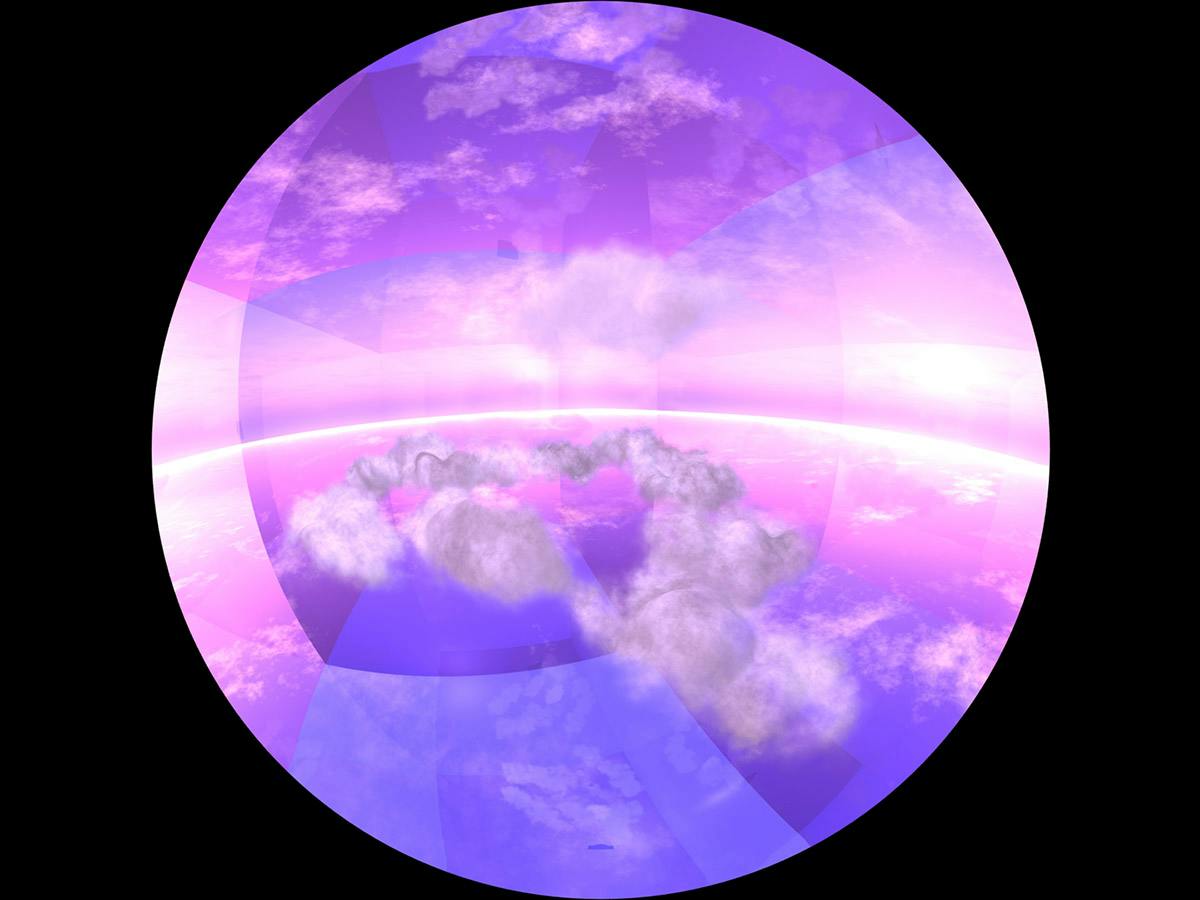
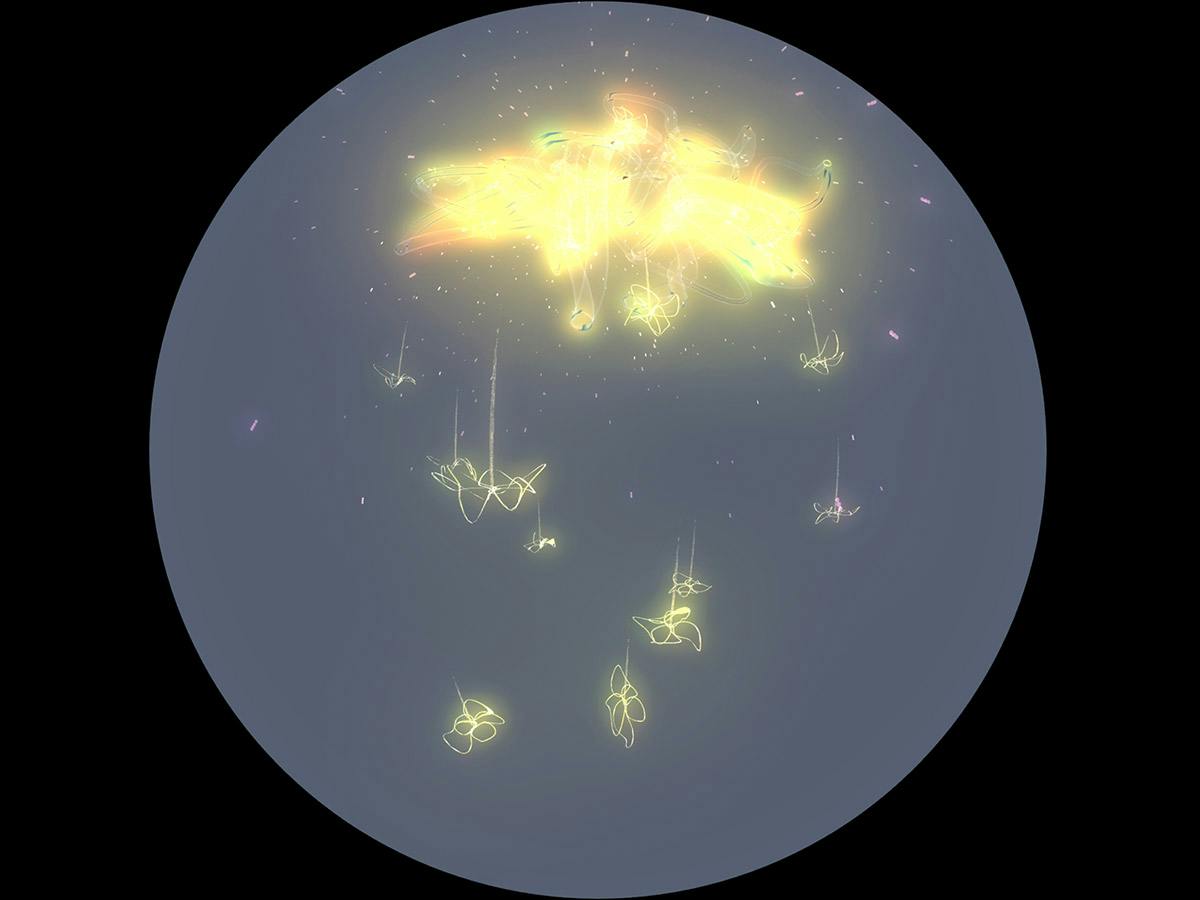
Mariko Mori, Dream Temple, 1997 – 1999 © 2026 Mariko Mori, Member Artists Rights Society (ARS), New York
In Subway, she exists as a cyborg, standing amid a crowded commuter train in a metallic outfit and headset, while in Birth of a Star, she’s in a bright white lightbox, dressed as a cyberpunk J-pop idol; her oversized headphones and spiky violet hair are lit from all sides, turning Mori into a liminal avatar years before the advent of social media would allow us all to birth our own stars.
“I saw fashion as a vocabulary to express ideas.”
Mariko Mori
As with the work of Kawakubo and Yamamoto, Mori’s dialogue with Japanese culture translated into recognition outside of Japan. “The image reached not only the art world but also fashion magazines. The work was accessible because of the image,” she says. “I saw fashion as a vocabulary to express ideas, something I could do instead of painting or sculpture.”
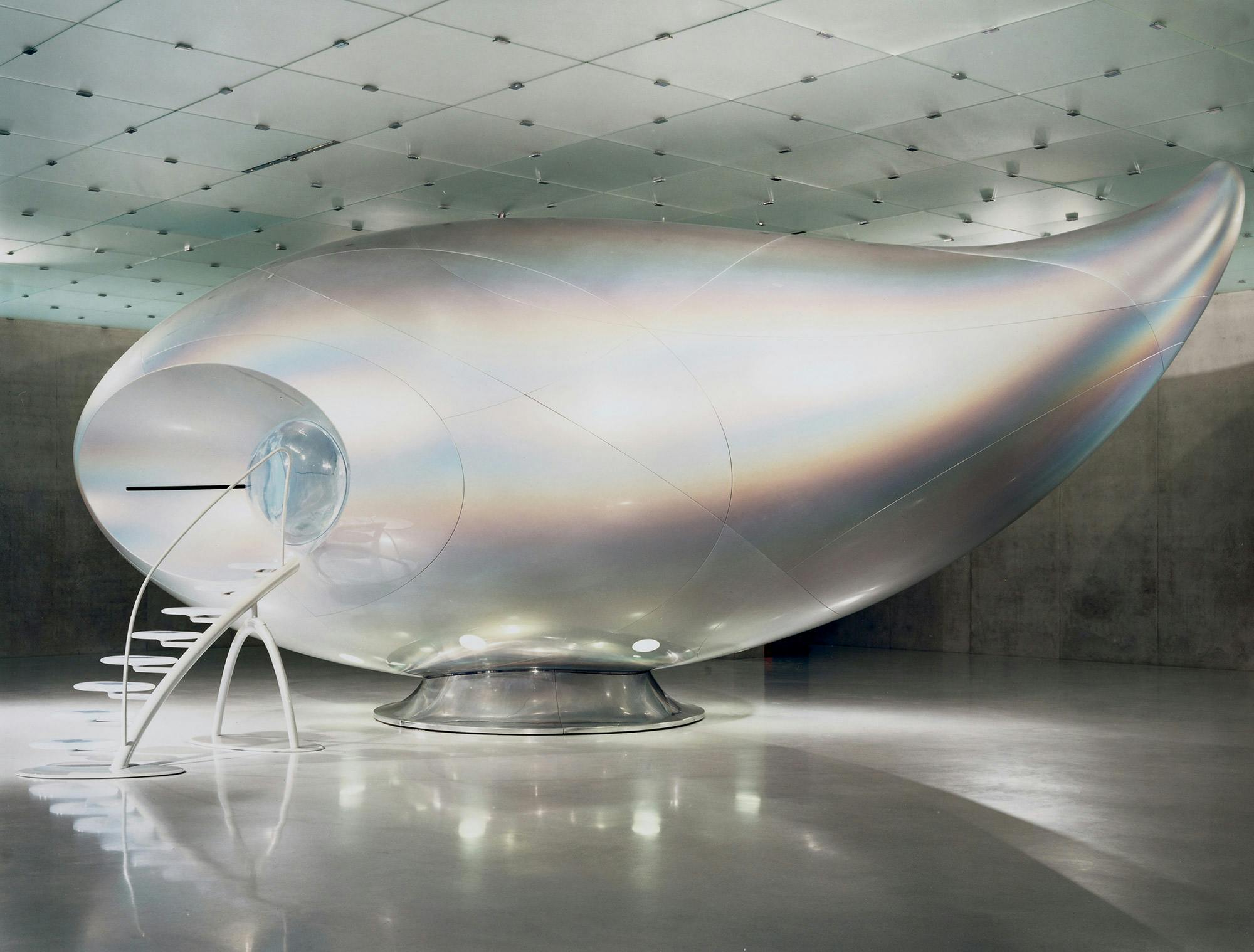
Mariko Mori, Wave UFO, 1999 – 2002 (Photo by Richard Learoyd. Installation view: Kunsthaus Bregenz, Austria, 2003) © 2026 Mariko Mori, Member Artists Rights Society (ARS), New York
This discovery of what an image could carry and how far it could travel became the engine that fueled everything that followed in the first chapter of Mori’s career. In 1996, she swapped the city for nature with the Esoteric Cosmos series: four billboard-sized murals mapping the elements of a Buddhist mandala on the path to enlightenment, featuring Mori seemingly superimposed within a stalagmite-covered cave somewhere in France or hovering as five figures, costumed and aflame, at China’s Flaming Mountains — the figures representing the Five Dhyani Buddhas, visualizing a state of nirvana where sensory-based desires are extinguished.
Revisited today, these images slot seamlessly into our blurred reality. But three decades ago, in the era before stock images and the technical wizardry of Photoshop, the series was revelatory — shot on location and processed with “a huge supercomputer, the size of an American refrigerator.”
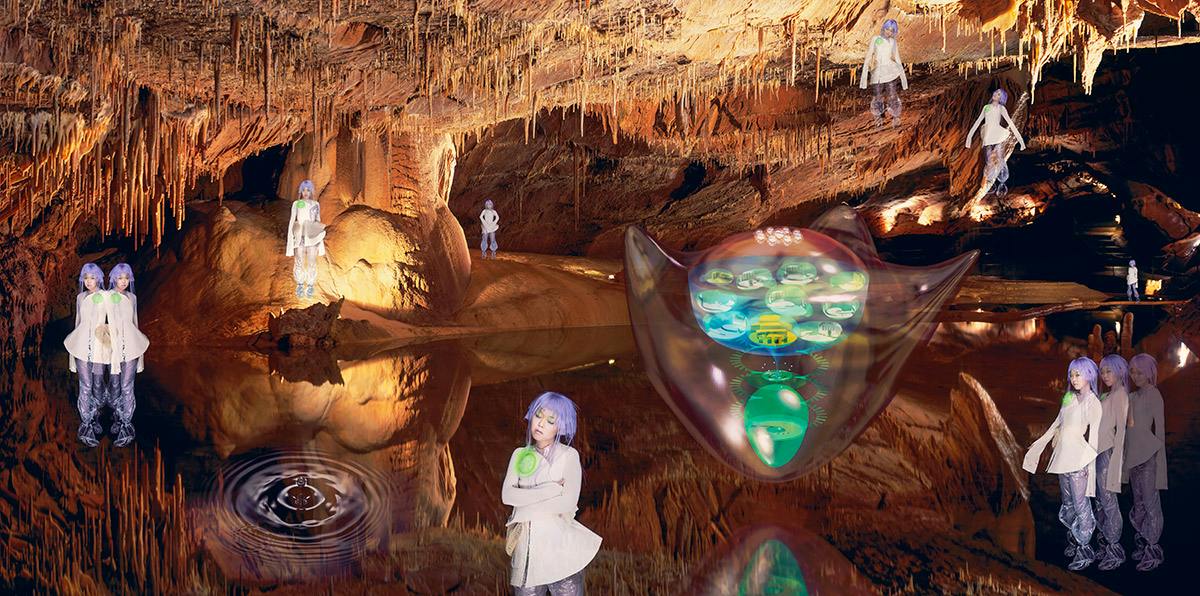
Mariko Mori, Esoteric Cosmos: Mirror of Water, 1996 – 1998 © 2026 Mariko Mori, Member Artists Rights Society (ARS), New York
Mori still appears in the work, now existing as a floating deity rather than a city-bound cyborg, but the social commentary has dissolved into something more interior: her physical body is there, but the self has begun to turn inward. It serves as a catalyst in her own journey of introspection. “At the beginning of my career, I was very much interested in society and popular culture, but my focus shifted toward Eastern philosophy — Buddhism, Shintoism, and so on — that doesn’t require me to use my own body,” she explains. “I realized that the images I [wanted to] create were more abstract than figurative. I wanted to express deep consciousness; in a way, it’s a self-portrait of the mind.”
The embodiment of this pivot came with Wave UFO, a seminal installation piece in the form of an 11-meter whale-shaped pod designed to spiritually connect three visitors at a time to one another through their own brain waves. First conceived in the late 1990s, the work took years to develop; the technology needed to keep pace with what Mori imagined had to be invented almost from scratch.
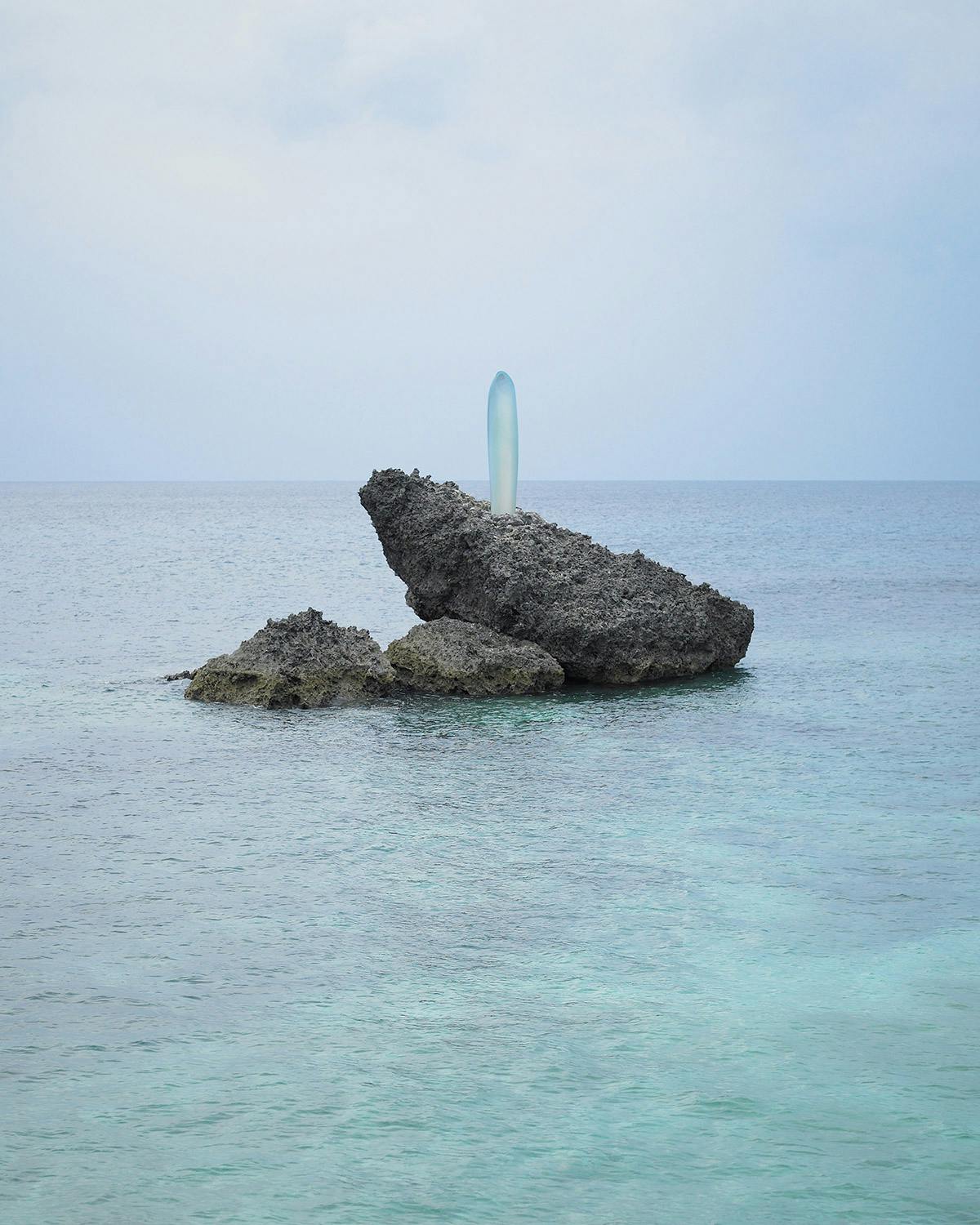
Mariko Mori, Primal Rhythm: Sun Pillar, 2011 (Photo by Richard Learoyd, courtesy of Faou Foundation, New York. Installation view: Seven Light Bay, Miyako Island, Japan) © 2026 Mariko Mori, Member Artists Rights Society (ARS), New York
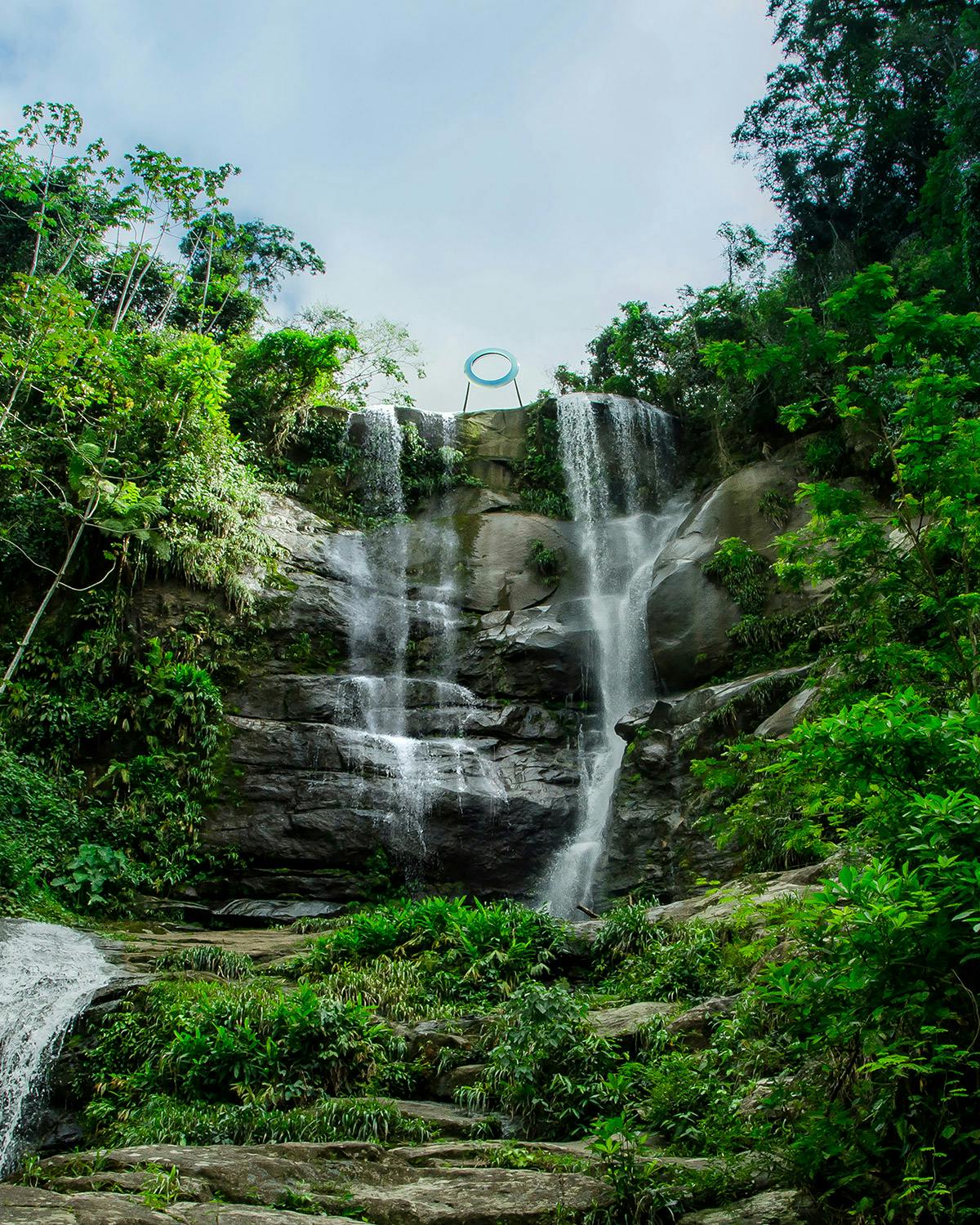
Mariko Mori, Ring: One with Nature, 2016 (Photo by Stephanie Leal, courtesy of Faou Foundation, New York. Installation view: Cunhambebe State Park, Rio de Janeiro, Brazil) © 2026 Mariko Mori, Member Artists Rights Society (ARS), New York
The work had guests wired up to brainwave monitors that translated their neural activity into color and movement on a domed screen. Though it debuted in Bregenz, Austria, it was a stop in New York City that proved most effective, two years after 9/11, while the city was still raw from the reminder of how quickly the world could fracture. “It was so important for people to be connected and to share the idea of oneness. The world was so divided at the time,” she says, pausing for a moment. “It’s divided again now, honestly.”
Speaking to Mori, it’s evident that she’s been guided foremost by this inner world rather than by the culture around her. Like the deities she depicted in the Esoteric Cosmos series, Mori has taken on an almost sagelike presence, aided by her all-white ensembles, which have, admittedly, made packing a suitcase very easy. “I can travel light,” she says with a laugh. “I just have one of each item, and everything matches.”
“Humans can bring something completely new into this world. At the moment, AI cannot.”
Mariko Mori
Freed to focus on life’s more existential questions, Mori’s inward turn hasn’t made her any less intrigued by technology’s utility as a tool of expression. This naturally carries through to artificial intelligence, which has become a lightning rod in creative circles. Mori has fed her own images into AI and considers it a “great system engineer” and supportive tool, but she is clear-eyed about its limitations. “AI is still not yet truly creative; it’s always copying, always referencing something that [already] exists,” she notes. “An artist’s work is to try and find things through ourselves: to visualize something people haven’t seen before. Humans can bring something completely new into this world. At the moment, AI cannot quite produce anything absolutely new.”
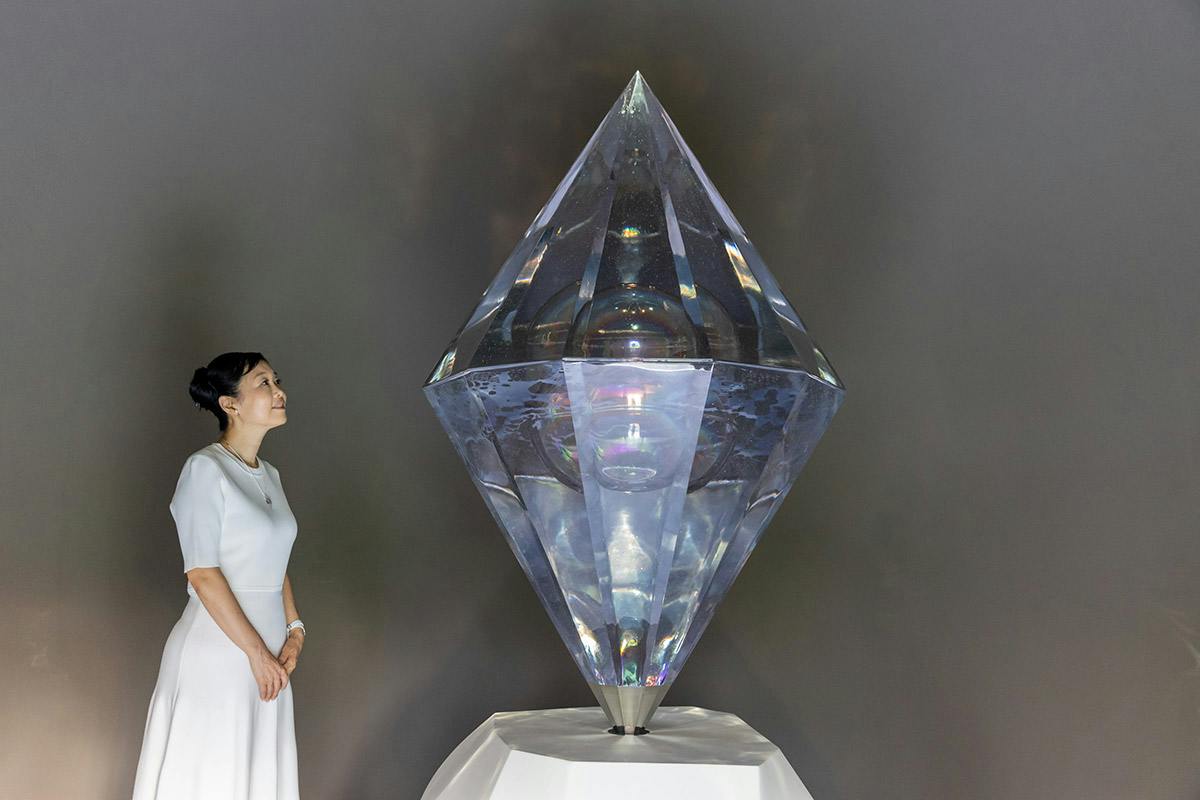
Mariko Mori, Peace Crystal, 2025 (Photo by Marta Buso, courtesy of Faou Foundation, New York. Installation view: Palazzo Corner della Ca' Granda, Venice, Italy, 2024) © 2026 Mariko Mori, Member Artists Rights Society (ARS), New York
Technology, for Mori, has always been the most current form of a very old human impulse: “It facilitates human dreams.” Her later works bear this out: Tom Na H-iu, a glass sculpture networked to a neutrino observatory in Japan that glows when a distant star dies; Ring: One with Nature, a two-ton glowing ring suspended above a Rio de Janeiro waterfall that shifts from blue to gold as the sun crosses the sky; and most recently, her Stone series — shown in her 2025 exhibition “Radiance” at Sean Kelly in New York — which features a set of translucent acrylic sculptures that reflect and diffract light, rooted in Japan’s sacred Iwakura stone sites, believed to be the landing places of the gods.
She’s appreciative of how far she’s come since those early works, dressed up in odd costumes around Tokyo, struggling to be seen. In 2000, as Mori was still making a name for herself, one critic at The Guardian called her “a slightly kooky Japanese artist.” Although she doesn’t remember this labeling, she is clear-eyed about the implication. “At the beginning, the art world is like a strainer, trying to shake people out,” she says. “It didn’t stop me. I had my own mission. Once you break through, people stop saying such things because you’ve continued to exist.” There’s no denying, or dismissing, her existence now.
Credits
Lead Image: Mariko Mori, Subway, 1994 © 2026 Mariko Mori, Member Artists Rights Society (ARS), New York