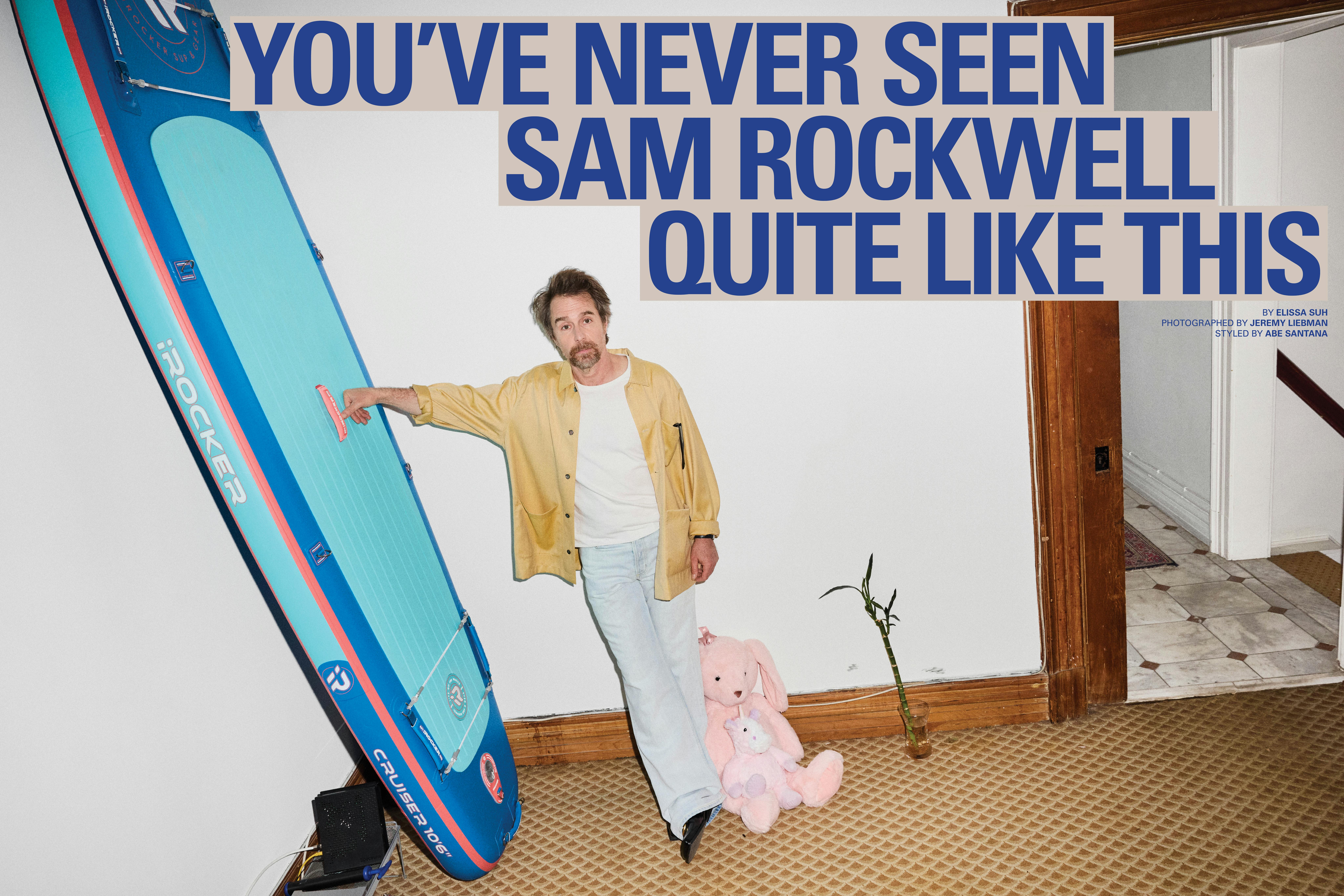
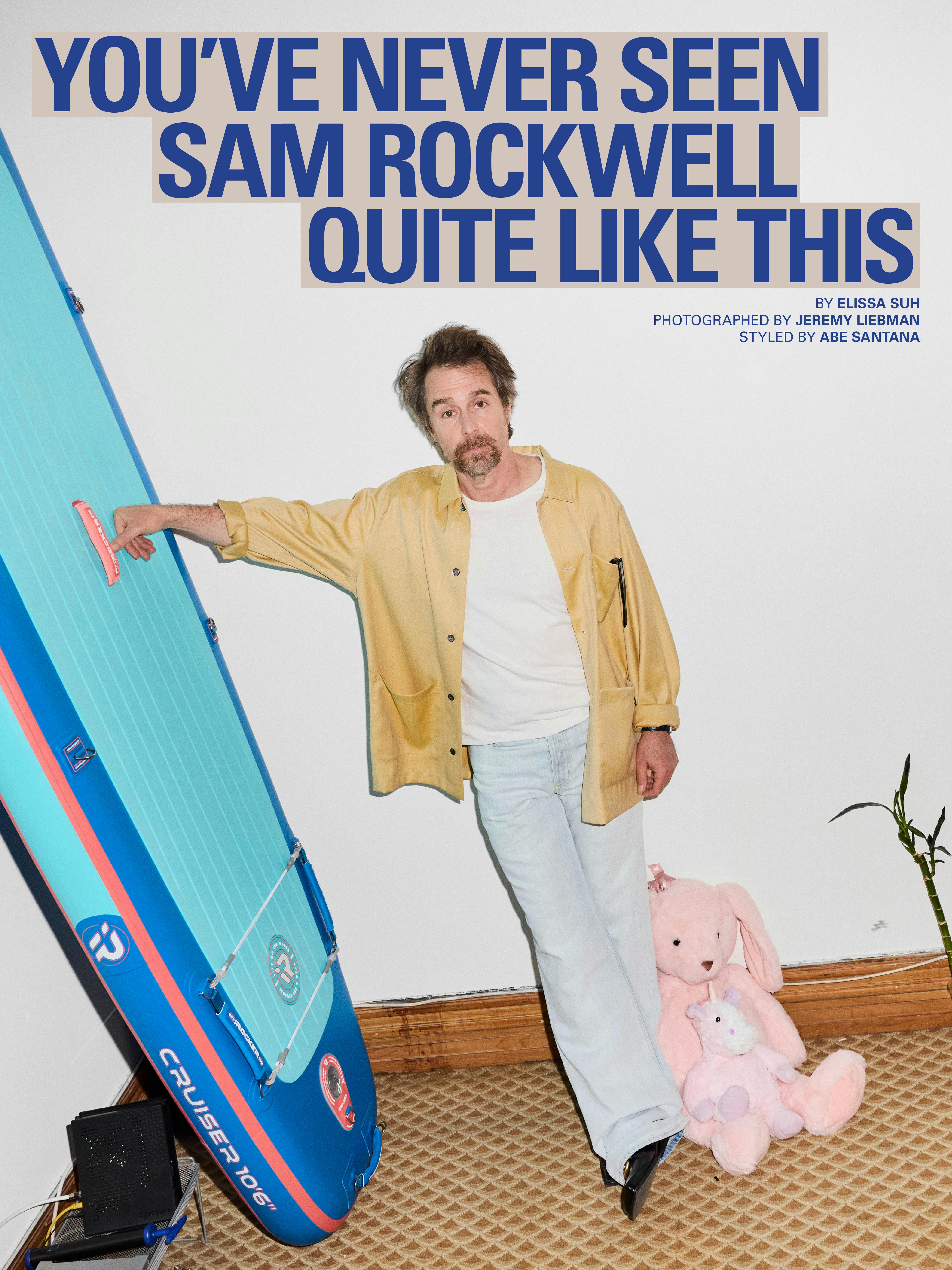
Top LADY WHITE, shirt GAJIROC from C’H’C’M’, pants and shoes DIOR, watch CARTIER
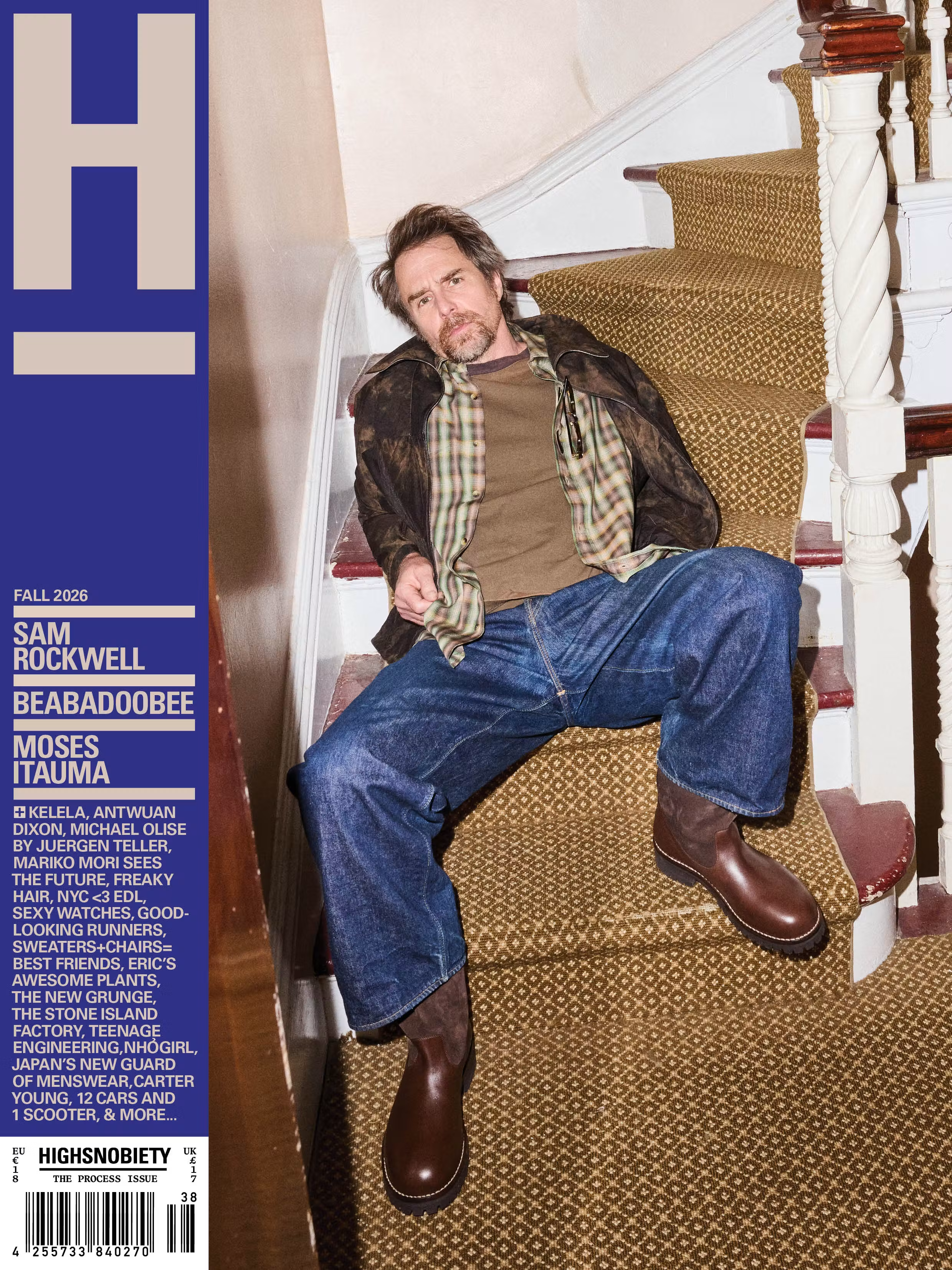
This story appears on the cover of the fall 2026 issue of Highsnobiety. Head here to get a copy.
In the third season of The White Lotus, which is set at a luxury wellness resort in Thailand, Sam Rockwell’s character, Frank — a recovering addict with a shady past — orders a chamomile tea and casually launches into an extraordinary confession about all the times he has tried to fuck his way out of his own emptiness. The “Asian girl monologue,” as it’s known, runs for several uninterrupted minutes. By the time it’s over, Frank has hijacked the season.
“They told me it broke the internet,” Rockwell says. “I was like, ‘I don’t even know what that means. What does that mean break?’ I guess it struck a chord.”
Frank carries the same faint aura of volatility that has trailed so many of Rockwell’s characters. But, like Rockwell, who is currently sporting a sandy goatee for a project he’s filming, Frank is tempered by a newfound maturity and sense of ease in his own skin.
In person, it takes a minute for that ease to become apparent. Rockwell is late because of the rain and a little frantic about it, apologizing as he meets me at the jewel-toned bar of The Mark Hotel. He’s come straight from the gym — he has a backpack the size of a small watermelon slung over one shoulder — and he’s wearing a trucker cap and olive-green chinos. He looks like any other guy killing an afternoon.
By the time he’s ordered branzino, sauteed spinach, and a Diet Coke, the fluster has started to drain out of him. He laughs freely, often at himself. He gushes, loudly, when something is good, whether it’s a director or one of the chickpea fries I offer him.
Rockwell, 57, is the kind of stalwart whose face you’ve seen in dozens and dozens of movies, TV shows, and plays. He has also, incidentally, been nominated for two Oscars and won one, along with a BAFTA, a Golden Globe, and several SAG Actor Awards. Ask people to name their favorite Rockwell performance, and you’ll get a variety of answers: The burnout lifeguard in The Way Way Back. The sad, fated philanderer and choreographer on the FX show Fosse/Verdon. It could be Moon, in which he plays an astronaut confronting the existential, or maybe corporeal, threat of his own double. Or Eric Knox, the slick villain who wants to shake and bake with Drew Barrymore in Charlie’s Angels. With a career this sprawling, the patterns start to surface.
Rockwell’s characters hold a recognizable shape. They tend to be adrenalized, quirky antiheroes, a bit seedy, upbeat and offbeat, though never, somehow, cartoonish. They throw people out of windows. They accidentally nuke entire planets. They’re occasionally racist, and they always dance. (“I could take a break from racists. A long break,” he told The Hollywood Reporter during a 2019 roundtable.) They’re secret spies, secret traitors, sometimes both. Other times they are, quite simply, psychopaths — as in 2012’s Seven Psychopaths, Rockwell’s first in a career-long series of collaborations with the British-Irish director and playwright Martin McDonagh, who directed the film for which Rockwell won his Oscar.
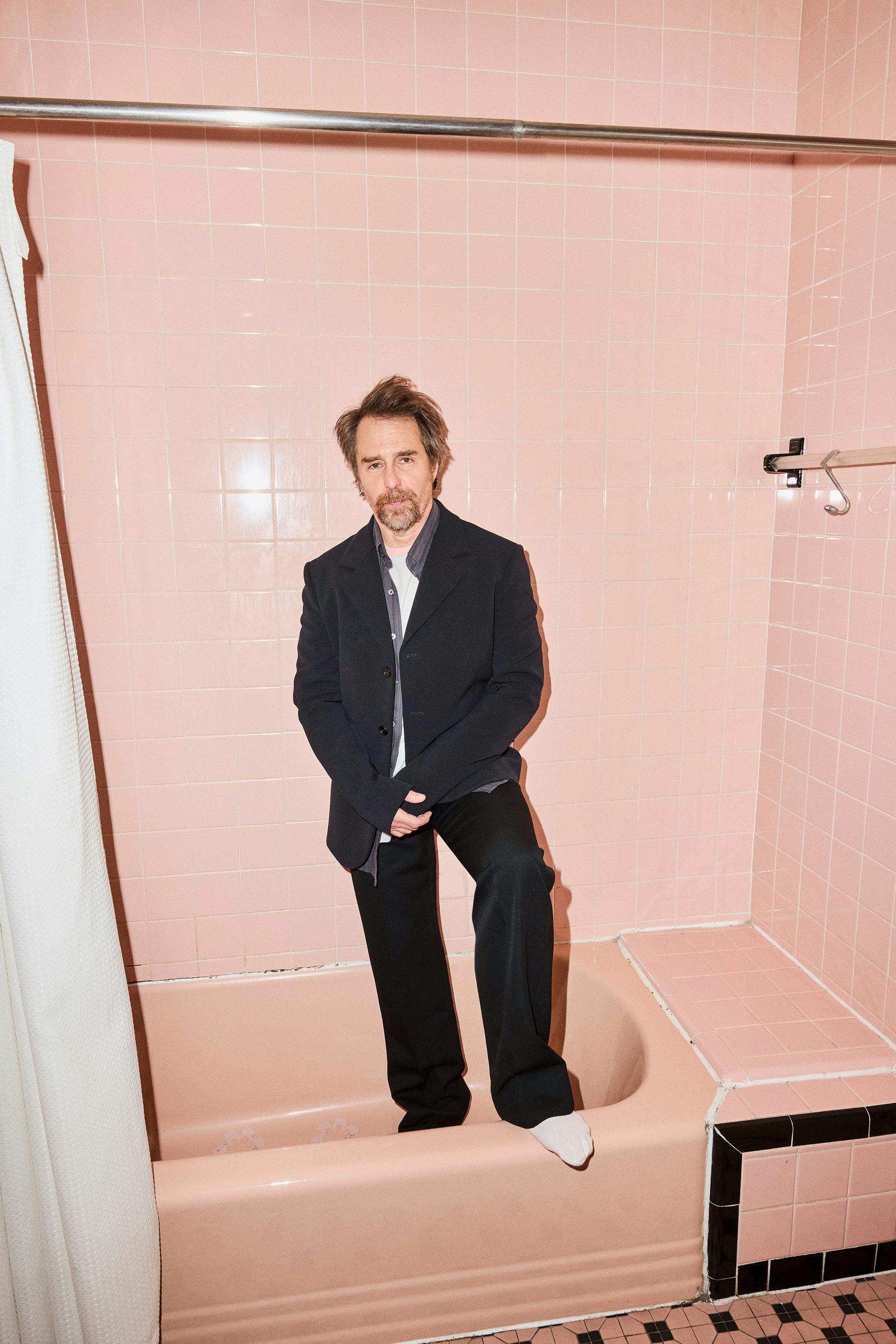
Top SMALL TALK, shirt CARTER YOUNG, jacket and pants LOEWE
This November, the pair will release their latest project, Wild Horse Nine, in which Rockwell and John Malkovich play two CIA operatives in the lead-up to the Chilean coup. It’s largely a two-hander, with Rockwell playing Lee, the tight company man to Malkovich’s brooding, sardonic mentor. Lee is, unusually for Rockwell, the still point of the film. “I usually play wacky guys, but he’s a straight guy, somewhere between Steve McQueen and Jason Bateman,” he says of the comedic tenor.
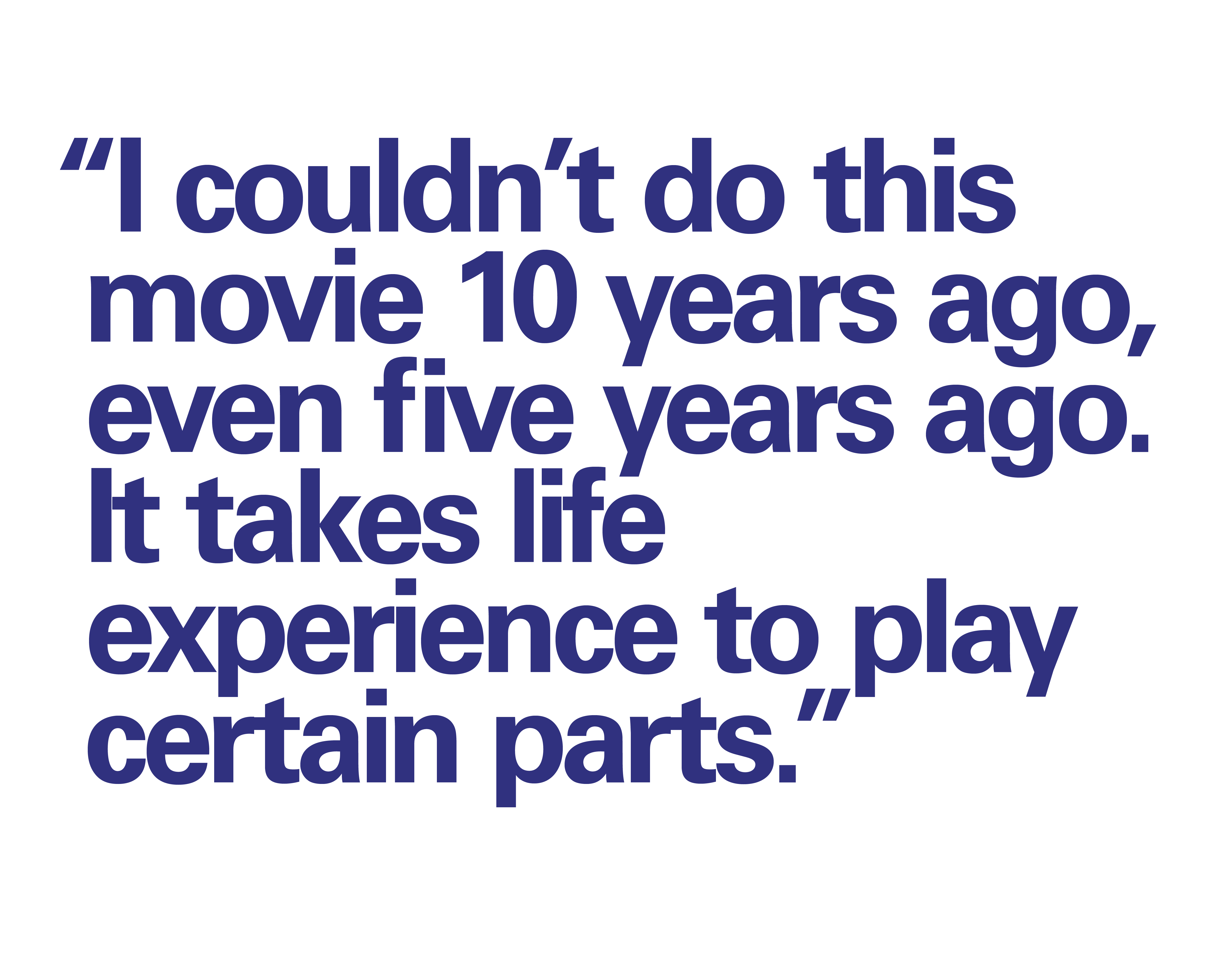
McDonagh describes Lee as “the most adult role, in the most adult movie,” and Rockwell agrees. “Somehow, Martin’s brought me to this point in my life, and I’m here, and I’m the right age,” he says. “I couldn’t do this movie 10 years ago, even five years ago. It takes life experience to play certain parts.”
The movie, which premiered at Venice this month, already has awards prognosticators banking on numerous Oscar nominations, including for Rockwell. Lee is built on restraint, and that kind of turn tends to be exactly what gets the Academy excited about an actor of Rockwell’s vintage.
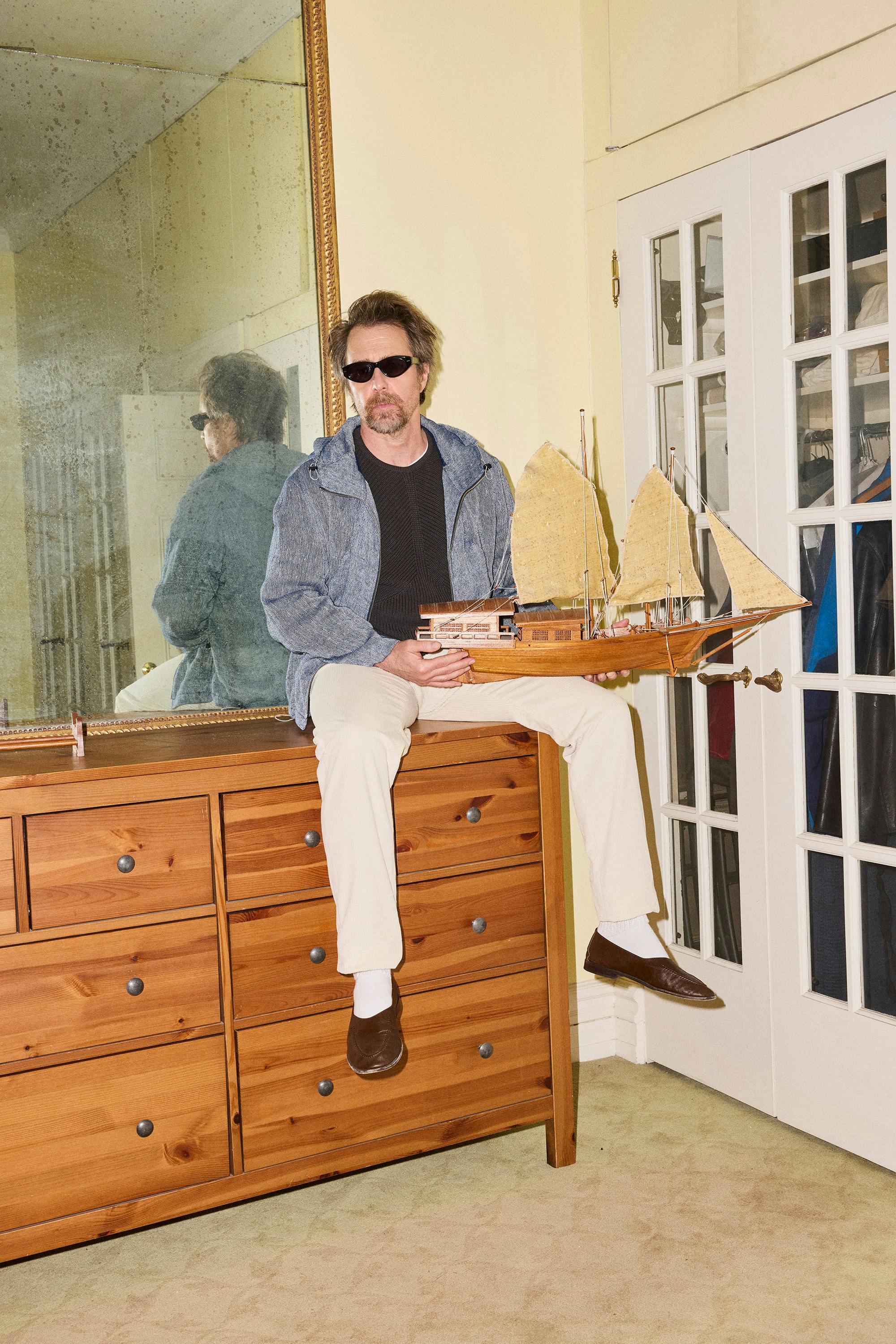
Top EMILY DAWN LONG, jacket SMALL TALK, pants LORO PIANA, watch CARTIER, shoes HEREU
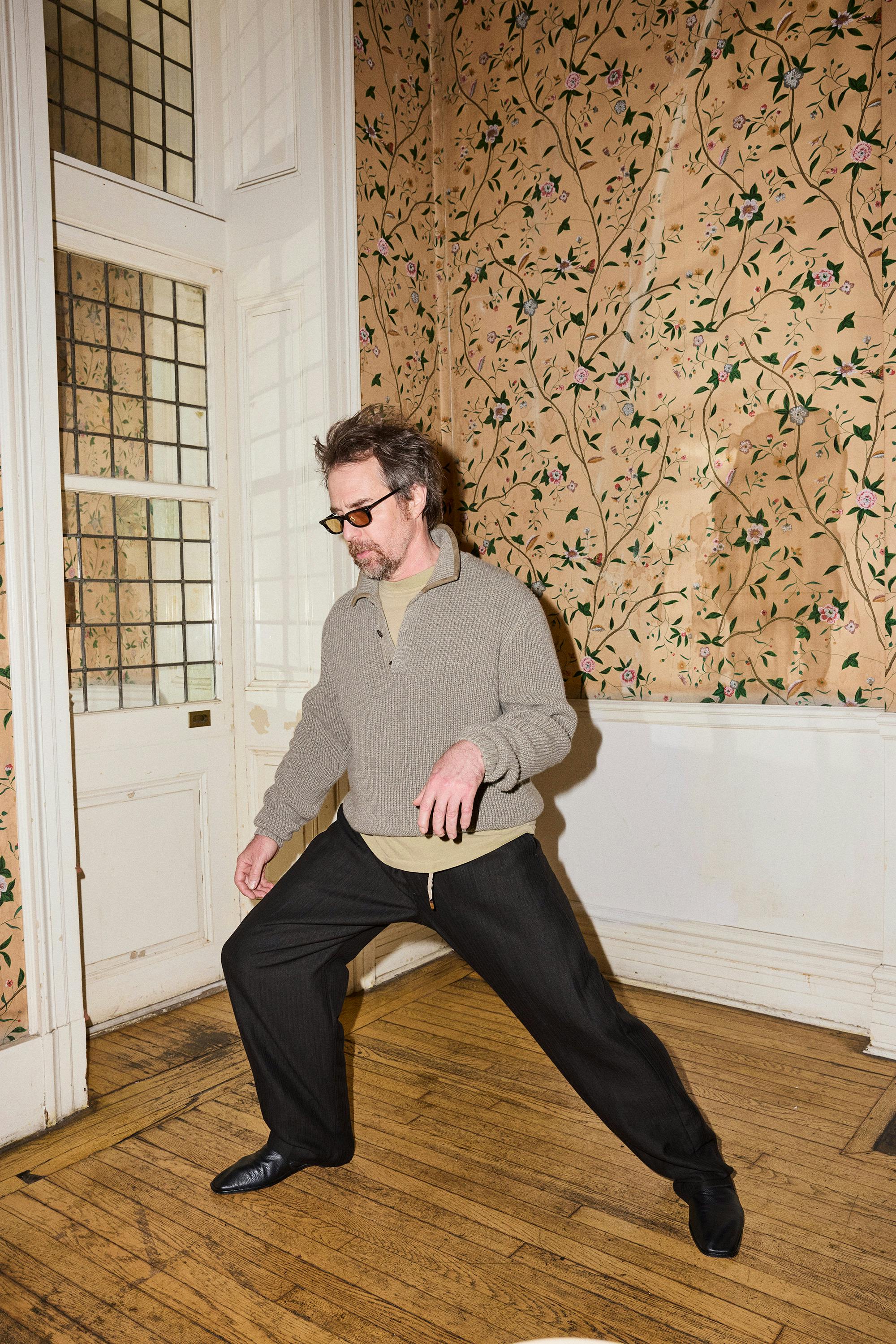
Sweater LORO PIANA, pants PAUL SMITH, sunglasses JACQUES MARIE MAGE, belt BRUNELLO CUCINELLI, shoes LAUREN MANOOGIAN
The film will also, once again, bring Rockwell to the cultural forefront, though perhaps in a different way than before. There’s always been something about him. “Wearing bode in the presence of Sam Rockwell is now my only kink,” the playwright Jeremy O. Harris tweeted in 2019 after the actor — Harris’ childhood) crush briefly passed him onstage at the Gotham Awards. To a certain subset of people, Rockwell has been that guy for years. Now, his lore is breaking containment, spreading to a wider, more online audience.
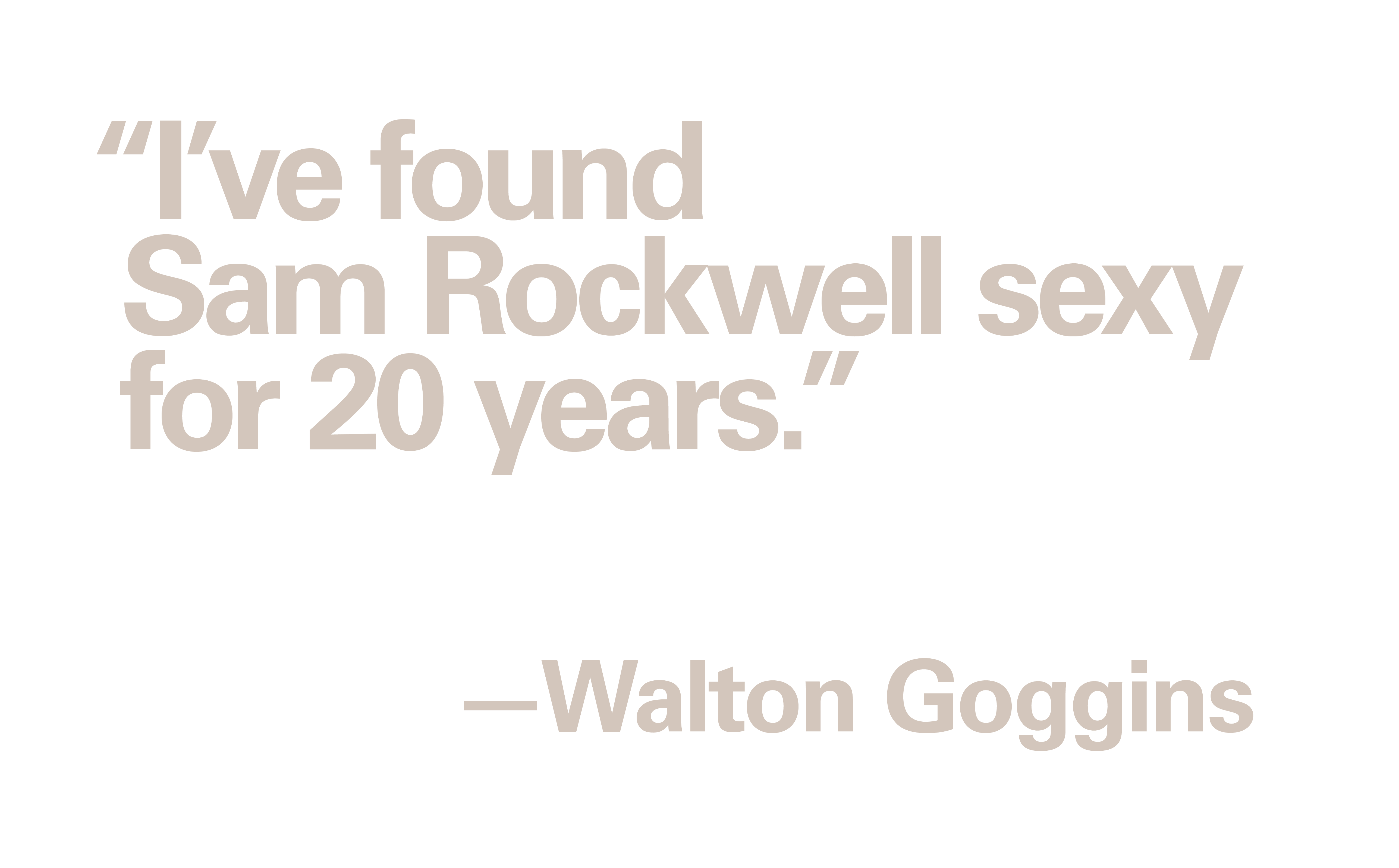
“I’ve found Sam Rockwell sexy for 20 years,” says Walton Goggins, who first met Rockwell on the set of 2011’s Cowboys & Aliens and now counts him among his closest friends. “Give me someone that is that playful and that funny and yet can pull my heartstrings and look like him and be as gracious as he is — how could you not find him sexy?”

Born in Northern California to two actors, Rockwell has been working steadily since the late ’80s. He figured out the rules of the job early on. “When you’re 15, you’re really into being cool — and you can’t be cool and be an actor,” he says. “You have to make fun of yourself. You can’t say ‘boil, toil, and trouble’ or whatever and be like Fonzie. It just doesn’t work.” Acting, he realized, required surrendering a little dignity.
Goggins describes a person organized entirely around the work. “He’s disciplined in a way that he becomes absolutely obsessed with whatever he’s doing,” Goggins says. “There’s a modality that Sam has that I could never follow.”

Woody Harrelson, who plays opposite Rockwell for the third time in the upcoming film The Cackling of the Dodos, describes his co-star as “very moderate. It’s always two beers, not three.” More than one person mentions Rockwell’s dedication to fitness, something he readily admits he’s “a little masochistic about,” doing just about everything except Pilates.
Rockwell is an actor’s actor; his preparations have been well documented. For Three Billboards, he went on ride-alongs with a Missouri cop. To play a high-school girls’ basketball coach in The Winning Season — one of the more under-the-radar roles he’s proud of — he trained with an ex-WNBA player. “Sam is a real student of the movies from the ’70s,” Goggins says. “I’ve seen those movies 10 times. Sam’s seen them a hundred times.” Rockwell doesn’t use social media but has considered TikTok, if only to keep up on interviews with fellow actors.

Playing opposite Malkovich had a satisfying symmetry. For years, he has been Rockwell’s stock answer when asked which actor he most admired. Press him on the moment he decided he wanted to do this for a living, and he lands on two performances: Malkovich as Biff in the televised Death of a Salesman, and, a few years later, seeing him onstage in Burn This after arriving in New York City at 18. The atmosphere on Wild Horse Nine’s Easter Island set was loose and goofy, punctuated by Malkovich’s stories about the Steppenwolf years. But when McDonagh asked him to “turn up the heat,” Rockwell says, “it was like we had front-row tickets to the John Malkovich show.”
Watching his hero summon that raw emotional power was thrilling enough, but being on the receiving end was something else entirely. “It was like Michael Jordan passing you the ball,” he says. “Every time he yelled at me, I was secretly so excited.”
Rockwell recounts all this with the measured tone of one actor discussing another — right up until he pulls out his phone to show me True West, the Sam Shepard play that made Malkovich a star, scrolling through YouTube with the fiendishness of a devoted fan.
Like nearly everything he does, Rockwell approached Frank’s “Asian girl monologue” as a “delicious acting problem” to be solved by doing some homework. “What’s coming out of his mouth is already idiosyncratic and eccentric,” Rockwell says, “so he should be the opposite of that.” For the speech, he studied Martin Sheen in Apocalypse Now and an ESPN 30 for 30 documentary about a rugby player coming out, fascinated by the collision of hypermasculinity and vulnerability.
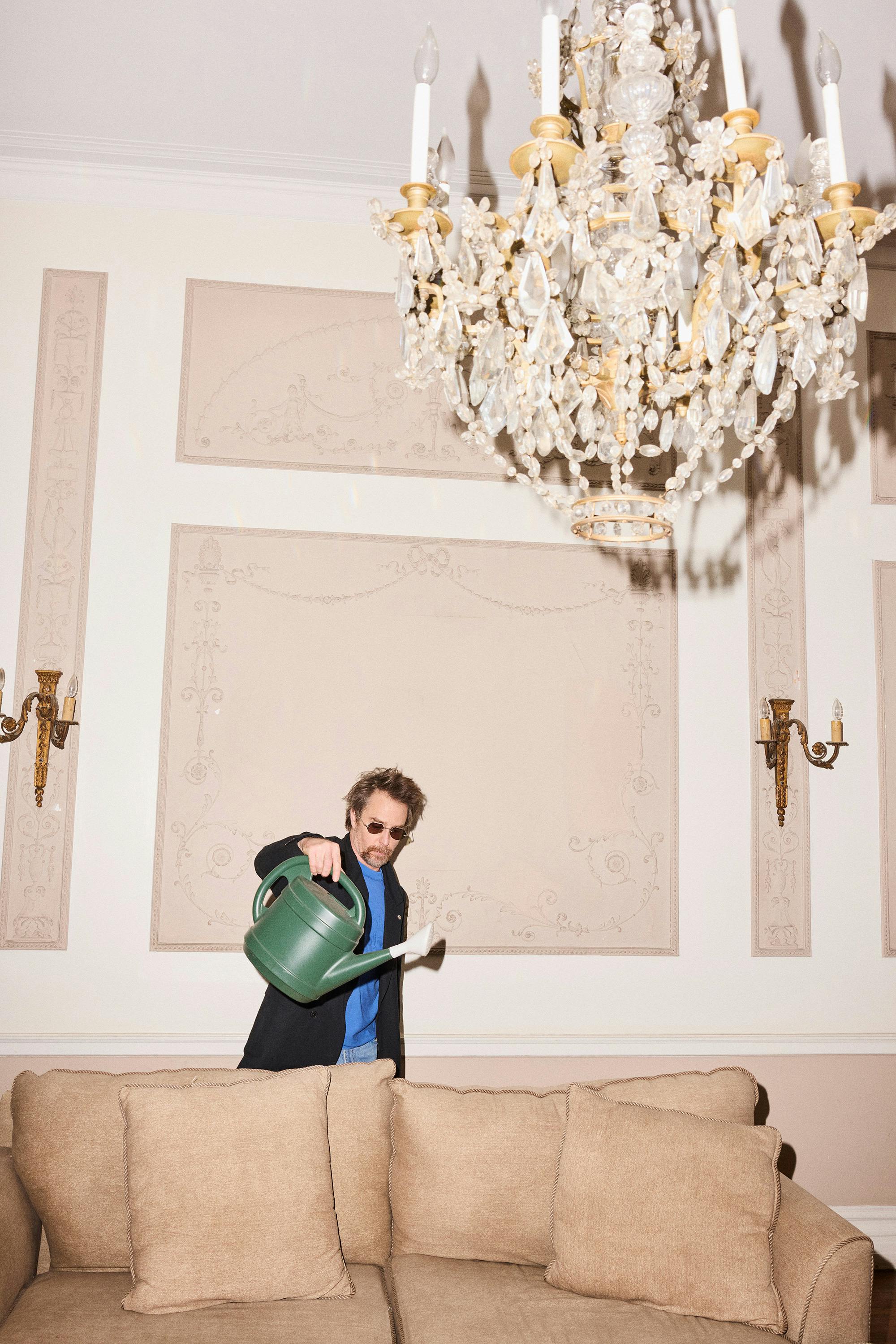
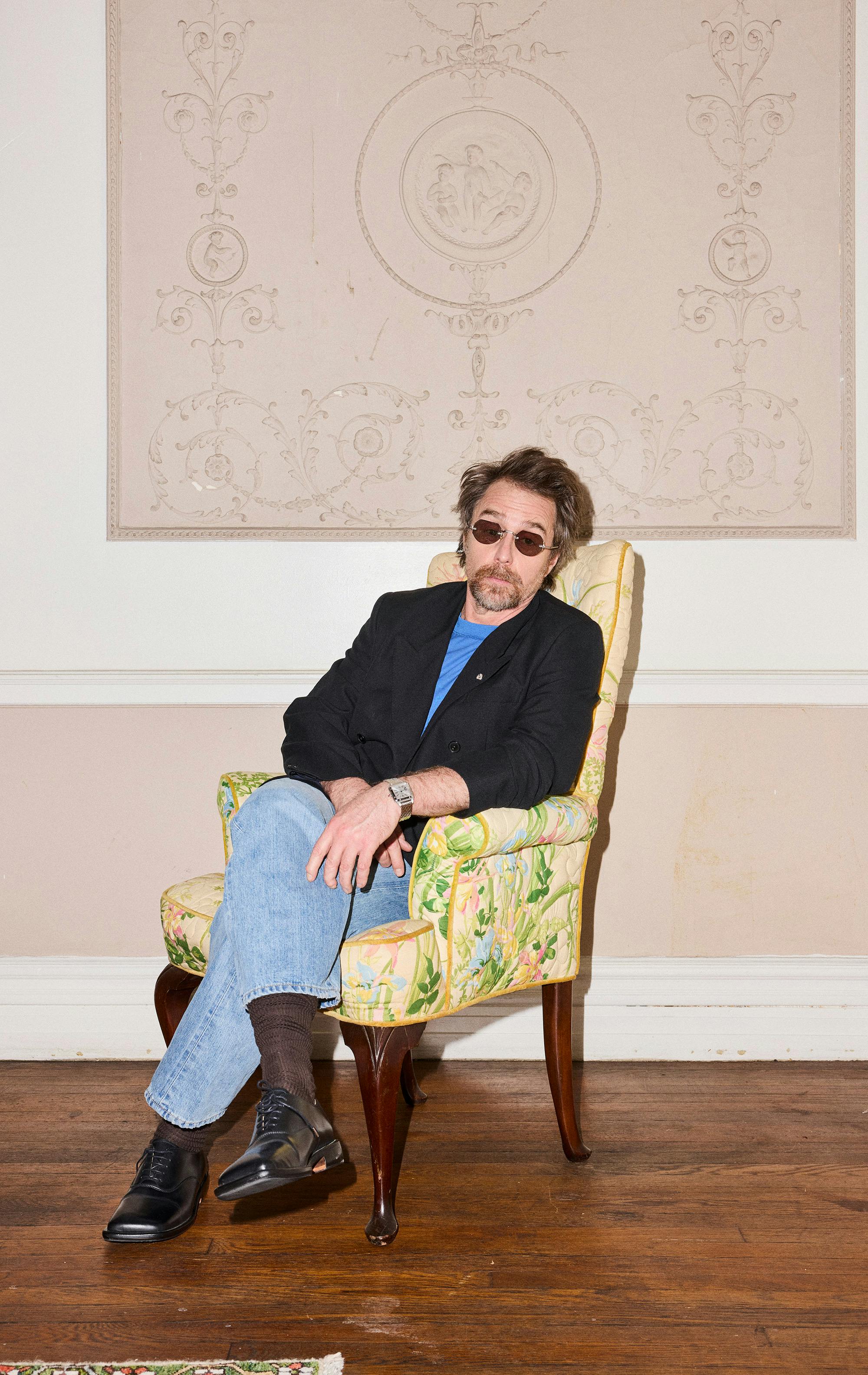
Jacket AURALEE, top STYLIST’S OWN, pants UNLIKELY from C’H’C’M’, glasses JACQUES MARIE MAGE, watch CARTIER, shoes HENDER SCHEME from C’H’C’M’
For Wild Horse Nine, the watch list ran in two directions. There were the obvious entries: the films about military coups, South American movies set under dictatorship. Then there were the ones that tell you more about how his mind works: buddy pictures like Midnight Run and Thelma & Louise, and stranger, looser comedies like Identity Thief and Due Date (“underrated,” he insists). It’s in those detours that you begin to recognize the Rockwell touch: the instinct to find the absurd nestled inside the serious, the joke that somehow deepens rather than diffuses the drama.
This might be Rockwell’s defining gift. He can play monsters because he never plays them as monsters. Instead, he finds the soft, slightly ridiculous human buried inside them and lets you fall for that person before the floor drops.
As McDonagh puts it, “There’s a joyfulness to Sam’s performances that can turn on a dime to something much darker and dangerous. And there aren’t many actors who can make that turn without signaling it from two miles away.”

That knife’s-edge quality is also what underlies Rockwell’s sex appeal, which the internet has spent the past several years trying to explain, usually settling on some version of “could murder did he murder will he murder?” as proffered by writer Allison P. Davis in a 2019 The Cut article titled, “Sam Rockwell Is…Totally Kind of Hot?” The appeal was never conventional handsomeness. In the same article, writer Gabriella Paiella put the fantasy more bluntly: “He looks like he’d spit in your mouth.” A hidden freak. There are YouTube supercuts of Rockwell with view counts north of 7 million, their comment sections less film appreciation than collective swooning. One poster: “Sam Rockwell is solely responsible for my Daddy Kink.”
Rockwell’s draw has never been rooted in menace alone. The frisson comes from watching warmth and volatility occupy the same body, and it only works because of Rockwell’s real, fundamental kindness. “He’s a very huggable human being,” says Harrelson. This is why his turn as George W. Bush in Vice works as more than just an elite impression. Plenty of actors can master the drawl, but Rockwell manages to telegraph W.’s puppyish need to be liked.
Aimee Lou Wood, who met Rockwell on the set of The White Lotus, reaches for similar vocabulary when describing the actor. “He feels so safe to be around because he’s got endless amounts of compassion,” she says. Rockwell onscreen isn’t convincing you that he might snap. He’s convincing you that, if he did, you’d still want to give him the benefit of the doubt.
On set for his photoshoot, Rockwell’s methodology is on full display. He’s been caught up in The Cackling of the Dodos, with intense stretches of filming that last for days. And so, to pump himself up for the camera, Rockwell has taken control of the Bluetooth speaker, carefully selecting such bangers as Selena Gomez’s “Hands to Myself” and Kylie Minogue’s “Can’t Get You Out of My Head” played at heroic volume. Rockwell bops gently to the music while standing in front of a giant blue surfboard in the corner of an old Upper East Side brownstone. When Minogue’s song ends, he asks his assistant to play Michael Jackson next.

Jacket NICENESS from C’H’C’M’, shirt EMILY DAWN LONG, top BUCKETS from C’H’C’M’, pants ORSLOW X EVAN KINORI, shoes LORO PIANA
There’s an endearingness to this: Rockwell’s determination to get the job done. “People who know Sam would categorically agree with this statement, but people who don’t know Sam may not believe it: He is one of the kindest, most accessible people that I’ve ever encountered in the world,” Goggins says. It’s of a piece with the man at lunch who inquires about my childhood with genuine interest and interrupts himself to check whether my cortado has come out right — too much milk? — as if my coffee was somehow his responsibility.
When Rockwell travels for a job “anywhere in the world, even New Jersey, if he’s there for a long time,” he brings a stack of photographs and tapes them on the walls where he’s staying — pictures of his dog, his friends, and his longtime partner, Leslie Bibb. “It’s the things that are most important to him,” Goggins explains. “He’s not a materialistic person. He is not someone striving for anything other than excellence in between ‘action’ and ‘cut.’”
There’s a quality in Rockwell that seems to provoke the same instinct in almost everyone who gets close to him: not just fondness but an urge to preserve something rare. Goggins feels it; so does Wood, who has become good friends with Rockwell and Bibb. “He’s so pure,” Wood says. “Growing up and watching Sam Rockwell, and then meeting him, I have complete respect and admiration and reverence, of course, but I have this protectiveness of him, as well. Because he gives so much to the world, and he contributes so much with his storytelling, that you just want to keep him safe.”
I feel this when Rockwell tells me about spending time on Easter Island for Wild Horse Nine: how he was fascinated by the wildlife there, some insect-or-crab-or-fish creature he still can’t quite describe, but he holds his hands apart to show me the size. When he wasn’t filming, he’d spend his days salsa dancing and working out in the un-airconditioned gym of someone named Rosa until he passed out from the heat, at which point the local dogs would wander over and lick his face. He recounts all of this with the delight of a kid who has just come back from summer camp and can’t wait to tell you all about it.
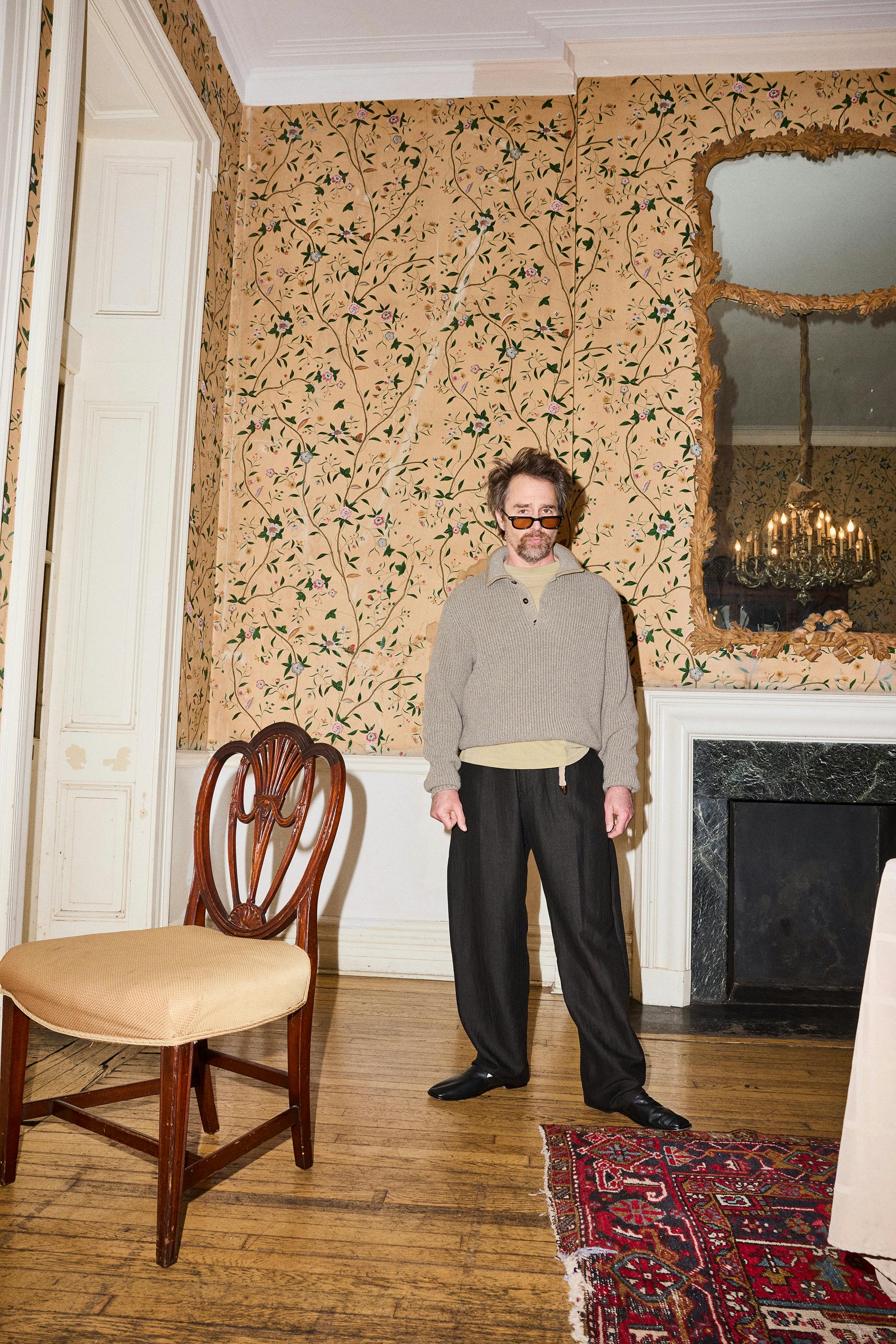
Sweater LORO PIANA, pants PAUL SMITH, sunglasses JACQUES MARIE MAGE, belt BRUNELLO CUCINELLI, shoes LAUREN MANOOGIAN
I feel it again when, for the second time that day, I find myself interpreting internet lingo for the actor. I mention the phrase that’s been circulating Letterboxd reviews to describe him — bicon — and he asks what it means. When I explain, he doesn’t blush or brush it off but starts working back through his own filmography out loud to test the read: the gardener in Lawn Dogs, the closeted Nazi in Jojo Rabbit (“I wonder if they clocked that one”), and his new role in The Cackling of the Dodos. “There’s a little bit of that,” he says of his character in the Jason Bateman–directed feature. “Or a lot of that, actually.”
There’s something disarming about watching an actor learn in real time that audiences have been reading him in a particular way for decades and responding with genuine fascination. “I’ll take whatever I can get at 57!” he says, dissolving into laughter.
Fifty-seven is, in fact, on his mind, though not as a punchline. It’s the age at which he feels he’s finally being trusted with a certain kind of role. Lee in Wild Horse Nine is one; this November brings another, when he returns to the stage as Eddie Carbone in Arthur Miller’s A View from the Bridge at La MaMa. “I’m really just starting to play grown men,” he tells me. “Even [Dixon in] Three Billboards was essentially a man-child.”
Ask him what’s next, and he doesn’t have a grand theory, no plan to capitalize on the moment, no sense that the moment is even his on which to capitalize. He’s spent years vanishing into screwups and addicts and hustlers and fools, and somehow his lore has only grown. And so, he will continue to do what he’s always done: focus on the work and what he needs to do to keep making it. As he puts it, “Everything’s an apprenticeship to the next part.”
Credits
By: Elissa Suh
Production Assistant: Salim Garcia
Photographed by: Jeremy Liebman
Grooming: Melissa DeZarate
Styled by: Abe Santana
Styling Assistants: Ian O’Hara, Delia Cai
Producer: Shawnee Escoffery