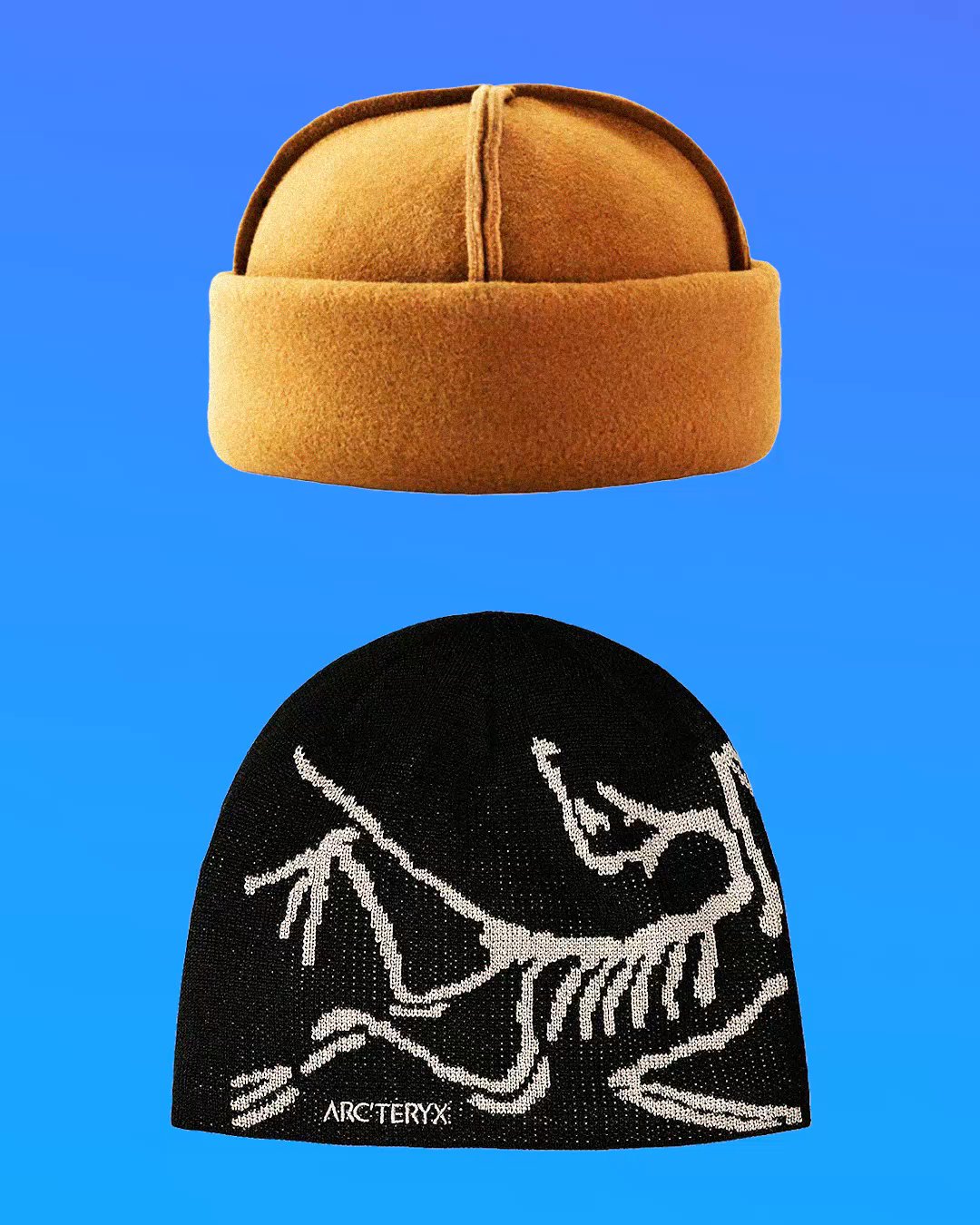
The arrival of winter usually means that beanie season is upon us. Or at least, it used to be. Today, beanies, the classic knitted watch caps usually worn with foldover hems, are bordering on passé. Today's coolest menswear brands and their stylish admirers are venturing into unexpected headwear territory.
Beanie-defying headwear is everywhere, if you dare to look for it. Cawley’s bestseller is a big sheepskin cap with a curly-hair interior; Llloyd’s small-batch fleece toques are in high demand beyond its native Vancouver; and AURALEE’s merino mouton cap is completely sold out on its online store. Some tastemaking boutiques push the headwear envelope even further: Tokyo’s Vision of Fashion stocks wool baseball caps from Scha, and Gentlewench offers a wide range of Diane De Clercq, including a lambswool-cashmere knight helmet. Look at Bexhill Court’s "Scrap Beanie" and Camiel Fortgens’ "Seaman’s Beanie," both sold out online, and you’ll see: even brands that stick to the beanie are bending beanie-norms.
What’s driving experimentation in men’s headwear? A big part of it comes from a desire for clothes that are expressive without showing off — that have personality without trying too hard. The post-beanie winter hat answers that need, not necessarily by avoiding that classic beanie shape, either. It's more a left turn than an about-face.
Fielding Miller, founder of Colorado-based label Thurston, is at the forefront of the post-beanie movement. His performance-driven hats, skullcaps, and balaclavas just landed at Ven.Space, Understory, and several other forward-looking boutiques that rarely delve into proper outdoorsy gear. That’s no small feat for a brand whose first collection launched last March.
All Thurston styles are function-first. They’re made of high-spec materials like Polartec Wind Pro, a superfleece known for superior wind resistance, and prided for “absolute reliability” that Miller himself honed through years of prototyping on the slopes. But while clean, unbranded, and logo-free, Thurston headwear is also a little weird — in a good way. The description of the $60 Alpine Hat, so in demand that it's currently sold-out online, claims it allows for “personal expression.” That’s essentially a polite way of saying its high, triangular shape is pretty difficult to style. Once you pull it off, though, sartorial bliss awaits.
Frederick Sellier, co-founder of buzzy Munich-based creative studio thv4gsb, is a fan. “I’m not really into headwear, and friends often call it a weird hat,” he says. “But with the triangle pressed down, I think the fit is perfect — and now I don’t want to wear anything else.”
Thurston sits on the technical side of our emergent post-beanie world. It’s where like-minded brands such as and wander, Satisfy, and Goldwin use innovative synthetic fabrics to experiment with styles — structured, draped, packable — that literally wouldn’t hold up in organic fibers. Not that natural-fabric fanatics aren’t pushing headwear norms in their own primitivist way.
Simon Homes, ex-Lemaire and ex-The Row, now one half of Sono, sees it happening firsthand. “Guys are definitely less self-conscious wearing pieces that long felt uncool because they seemed childish or granny-ish,” he says. Sono’s beret-like hat is a good example. Inspired by the hats his aunt used to knit for him when he was a kid, it can be worn in multiple ways—rolled up or folded over. Like the London brand’s experimental, slightly elfish hat with ear flaps and fastening cords, this post-beanie style is being picked up by tasteful menswear stores across the globe—and selling out there fast.
Post-beanie headwear takes more effort to style than a classic beanie, but the potential stylistic rewards are bigger. It’s a statement, but also practical. Put it this way. When worn on the streets, a shaggy balaclava might be a bold fashion choice; yet in the end, Homes observes, “it’s simply the best way to keep the sides of your head, your forehead, and your sinuses warm.”


